The truck backs into your dock. A pallet is crushed on one side. A box is missing. The driver taps a foot and waits for your signature. What you do in the next few minutes decides whether the carrier pays you back or you swallow the loss. That small window is where OS&D claims begin.
And the risk is not rare. Freight network Warp puts the LTL industry damage rate at 1.24%, which works out to roughly one damaged or lost shipment in every 80. That sounds small until you move thousands of loads a year. Each hit can trigger an OS&D claim, and each claim costs time, money, and a customer left waiting on freight that didn't arrive as it should have.
OS&D stands for over, short, and damaged. It is the label for the three ways a shipment can arrive differently than the paperwork: too much, too little, or beaten up. Handle it well, and you recover the money. Handle it poorly, and the carrier has every reason to deny you.
This guide covers the whole picture. You will learn what OS&D means, the claim types, how to file a claim step by step, the deadlines that make or break it, and how to stop these claims before they ever reach your desk.
Key Takeaways
• OS&D stands for over, short, and damaged. • An OS&D claim asks the carrier to pay for freight that arrives wrong. • The main claim types are shortage, damage, refused, and loss. • You usually have nine months to file, but concealed issues get about five days. • Most claims are won or lost at the receiving dock.
What is OS&D?
OS&D stands for over, short, and damaged. It is a logistics term for freight that does not match the bill of lading (BOL) when it arrives. The BOL is the contract and receipt for the shipment: It lists what should show up and in what condition.
An OS&D claim is the formal request for payment that follows. You file it with the carrier to recover the value of freight that was lost, damaged, or delivered in the wrong quantity. Without the discrepancy noted on the BOL, that claim is hard to win.
OS&D shows up most in LTL freight, where many shipments share a trailer and get handled again at every terminal. Each extra touch is one more chance for a box to go missing or a pallet to get crushed.
Over, short, and damaged explained
Each letter points to a different problem. All three are measured against the bill of lading.
- Over (overage): You receive more items than the paperwork lists. An extra carton or pallet shows up.
- Short (shortage): You receive fewer items than the BOL says. A box is missing, or a whole pallet never made it.
- Damaged: The goods arrive broken, crushed, wet, or spoiled. Damage can be visible at delivery, or concealed and found later when you open the freight forwarding.
The bill of lading is the anchor. If what you count does not match what it says, you may have an OS&D event on your hands.
Types of OS&D claims
Not every claim is the same. The type decides how hard it is to win and how fast you must act.
- Shortage claim: Freight is missing, and it was noted on the BOL. These are the easiest to prove.
- Visible damage claim: The damage is obvious at delivery. Note it, photograph it, and you have a strong case.
- Concealed damage claim: The damage is hidden until you unpack. Most carriers give you only about five days to report it, and it is harder to prove.
- Concealed shortage claim: A shortage you find after signing a clean BOL. Carriers push back hard on these, so act within five days.
- Refused shipment: You reject part or all of a delivery for damage, wrong product, or a late arrival. The freight goes back to the carrier.
- Loss claim: The whole shipment vanishes. The carrier gets a short window to find it before they pay out.
- Overage: You end up with extra freight. Report it too, because it belongs to someone.
OS&D report vs. OS&D claim
These two get mixed up. They are not the same step.
The report is what you write at delivery. It records the discrepancy: The BOL number, the item, the quantity expected versus received, the condition, and photos.
The claim comes next. It is the formal demand for payment, backed by that report and your documents.
The report is your evidence. The claim is your ask. Skip the report, and the claim has nothing to stand on.
How to file an OS&D claim
Filing is simple when you follow the right order. Rushing or skipping a step is how claims get denied.
- Inspect before you sign. Check the count and the condition while the driver is still there. Never sign a clean BOL over damaged freight.
- Note it on the BOL and POD. Write exactly what is wrong. Two boxes short. Crate crushed on the left. Then photograph everything.
- Set the freight aside. Keep the damaged goods until the claim closes. The carrier may want to inspect them.
- Gather your documents. You need the BOL, the freight bill, the invoice showing value, and a repair or replacement cost.
- Submit and track. Send a written claim to the carrier and log the date. Follow up until they pay, settle, or deny.
Do these five things every time and your odds jump.
Timelines and the Carmack Amendment
The clock matters. You generally have nine months from delivery to file a freight claim. Concealed damage or shortage is tighter, at about five days with most carriers. Once you file, the carrier has up to 120 days to respond under 49 CFR Part 370.
Carrier liability comes from the Carmack Amendment. It makes the carrier responsible for loss and damage in transit, with five exceptions:
- Natural disaster: A flood, storm, or other event no one could predict or prevent.
- The shipper's own fault: Bad packaging, a loading mistake, or mislabeled freight.
- War or a public enemy: Damage caused by enemy military action against the US.
- Government action: A seizure, hold, or order that stops the shipment.
- The nature of the goods: Items that spoil or break on their own, like produce, even when handled correctly.
If none of these apply, the carrier is responsible.
Why OS&D claims get denied
Most denials trace back to a few avoidable mistakes:
- Damage not noted at delivery, so the carrier says it left it in good condition.
- Missing or incomplete documents, like no invoice or no photos.
- Late filing, past the nine-month or five-day window.
- Poor packaging, which shifts blame to the shipper.
- No proof the carrier caused it, with a broken chain of custody.
- Failing to mitigate, meaning you did not limit the loss after you found it.
Fix these at the dock, and most claims sail through.
How to prevent OS&D at the receiving dock
The best claim is the one you never have to file. Prevention starts the second freight hits your dock.
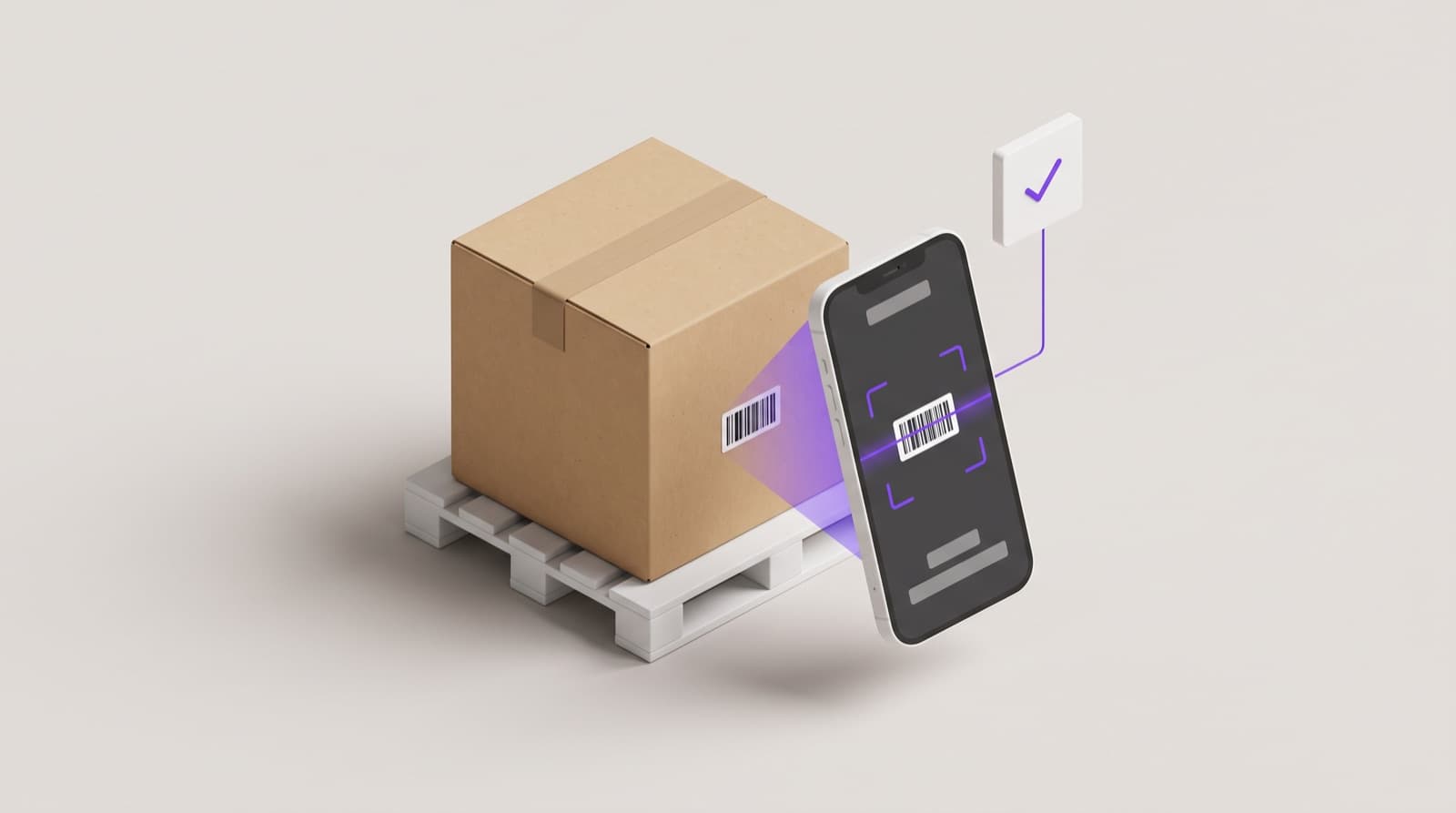
- Verify counts against the BOL: Scan each item or pallet in and match it to the bill of lading and the ASN. Overages and shortages show up right away, not weeks later. Better barcode scanning speeds this up.
- Capture condition on arrival: Take timestamped photos of every pallet and label. This is the evidence that wins claims and stops denials. Automated data capture at receiving makes it routine.
- Inspect before signing: Train the team to check first, then sign. A clean BOL over damaged freight kills your case.
- Standardize the exception process: Everyone records an OS&D event the same way, on any device, in your warehouse receiving flow.
- Track carriers and SKUs: Watch which lanes and products cause the most trouble, then fix the pattern.
Clean dock data turns OS&D from a guessing game into a fast, provable claim.
OS&D in trucking, warehousing, and the OS&D clerk
In trucking, OS&D usually rides with LTL freight, where many shipments share a trailer and change hands often. That handling is where overages, shortages, and damage creep in.
In the warehouse, it lives at receiving. Larger operations have an OS&D clerk or department whose job is to catch discrepancies, file reports, and manage claims. Whether it is one person or a team, the goal is the same: Catch the problem before it walks past the dock.
The bottom line
OS&D claims come down to speed and proof. Inspect before you sign. Note every discrepancy on the BOL. Photograph the freight. File within the window. Do that, and you turn a messy loss into a claim the carrier pays.
Frequently asked questions
What does OSND stand for?
OSND is just another way to write OS&D, and it means the same thing: Over, short, and damaged. Some carriers and systems drop the ampersand and spell it "OSND." Either way, it flags a shipment that does not match the paperwork.
What does OSD stand for in logistics?
In logistics, OSD (also written OS&D) stands for over, short, and damaged. It describes freight received in the wrong quantity or condition compared to the bill of lading. The discrepancy gets logged in an OSD report and can lead to a claim against the carrier.
What does OS mean in shipping?
In shipping, OS is short for "over and short," the quantity side of OS&D. "Over" is more freight than the paperwork lists, and "short" is less. Add damage to the mix and you get the full over, short, and damaged picture.
Cut OS&D claims at the source with PackageX
Most OS&D disputes are won or lost at receiving. PackageX captures the proof for you, automatically.
- Scan with Vision AI: Verify counts against the BOL and flag overages or shortages as soon as freight arrives.
- Capture condition on arrival: Timestamped photos and notes build evidence the carrier cannot argue with.
- Automate the exception workflow: Log every OS&D event the same way, on any device.
- Connect your stack: Push clean receiving data into your WMS, ERP, and claims process.
See how PackageX turns your dock into your best defense against claims. Book a demo.