Founding Series #2 · Part one: Who Verifies the Physical World?
Picture the receiving dock at a regional distribution center at 6 a.m. Three trucks, three suppliers, one purchase order each.
The first pallet’s barcode carries a tracking number; the PO is printed beside it, so nobody scans it. The second has five barcodes across two labels and a packing list in a format nobody on the dock has seen. The third comes with a bill of lading that counts pallets and weight, not a single part number.
Someone counts pallets against the bill of lading and signs for them without checking what came. The pallets get broken down later, sometimes days later. Someone else walks the paperwork to the back office to find the PO, or digs through email for the ship notice. The system records all three as received. None of them was checked against the PO when it arrived.

On a Third Person panel last month, the head of supply chain at a consumer brand described the same problem from the brand’s side. Inbound, he said, is largely non-standard: the bills of lading all look different, part numbers and units of measure don’t match, and it comes down to a lot of human intervention. He won’t let a 3PL’s receipt post straight into his ERP: “What if they got it wrong? What if I over-receive?”
Last week I asked who verifies the physical world, and ended on a problem nobody has solved: the physical world has no standard. This week is about that problem.
I’ve spent nine years on docks like this one, and this is the problem I keep coming back to. Supply chains have no standard, and they never will. Every supplier labels and documents its goods its own way. Until we stop pretending otherwise, every plan, every forecast, and every AI agent built on that data starts from a guess.
Every system speaks its own dialect
Think about where a label comes from. Somebody’s ERP, WMS, TMS, or inventory system prints it. Each of those systems was coded by its own engineers over the last two, three, four decades, each with its own idea of what a label or a bill of lading should look like. There are hundreds of them. How could we ever expect them to agree?
So there’s no standard for what a bill of lading looks like, or where the lot number sits on a case label. And it isn’t only different companies. One manufacturer with plants in Malaysia, Vietnam, and China can ship the same part with three different labels, all into the same distribution center in the US.

It doesn’t start or stop at one dock, either. The factory itself receives parts and raw materials from dozens of vendors, each labeled its own way, often with the lot or serial number it needs for traceability printed only in text. The facility that receives the goods prints its own labels and documents when it ships them on, and so does the next one. In stores, direct store deliveries arrive with each vendor’s own paperwork. From inbound to outbound, every hop re-labels the same goods, in manufacturing, in distribution and warehousing, and in retail alike.
Every one of those developers decided what goes on the label and into the barcode based on what their own software needed, not what the next hop would. The carrier needs one thing, the DC another, the store a third. Goods still get where they’re going, just inefficiently: people key in what the label didn’t carry, wait on paperwork, recount, and rely on memory about which supplier’s label to trust. That tribal knowledge kept things moving for decades. Across every hop, it costs millions in errors, delays, and forecasts built on bad data. And it doesn’t work for agents, which can only act on what’s in the record.

The barcode is the one standard we have
To be fair, the systems did learn to talk to each other. Trading partners exchange orders, invoices, and ship notices over EDI, and systems connect through APIs. Even that is standard in name only: every big retailer publishes its own rulebook for the same ship notice, and the mappings break whenever one changes. And it only covers the data in the back office. Nothing standardized what gets printed and stuck on the box.
The barcode was supposed to do the same for the physical side, and at the checkout it did. The first product scanned at a till was a pack of chewing gum in Troy, Ohio, in 1974. GS1 says barcodes are now scanned 10 billion times a day.
But a barcode is only as good as what someone chose to put in it. Sometimes it carries the product, lot, and quantity. Often it carries only a tracking number or an internal code, and the details that matter (PO, lot, expiry, revision) are printed wherever there was room. Newer 2D codes such as QR and DataMatrix can hold far more, but they have the same catch: what goes in them, and how, depends on how someone set up the system that prints them. Even when it does describe the contents, it’s the supplier’s word for what shipped, printed before the truck left, not a check of what arrived.
The barcode is a good standard. It just can’t carry the whole load. Nobody agrees on what to barcode: a part number, an internal SKU, a license plate, a shipment ID. So one pallet ends up with three barcodes, and the one fact you need is printed only in text.

“Just push your suppliers”
Every time I raise this, someone says the fix is to push the standard upstream: tell your vendors and suppliers to standardize their labels, write it into the rules, and fine the ones who miss it.
Routing guides show the same problem on the other side of the dock, during pick, pack, and ship. Every big receiver writes its own rulebook for how suppliers must label, pack, document, and ship, and no two agree. A supplier selling to ten retailers follows ten different standards, which is the same as having none. A 3PL executive on that same panel said the ones his team works from run 90 to 300 pages, change constantly, and live mostly in people’s heads.
Get it wrong and you pay. Walmart, for one, fines suppliers 3% of the cost of goods on cases that miss its on-time, in-full rules. The consumer brand on that panel budgets 0.5 to 1 percent of gross revenue just for retailer chargebacks. Retailers charge back for the wrong label, the wrong spot on the carton, or a ship notice that doesn’t match what arrived.
That works if you’re Walmart, Costco, Apple, or Dell. Everyone else gets handed the rulebook; they don’t get to write it. Most companies can’t push hundreds of suppliers to relabel anything, and even the giants only reach their top suppliers. The long tail ships however it ships. And remember the manufacturer shipping one part with three labels from three of its own plants. If it can’t get its own factories to agree, it won’t relabel to match yours.
The dock translation tax
The receiving side has it worse. A distributor or a store doesn’t get to write the rules for most of its suppliers. It takes in hundreds of formats and turns them into one clean record.
So the translation happens by hand, at the dock, under time pressure. That’s where the record starts to drift.
I call it the dock translation tax: the hours everyone who touches a shipment (supplier, carrier, DC, 3PL, and the store or customer at the end of the line) spends turning someone else’s format into its own record. Every company pays it, every day, and almost nobody measures it.
“But we have ASNs”
The other answer I hear is the advance ship notice. In the field, we typically see 50 to 70 percent of inbound shipments arrive with one. Some come over EDI; others sit in an email inbox. Either way, they live in the back office, not at the dock where someone is looking at the pallet.
And a notice tells you what was planned, not what arrived. Like every backend system, it knows what should happen, not what actually did. Many are generated the moment an order is picked or invoiced, sometimes before a single case is loaded. In a multi-year study led by Auburn University’s Center for Supply Chain Innovation, retailers reported median supplier accuracy of 92 percent on ASN audits, ranging from 50 to 100 percent, and physically checked 57 percent of orders on average to catch the difference. That’s a lot of people re-counting boxes the paperwork already described.

Between labels nobody agrees on and a notice that describes the plan, you get what I wrote about last week: a scan confirms that something was read, not that the shipment was right. The check that matters, label against document against what’s physically there, is the one left to a person’s eyes and memory.
Stop waiting. Translate at the touch.
If the world won’t standardize, the point of work has to. Not by rewriting hundreds of systems, or by bolting a barcode standard onto every document, but by putting a translation layer where the record is born.
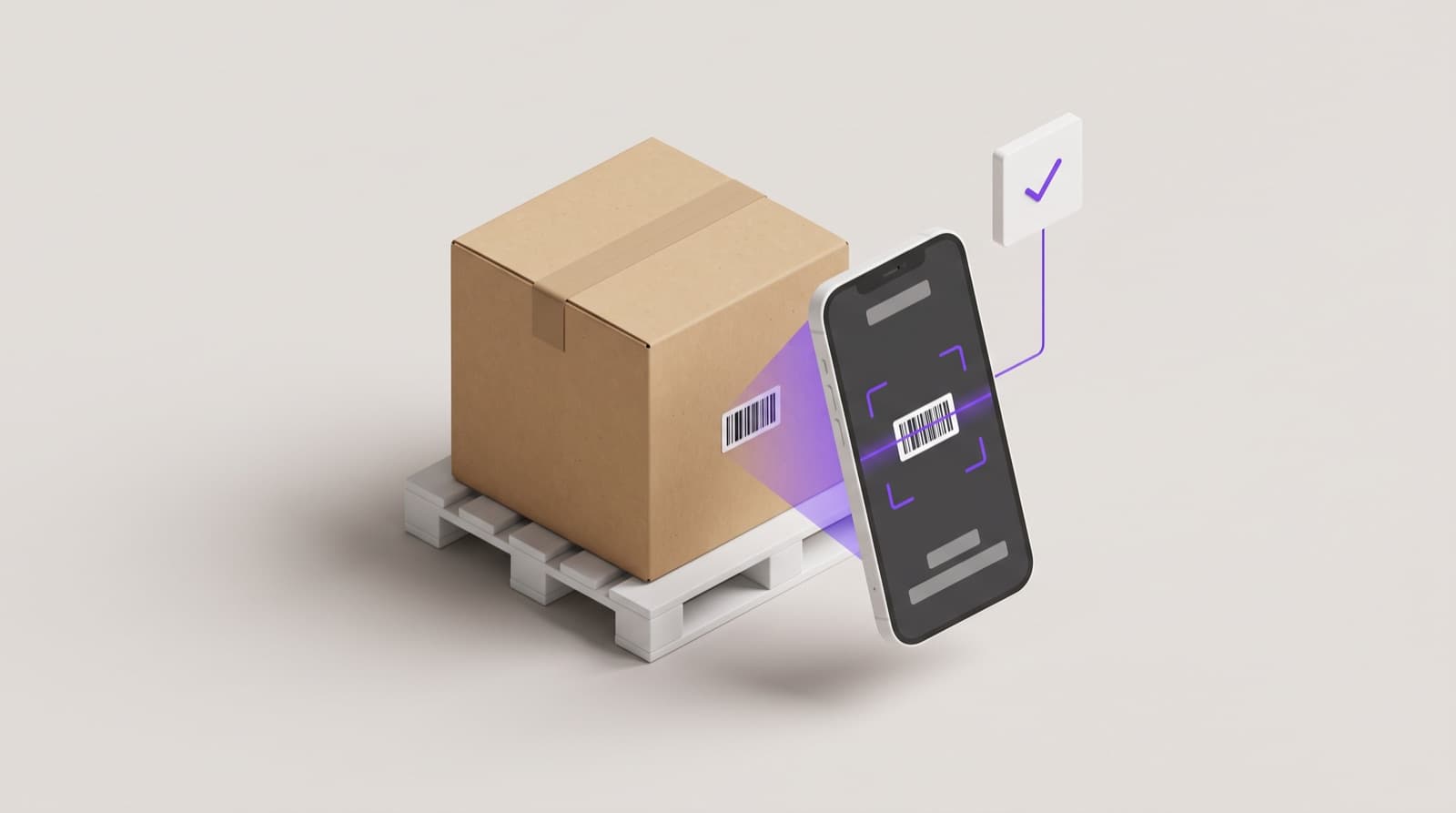
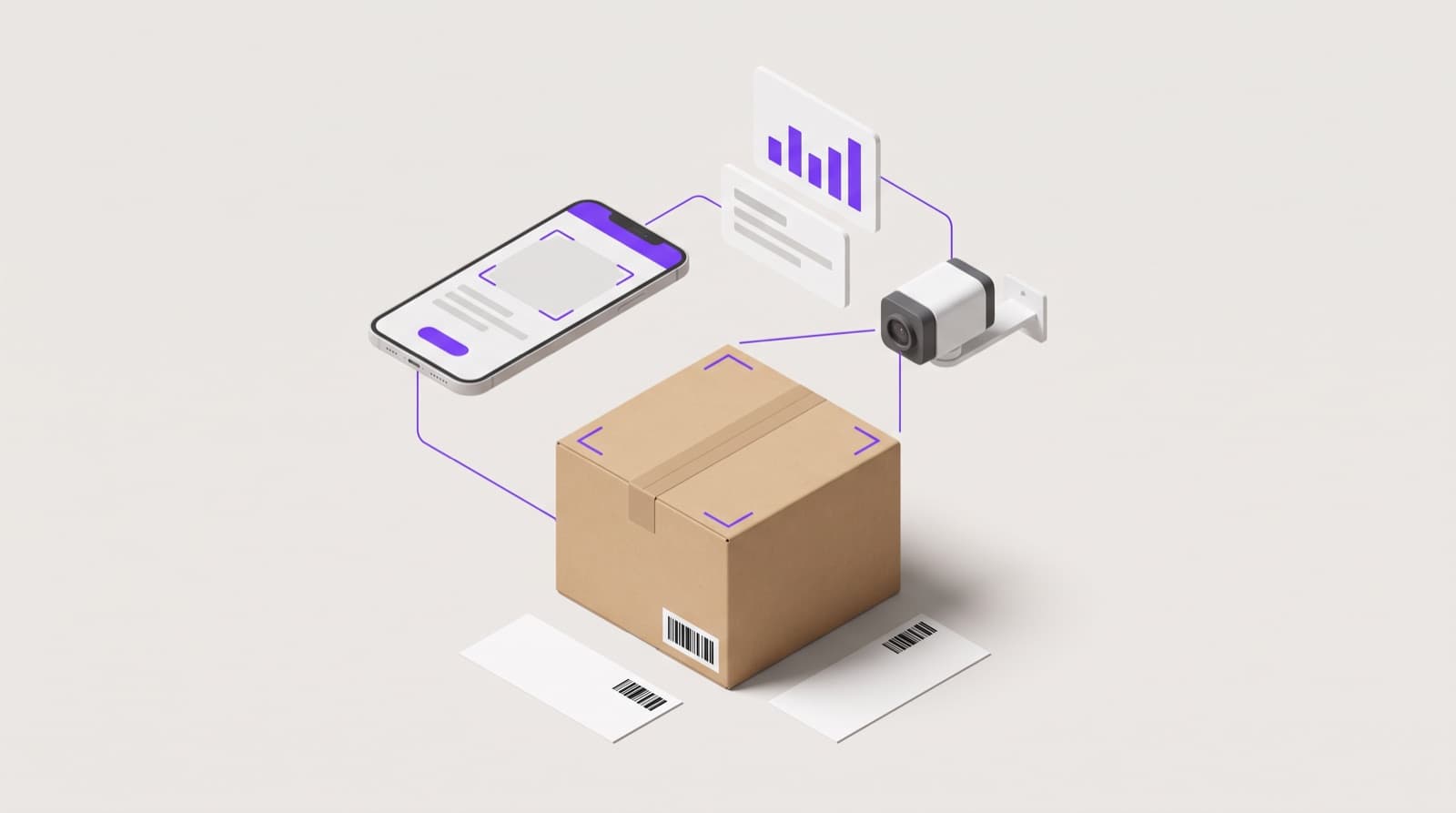
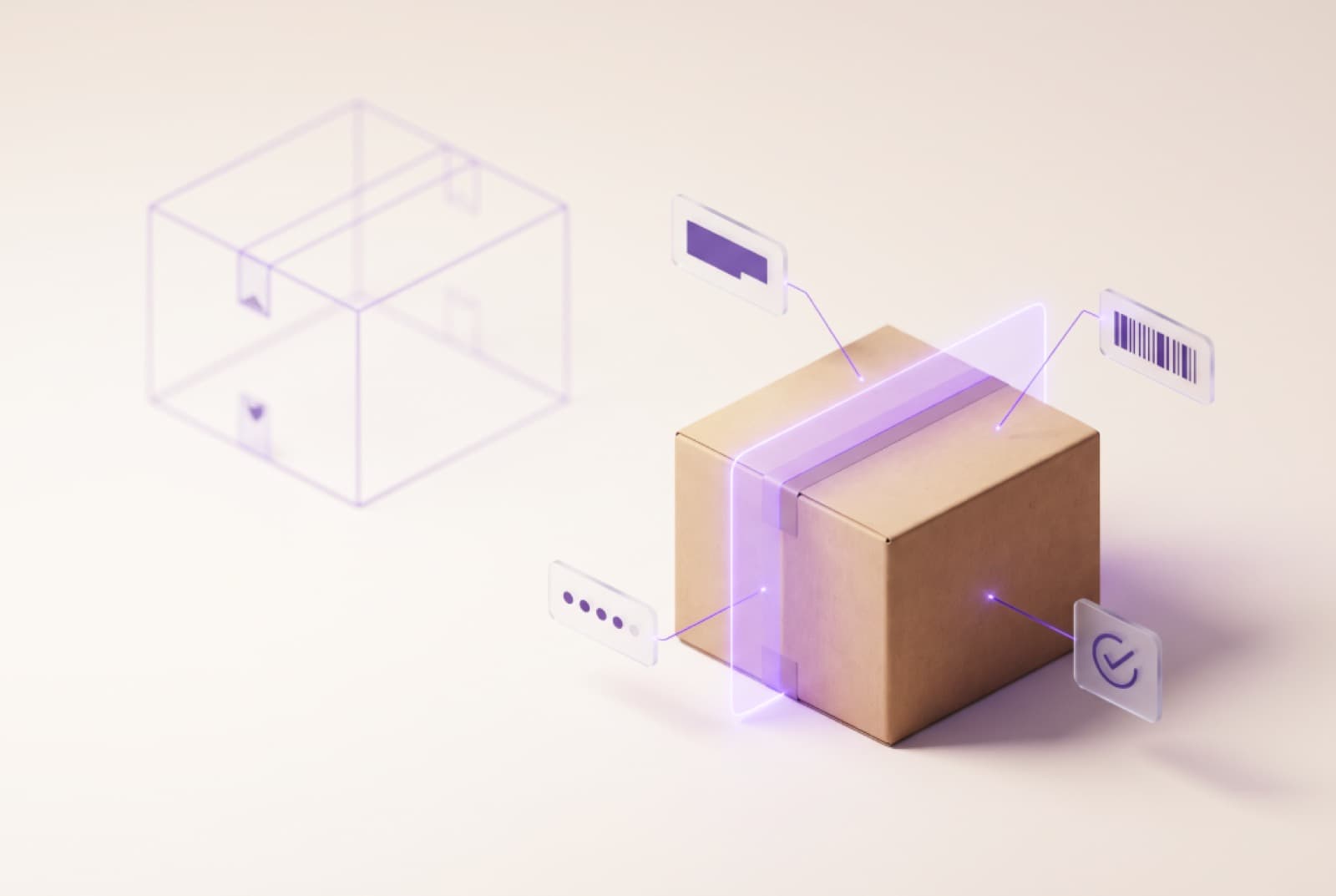
That’s what we’ve built at PackageX: workflows powered by Vision AI that read whatever arrives. One capture takes in every label and document on the pallet, works out which barcodes and fields matter, and matches them to the PO in real time. Nobody has to know which label to scan.
Then the workflow guides what happens next. PO matched: put it away. Short, over, or damaged: here’s exactly what to do. And the capture stays with the record as evidence, because when there’s a dispute or a claim, liability follows the record. Hundreds of formats come in. One verified record goes out, to the ERP, to finance, and to every AI agent that will act on it. The supplier doesn’t change a thing.
The record is born at receiving, but the translating doesn’t stop there. Every touch inside the building has the same problem: putaway, picking, packing, and dispatch, where a routing guide decides whether you get paid. The same workflows powered by Vision AI read and verify each one, so the record grows as the goods move.
Done this way, translation stops being a cost and becomes an edge. Every receipt is checked against the order before it’s put away, so inventory is right the moment it lands, not after the next cycle count. Every exception carries a photo and a timestamp, so a claim or a chargeback is settled on evidence, not memory. The ERP and every agent that acts on it get clean data instead of a guess. Your team sees what’s happening now, and you can give your customers the same view: what arrived, in what condition, and what shipped and when. That’s where operations turn into growth. Customers stay with the partner who can show them what happened.

Which raises the obvious question: if any AI model can read a label now, what’s hard about this? Models are getting smarter. The harness is the moat. It’s what makes the execution layer work, and it’s learned one dock at a time. That’s next week.
Three questions to ask this quarter
- How many different label and document formats arrive at your busiest dock in a week? If nobody knows, that’s the first answer.
- When a shipment arrives with no usable barcode, what happens? Who decides what was received, and what do they write down?
- Would you let an agent reorder from yesterday’s receiving data without a person checking it? If not, the problem starts at the dock, not in the agent.
Last week I asked who verifies the physical world. Part of the answer is admitting the world won’t standardize for us. The verification has to work with whatever arrives.
Tell me where your operation pays the dock translation tax. I read every reply.
Frequently asked questions
Why don’t barcode scanners solve receiving accuracy?
A scan confirms a code was read, not that the shipment matches the order. Pallets carry several labels, many goods have no usable barcode, and ship notices are often made before loading.
Is there a standard for shipping labels?
Standards exist, but suppliers adopt them unevenly, and each large receiver adds its own routing guide. Most docks receive many formats every day.
How do you receive goods from suppliers that don’t follow a label standard?
Translate at the point of receipt: read every label and document in one capture, match it to the order in real time, guide the next step for exceptions, and keep the capture as evidence.
Why don’t advance ship notices solve it?
An ASN describes what was planned, is often created before the truck is loaded, and usually sits in an EDI feed or an inbox rather than at the dock where the goods are checked.