Three acronyms, one warehouse tech stack, and a mountain of confusion. WMS, WES, and WCS all promise to run your warehouse. They do, but they run different layers of it, and picking the wrong mix costs both money and time.
The stakes are climbing fast. The global warehouse management system market is projected to grow from USD 4.38 billion in 2026 to USD 10.64 billion by 2034, exhibiting a CAGR of 11.70%. As spend rises, knowing which layer of the stack you are actually buying matters more than ever.
In this blog, we will learn what a WMS, WES, and WCS each do, how they differ, and how they work together across the warehouse and the plant floor, so you can decide whether you need one layer, two, or all three.
Key Takeaways
• WMS manages inventory, orders, and paperwork. It is the system of record. • WES orchestrates people and equipment in real time, prioritizing tasks and rerouting work as conditions change. • WCS controls the physical machines: conveyors, sorters, AS/RS, and robotics. • The three layers are complementary, not competitors. Orders flow down the stack; performance data flows back up. • Every facility needs a WMS. Add a WES if you run heavy automation or a high SKU variety.
Quick definitions: The Three Layers
What is a Warehouse Management System (WMS)?
A Warehouse Management System (WMS) is the software that manages inventory, receiving, put-away, storage, order batches, and shipping across a facility. It is the record-keeping brain of the operation and the system of truth for what is on hand and where.
The WMS answers two questions: what stock do we have, and where is it? It plans work in shifts, hours, or days, using static batching to group orders into picking waves. Every receipt, move, pick, and shipment lands in the same record, so finance and operations see the same numbers.
Most modern WMS platforms include barcode scanning and validation, cycle-count tools, slotting logic, and integrations with ERP and TMS systems. What they do not do well is coordinate people and machines in the moment.
What is a Warehouse Execution System (WES)?
A Warehouse Execution System (WES) is the software that coordinates people and automation in real time. If the WMS is the brain, the WES is the nervous system.
The WES answers different questions: who does what, right now. It prioritizes tasks, balances workloads among pickers and equipment, and reroutes work when equipment breaks down. Decisions happen in seconds, not shifts.
Modern WES platforms handle dynamic waveless picking, sub-second task assignment, and real-time inventory management. When a robot goes offline or a picking zone jams, the WES redirects the flow before throughput drops.
What is a Warehouse Control System (WCS)?
A Warehouse Control System (WCS) is the software that directs individual material-handling machines. It is the hands of the operation.
The WCS talks directly to conveyors, sortation systems, AS/RS, and robotic cells. Decisions happen at the millisecond-to-second level, moving totes between points, releasing cartons at merges, and synchronizing equipment across a line.
Most WCS software ships with the hardware itself and speaks PLC-level protocols. It is invisible to most operators, but nothing moves without it.
WES vs WMS: What's the Real Difference?
WMS vs WES is the difference between a warehouse that tracks what happened and one that controls what happens next. Both matter, but they sit at different levels of the stack.
Here are the four dimensions where they diverge:
- Core focus: WMS tracks what and where. WES decides how and right now.
- Speed and timeframe: WMS runs on shifts and days with static batching. WES runs in real time with sub-second dynamic decisions.
- Automation and equipment: WMS handles barcode scan validation and limited hardware control. WES directs robotics, conveyors, AS/RS, and sortation based on live sensor data.
- Decision-making: WMS plans the work. WES executes and adapts as conditions change.
Are WMS and WES competitors?
No. They are complementary layers. A WMS gives you inventory accuracy and a clean system of record. A WES gives you throughput and flexibility on the floor. Most modern warehouses need both once automation enters the picture.
WMS vs WES vs WCS: Full Comparison Table
The cleanest way to see how the three layers fit is a side-by-side view.
| Dimension | WMS | WES | WCS |
|---|---|---|---|
| Full name | Warehouse Management System | Warehouse Execution System | Warehouse Control System |
| Primary role | Management | Execution | Control |
| Answers | What and where | Who and when | How it moves |
| Scope | Business processes | People, equipment, tasks | Single machine |
| Time scale | Days to shifts | Real-time to hourly | Milliseconds to seconds |
| Automation role | Plans and records | Orchestrates and adapts | Directs machines |
| Where it fits | Top of the stack | Middle layer | Bottom of the stack |
How to read the hierarchy: orders flow down the stack, and performance data flows back up. The WMS sends work to the WES. The WES breaks it into real-time tasks and hands machine-level moves to the WCS. The WCS confirms every move back to the WES, which rolls status up to the WMS.
WES vs WMS product comparison: features & buying criteria
When you actually shortlist a system, the difference between WES vs WMS shows up in specific feature buckets. Here is what to weigh.
- Inventory accuracy and SKU management: WMS strength. Nothing else keeps your system of record clean.
- Real-time task prioritization and wave/waveless picking: WES strength. This is where throughput lives.
- Robotics, AS/RS, and conveyor integration: WES with WCS underneath. WMS alone rarely coordinates hardware at the level automation demands.
- Labor management and workforce balancing: WES-led. It is the layer that sees people and machines at once.
- Reporting, analytics, and system of record: WMS-led. The audit trail lives here.
- Deployment model, scalability, and TCO: Varies widely. Ask about cloud vs on-prem, API footprint, and multi-site rollout.
Do you buy separately or together?
Both models work. Some operations run a best-of-breed WMS with a bolt-on WES. Others buy a converged platform where WMS and WES capabilities live in the same product.
The trend line is convergence. Modern platforms blur the lines, with WMS products embedding WES-style task orchestration and WES products adding inventory features. That is where a modern fulfillment warehouse OS fits, sitting across all three layers.
WES vs WMS for The Plant: Manufacturing & Production Use Cases
Plants are not distribution centers. They add production-floor complexity that changes how WES vs WMS decisions play out.
A plant has to handle line-side replenishment, work-in-process (WIP) inventory, kitting for assembly stations, and just-in-time or sequenced delivery to production. Machine coordination is tighter, and downtime is more expensive.
When does a plant lean on WMS? For raw material control, finished goods staging, and shipping. The WMS keeps the inventory record honest across manufacturing inventory management and shipping workflows.
When does it lean WES? For synchronizing production flow with on-the-floor automation. Kitting stations, sequenced deliveries, and work-in-process replenishment all need real-time coordination that a WMS alone cannot deliver.
There is also overlap with the MES (manufacturing execution system) layer, which focuses on production orders and shop-floor control. A WES usually complements MES rather than replacing it, handling material movement while MES runs the production sequence.
How the Three Systems Power Warehouse Automation
WMS vs WES vs WCS in a heavily automated warehouse becomes a division of labor, not a rivalry.
- WMS plans the workload: It decides what needs to ship today and drops the plan into the WES.
- WES orchestrates people and machines: It assigns tasks, feeds conveyors, and reroutes flow when something breaks.
- WCS drives the equipment: It moves individual totes, releases cartons at merges, and synchronizes robotics down to the millisecond.
The WES is often referred to as the conductor. It anticipates jams, keeps sortation lines fed, and prevents robots or picking zones from starving or backing up. Without a WES, automation runs at the pace of the slowest static wave. With one, it flexes to keep every machine and picker productive.
How WMS, WES, and WCS Work Together
Take a peak-season order flow. Here is how the three layers hand off.
The WMS receives orders and sets the shipping targets for the day. It decides that 5,000 orders need to leave by 5 p.m. and drops that plan to the WES.
The WES breaks the plan into real-time tasks. Pickers get assignments on mobile devices, conveyors get instructions, and robotic cells receive their next moves. When a robot fails or a zone backs up, the WES instantly reroutes staff and equipment.
The WCS executes the machine-level moves: releasing totes at merges, running the sorter, and confirming every scan.
Orders flow down the stack. Confirmations and exceptions flow back up. When the last carton hits the dock, the WMS closes the shipping record and updates inventory.
Do You Need a WMS, WES, WCS, or All Three?
Not every facility needs all three. Use this checklist to decide.
- Every facility needs a WMS: It is the core. If you are running on spreadsheets or a basic inventory tool, start here.
- If you have automation equipment, you need a WCS: It usually ships with the hardware, so this decision is often already made.
- If you have high SKU variety, big demand swings, or heavy automation, add a WES: This is where the biggest ROI hides for growing operations.
The good news: a WES can layer on top of an existing WMS and WCS without ripping either one out. That makes it a low-risk upgrade for operations that already have the basics in place.
Where PackageX Fits in Your WMS, WES, and WCS Stack
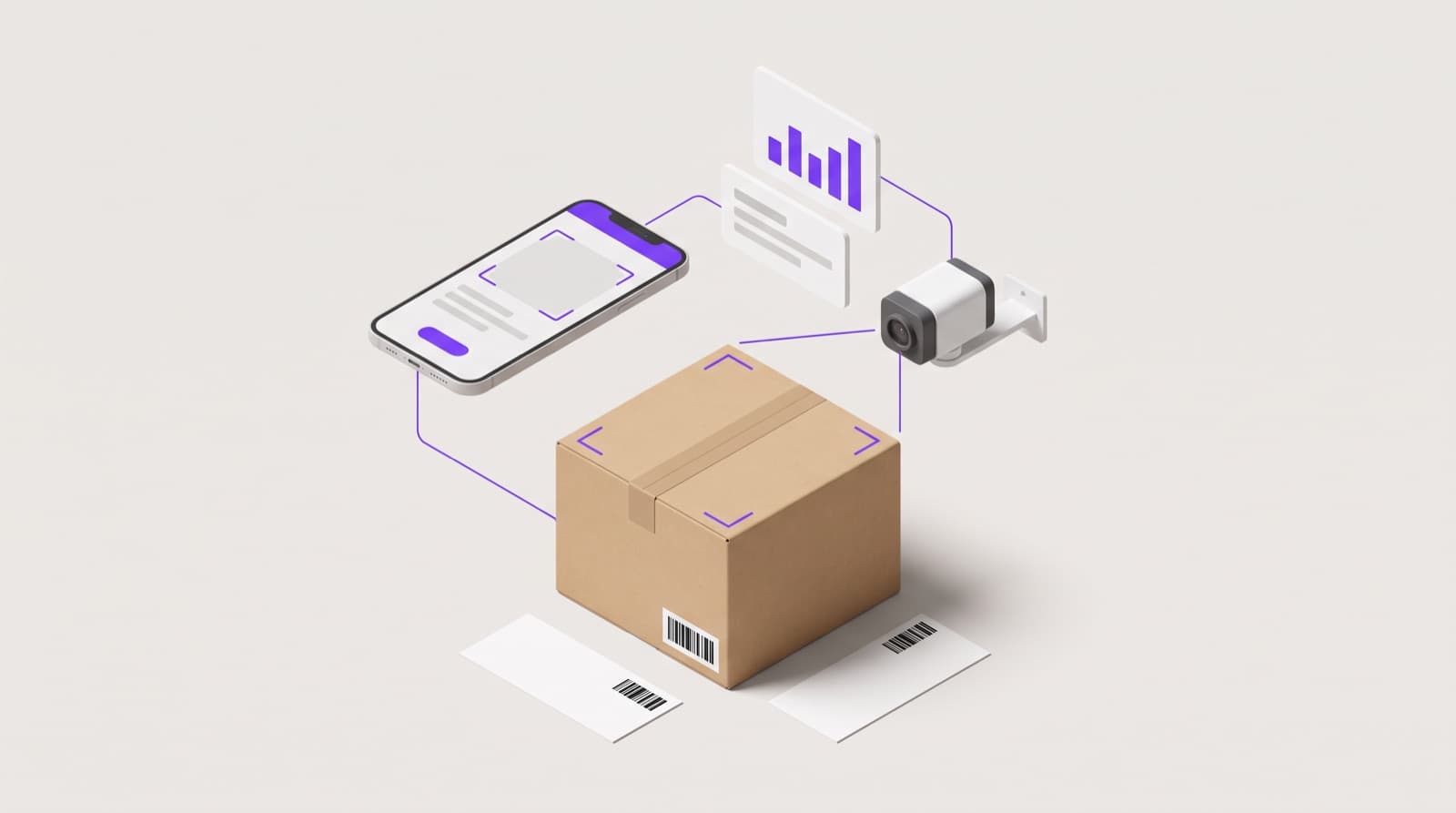
PackageX is not a WMS, a WES, or a WCS. It is the vision AI layer that feeds all three with clean, verified data from the receiving dock forward. PackageX sits alongside your existing stack rather than replacing any of it.
Here is what that looks like in practice:
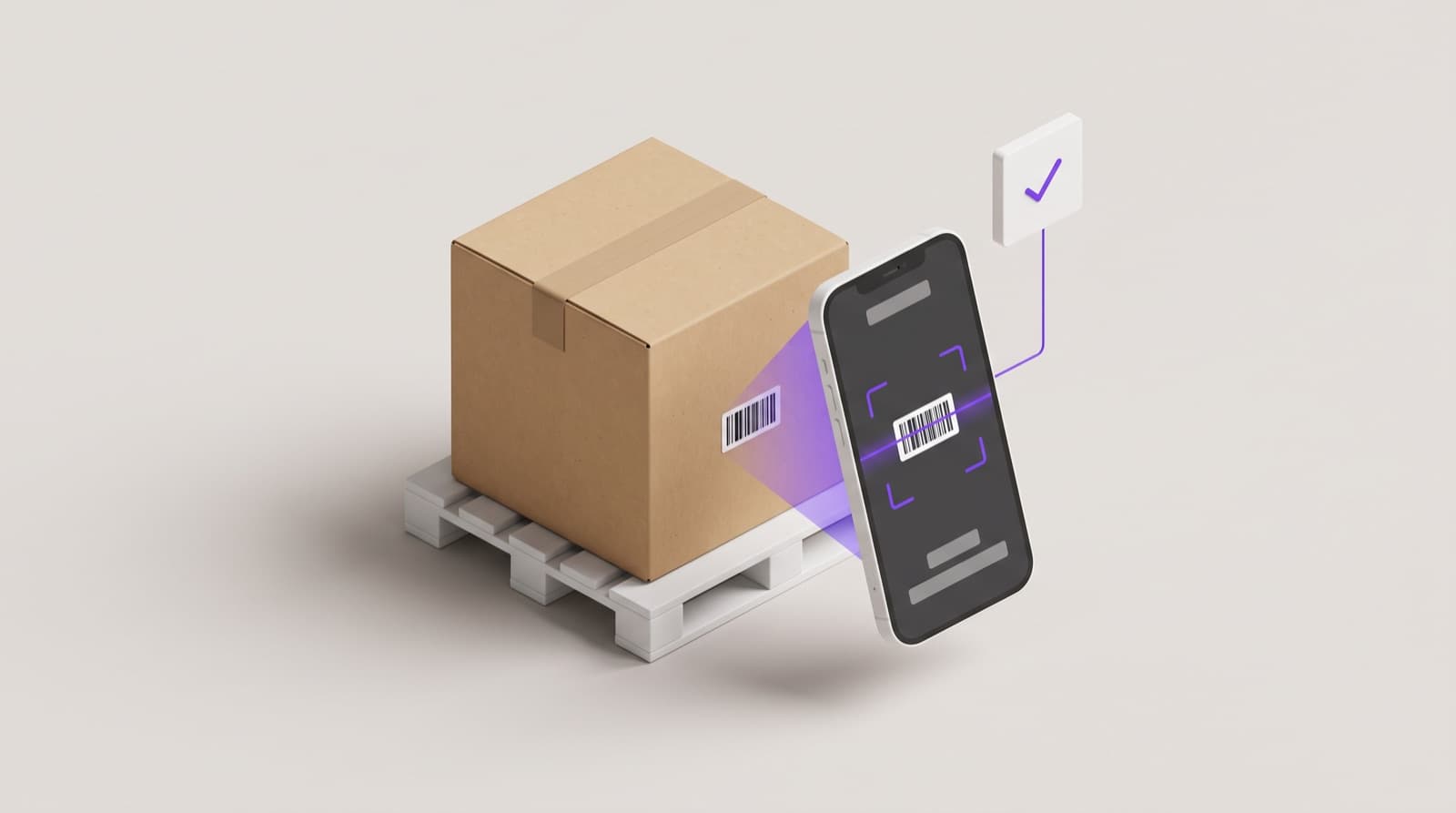
- Vision-driven data capture at the source: The VScan reads supplier labels, packing slips, and BOLs from a single camera frame, so your WMS starts with accurate inventory and your WES starts with real receipts.
- Real-time exception alerts: Damage, short shipments, and PO mismatches surface at the dock before they distort inventory records or trigger downstream chargebacks.
- Clean feeds into your existing stack: Through the PackageX API and SDK, verified events flow directly into WMS, WES, and ERP without manual re-entry.
- No hardware to rip out: Because it runs on any smartphone, tablet, or fixed camera, PackageX adds an accuracy layer without touching your WMS, WES, or WCS deployments.
Conclusion
WMS, WES, and WCS are three layers of the same warehouse stack, not three products competing for the same job. The WMS plans. The WES orchestrates. The WCS controls the machines. Understanding where each fits helps you invest in the right layer at the right time. Modern warehouses that treat the stack as one integrated system, feeding clean data into every layer, are the ones that hit their throughput and accuracy targets consistently.
Frequently Asked Questions
If I already have a WMS, do I still need a WES?
It depends on how much automation you run and how variable your demand is. If you have high SKU variety, heavy automation, or big demand swings, a WES layered on top of your WMS often delivers meaningful throughput gains without replacing anything.
What's the difference between a WCS and a WES?
A WCS controls individual machines at the millisecond level (conveyors, sorters, robots). A WES orchestrates people and machines at the second-to-minute level, deciding what should happen next across the whole floor. WCS runs the hardware; WES coordinates the operation.
Is a WES part of a WMS?
Not traditionally. WMS and WES were separate products, though modern platforms are converging. Some vendors sell WMS with embedded WES capabilities, while others sell them as separate systems that talk over APIs.
Do I need all three systems?
Not necessarily. Every facility needs a WMS. If you have automation, you need a WCS (it usually ships with the equipment). A WES is optional but delivers the biggest ROI in high-volume, high-variety, or heavily automated operations.
Which comes first: WMS, WES, or WCS?
WMS almost always comes first. It is the system of record for inventory and orders. WCS follows when you install automation. WES typically comes last, as operations mature and need real-time orchestration across people and equipment.