You drop a letter in the box on Monday. Whether it lands Wednesday or the following Tuesday depends on four things, and the stamp is only one of them.
Most domestic mail in the United States arrives within 1 to 5 business days. First-Class Mail letters have a 1 to 5 day service standard, USPS Ground Advantage packages 2 to 5 days, Priority Mail 2 to 3 days, and Priority Mail Express 1 to 3 days. Local mail is usually faster.
Those are the published standards. What happens is a separate question, and USPS answers it every quarter. Those are the published standards. What actually happens is a separate question, and USPS answers it every quarter. In the first quarter of financial year 2026, covering single-piece First-Class Mail delivered between October and December 2025, at least 96.8% arrived within the service standard plus three days. On-time performance by band ranged from 74.7% to 87.4%.
This guide gives you both numbers: what USPS promises for each service, and what it is currently delivering. It also covers what changed in 2025, why distance and drop-off time matter more than most people think, and how to get an exact estimate for your own route.
Key Takeaways
• standard answer is: 1 to 5 business days for First-Class Mail, which covers ordinary stamped letters and cards. • Only one service is guaranteed: Priority Mail Express is the only USPS service with a money-back guarantee. Priority Mail is a target, not a promise. • Plan for the standard plus three: Add three days to the published standard and you cover about 97% of mail. That is the number to quote when something matters. • The standards changed twice in 2025: USPS revised service standards in two phases during 2025. Most mail was unaffected, some got faster, and about 1 in 9 got slower. • Drop-off time is the factor people forget: Missing your local collection cutoff moves the clock to the next business day before your letter has gone anywhere.
USPS Delivery Times by Service
Two versions of this question get asked interchangeably. How long does mail take to deliver, and how long does it take to arrive? They have the same answer, because both are governed by the same thing: the service standard USPS publishes for each product, expressed as a range of days. The standard is a delivery target, not a guarantee, except for the exception noted in the table.
| Service | Service Standard | Guaranteed | What It Covers |
|---|---|---|---|
| First-Class Mail | 1 to 5 days | No | Letters, cards and flats up to 13 ounces |
| USPS Ground Advantage | 2 to 5 days | No | Packages up to 70 pounds |
| Priority Mail | 2 to 3 days | No | Faster package service, includes tracking |
| Priority Mail Express | 1 to 3 days | Yes, money-back | The fastest USPS option |
| Media Mail | 2 to 8 days | No | Books, film and educational media only |
The word "standard" does a lot of work there. Only Priority Mail Express carries a money-back guarantee. For everything else, including Priority Mail, the range is what USPS aims for, not what it owes you. That distinction matters the moment a deadline is involved. Parcels can also be delivered to a parcel locker rather than a door, and tracking marks those as delivered as soon as the item is dropped, not when you collect it.
Two more points the ranges hide. Mail delivery time is measured in business days, so a letter posted Friday afternoon has not started its 1 to 5 days until Monday. And the standard covers the journey through the postal network, not the moment you sealed the envelope.
How Long Does It Take to Mail a Letter?
For an ordinary stamped letter, 1 to 5 business days. Whether you are asking how long a letter takes to mail or how long does it take for a letter to arrive, the standard is the same, because a stamped letter is First-Class Mail either way. In practice, the range splits by distance, and knowing which end you are on is more useful than the range itself.
- Local and same-state mail: 1 to 3 business days. A letter staying inside the same city or metro area rarely needs the full window, because it is often processed at a single facility.
- Cross-country mail: 3 to 5 business days. Every additional processing facility and transport leg adds time, and cross-country mail passes through more of both.
How long does it take to send a letter is the same question with the direction reversed, and it has the same answer. There is no separate faster tier for letters. If you need a letter to arrive on a specific date, the options are Priority Mail for speed or Priority Mail Express for a guarantee, not a better class of stamp.
People still ask how long does snail mail take, and the nickname undersells it. A three-day cross-country delivery for the price of a stamp is a reasonable trade. What it is not is predictable to the day, which is the part worth planning around.
How Long Is Mail Actually Taking Right Now?
The published standards tell you what USPS is aiming for. Its quarterly performance reporting tells you how often it hits the target, and that is the number almost nobody looks up.
Here is Single-Piece First-Class Mail on-time performance for the first quarter of financial year 2026, covering mail delivered between 1 October and 31 December 2025.
| Service Standard | Delivered On Time | What That Means in Practice |
|---|---|---|
| Two-Day | 84.7% | About one piece in six misses the window |
| Three-Day | 78.4% | About one in five misses |
| Four-Day | 74.7% | The weakest band. One in four misses |
| Five-Day | 87.4% | The most reliable band of the four |
Two things stand out. The four-day band is the least reliable, not the longest one, which runs against the intuition that more time means more certainty. And the five-day band performs best, most likely because a wider window absorbs the delays that break a tighter one.
Then there is the figure that reframes the question entirely. At least 96.8% of mail across all service standards was delivered within the service standard plus three days. So the practical answer to when your mail will arrive isn't the standard on its own. It is the standard, with three days of headroom for the roughly one piece in five that runs late. If something must be there by a date, work backward from standard plus three.
What Changed in 2025
If a delivery time you relied on stopped holding, this is probably why. USPS revised its service standards in two phases during 2025 as part of its Delivering for America plan.
- Most mail did not change: 75% of First-Class Mail kept the same service standard.
- Some got faster: 14% moved to a faster standard, which USPS combines with the unchanged share to say almost 90% of mail maintains or improves.
- Some got slower: 11%, roughly one piece in nine, now has a slower standard than before.
- The overall shape: almost 70% of First-Class Mail now carries a service standard of three days or less.
The 1 to 5 day range for First-Class Mail itself did not change. What moved was which mail falls where inside that range, based on how USPS routes it. Day ranges for end-to-end Marketing Mail, Periodicals and Package Services were shortened.
USPS projects the changes will save at least USD 36 billion over ten years. The wider context is a market that is barely growing. Mordor Intelligence puts global postal services at USD 336.67 billion in 2026, reaching USD 359.94 billion by 2031, a compound annual growth rate of just 1.35%. Flat revenue against rising network costs drives standards revisions, which is why the 2025 changes are unlikely to be the last.
What Affects Mail Delivery Time
Four variables determine where your mail lands within the range.
- Distance: Mail crossing multiple processing zones takes longer than mail staying local, because each additional facility and transport leg adds handling time.
- Drop-Off Time: Every collection point has a daily cutoff. Miss it, and your mail has not entered the network, so the clock starts the next business day. This is the most common reason mail seems to take a day longer than it should.
- Holidays and Weather: Federal holidays are not business days, and severe weather disrupts transport schedules. December is the hardest month to predict, either way.
- The Service You Chose: The difference between a 1 to 5 day standard and a 1 to 3 day guarantee is the product you paid for, not the route it takes.
Only the first is outside your control. Drop-off timing, service selection, and avoiding holiday weeks are all decisions, and together they account for most of the variance people blame on the post.
How Long Does Mail Take From ZIP Code to ZIP Code?
This is the question the general ranges cannot answer, because the answer depends on the specific pair of ZIP codes and how USPS routes between them.
USPS publishes an official Service Commitments tool that takes an origin ZIP code, a destination ZIP code, and a mailing date, and returns the service standard for that exact route. It is the only source that accounts for your actual routing rather than a national average, and it is free to use.
- Mail traveling an hour away: Generally 1 to 2 business days, and often overnight for mail staying within one processing area. Distance measured in driving hours is a poor guide, because routing follows processing facilities rather than roads.
- Mail staying in the same state: Usually 1 to 3 business days, though a geographically large state can behave like cross-country mail.
- Coast to coast: Typically 3 to 5 business days for First-Class Mail.
For international mail, the ranges are wider and depend on the destination country and its customs processing, which sits outside the USPS network entirely. Check the destination country rather than assuming a domestic-style range.
Standard, Priority and Express Compared
How long does standard mail take compared with the paid tiers? Standard mail delivery time and Priority Mail delivery time differ by about two days at the outside. Whether that is worth paying for depends less on speed than on whether you need a guarantee.
| Service | Days | Tracking | Choose It When |
|---|---|---|---|
| First-Class Mail | 1 to 5 | No | Ordinary letters and cards with no deadline |
| Priority Mail | 2 to 3 | Yes | You want a narrower window and visibility |
| Priority Mail Express | 1 to 3 | Yes | The date is fixed, and you need recourse if it slips |
Note what the middle row does not say. Priority Mail is faster on average, and it is still not guaranteed, so paying for it buys a narrower target and tracking rather than certainty. If a missed date has real consequences, Express is the only service that backs the promise with money.
Regular mail delivery time is also perfectly adequate for most of what people send. The mistake is not using First-Class Mail. It is using it for something with a deadline and then having no recourse when the fifth day passes.
How Long Does Mail Forwarding Take?
Mail forwarding runs on its own timetable, and the numbers are easy to get wrong because they change.
- Standard forwarding lasts: 12 months for a permanent change of address.
- Temporary forwarding runs: 15 days up to 1 year.
- Paid extensions add: 6, 12 or 18 more months, with 18 months the maximum.
- Forwarding may begin: Within 3 business days of your request, though USPS advises allowing up to 2 weeks before relying on it.
- What actually gets forwarded: First-Class Mail and periodicals are forwarded free. USPS Marketing Mail is not forwarded at all, which is why the junk mail stops and the magazines follow you.
- When the period ends: Mail is returned to sender for 6 months with a label showing your new address.
Forwarded mail is redirected piece by piece as it arrives, so each item takes its normal transit time plus the redirection leg. The practical planning number is the two-week setup window, not the per-letter delay.
When Mail Does Not Arrive
Late is normal. Missing is different, and USPS has a defined process with a waiting period attached.
You can submit a Missing Mail search request starting 7 days after the mailing date. Before that window opens, there is no formal action to take, which is frustrating but worth knowing so you are not waiting on a process that has not started.
If you are tracking a package rather than a letter and the status has stopped updating, the scan sequence usually explains it. A shipment showing as received but not yet accepted is at a specific point in the process, and that status has its own meaning and its own timeline.
Where PackageX Fits
If you are asking when mail arrives because someone is waiting on it, the harder problem is usually what happens after delivery. Mail can reach a building in the morning and reach the recipient days later, which loses more time than the postal network ever did. Here is where PackageX helps.
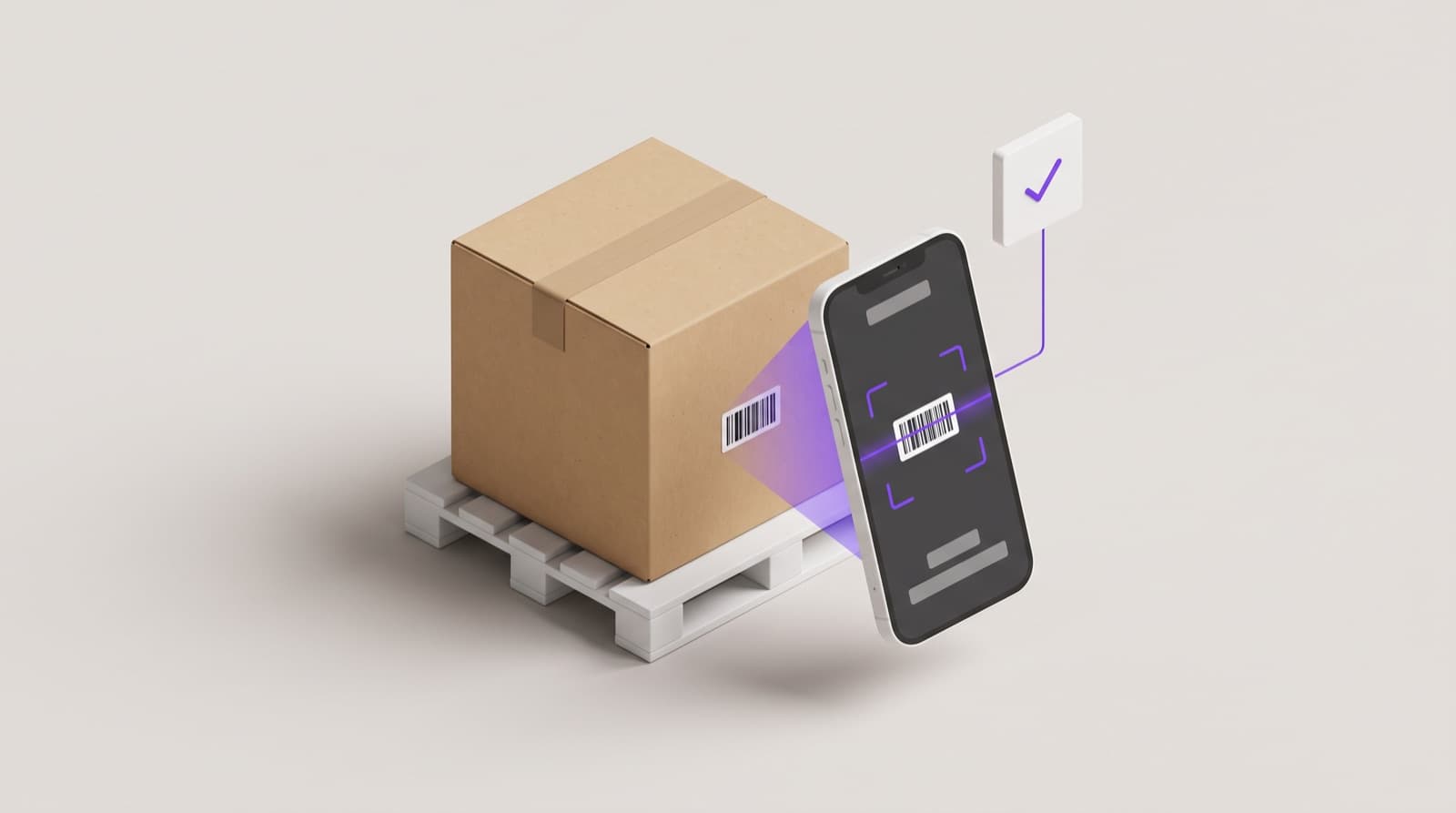
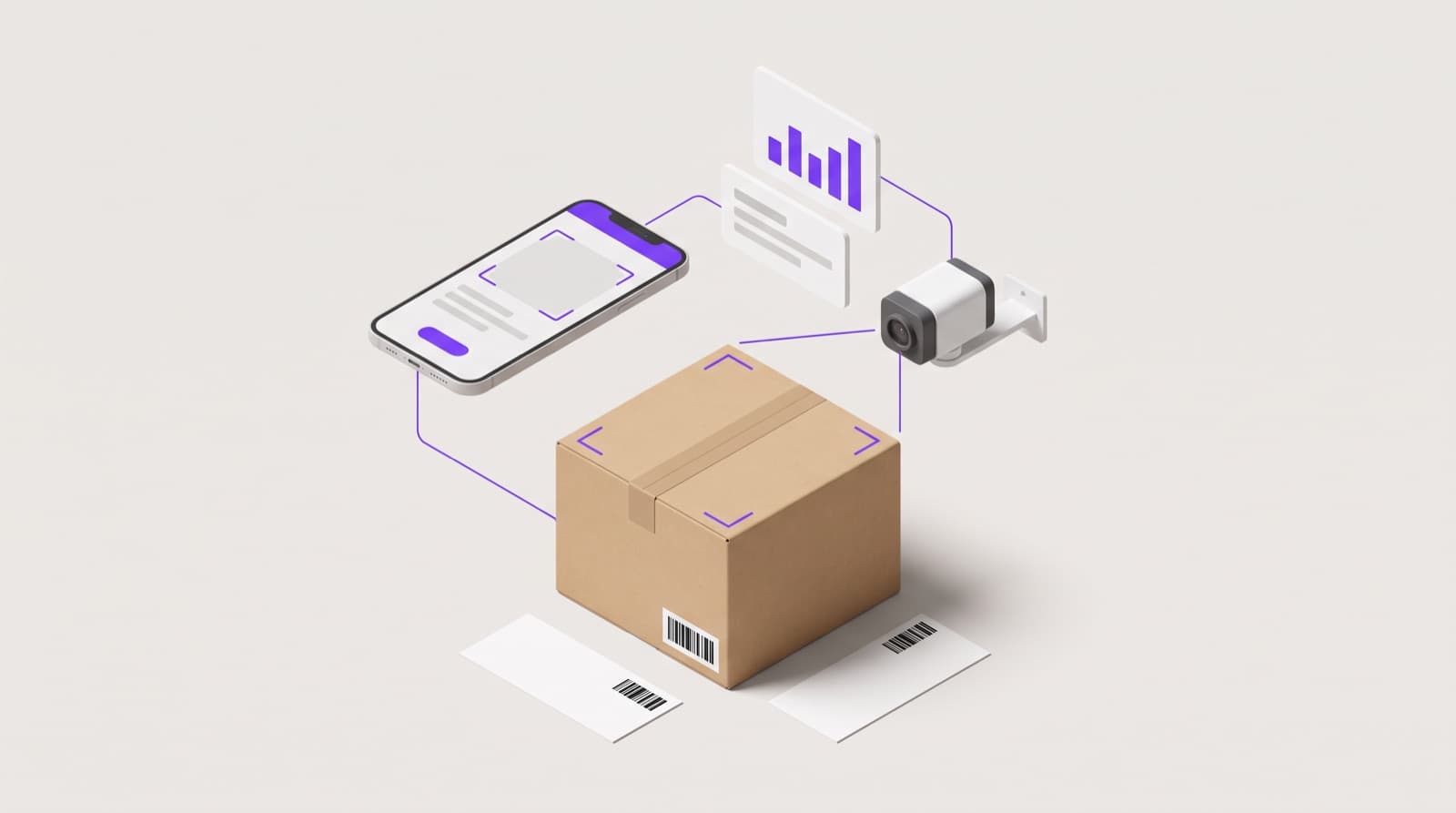
- Scan on Arrival: A phone or tablet app reads every bit of text and the barcode off the label within seconds, with no new hardware required.
- Notify the Recipient: The item is matched against your directory and the recipient gets an email, text, or WhatsApp notification.
- Give Them a Choice: They can take a digital copy, or have the item held, forwarded, or destroyed.
- Prove the Handover: Pickup is captured with a signature, RFID, or a photo of the person collecting.
- See What Is Sitting There: A dashboard shows what is on hand and how long each item has been in the building.
FAQs
1. Can You Mail a Letter in 2 Days?
Often, but not reliably. First-Class Mail has a 1 to 5 day standard, and local mail frequently arrives in 1 to 3 days. For a firm two-day commitment, use Priority Mail Express, which is the only USPS service with a money-back guarantee.
2. How Long Is US Mail Taking Right Now?
In FY2026 Q1, USPS delivered 84.7% of Two-Day, 78.4% of Three-Day, 74.7% of Four-Day, and 87.4% of Five-Day Single-Piece First-Class Mail on time. At least 96.8% arrived within the service standard plus three days.
3. How Long Does It Normally Take to Get a Letter in the Mail?
One to five business days, and typically 1 to 3 days for local mail. Business days exclude weekends and federal holidays, so a letter posted on Friday afternoon usually starts its journey the following Monday.
4. How Long Will Mail Take From ZIP Code to ZIP Code?
It depends on how USPS routes between the two ZIP codes. The official USPS Service Commitments tool returns the service standard for a specific origin, destination, and mailing date, which is more accurate than any general range.
5. How Long Does Mail Take Internationally?
Longer and less predictably than domestic mail, because delivery depends on the destination country and its customs processing. Check the specific country rather than applying a domestic range, and expect customs to be the variable.