Every plant runs on two versions of reality: the plan in the system, and the movement on the floor. When they drift apart, the line stops.
That gap is where manufacturing logistics execution lives, and closing it is now a large and growing category of spend. The global manufacturing logistics market was valued at USD 149.6 billion in 2023 and is projected to grow at a CAGR of over 9% through 2032, as manufacturers put more capital behind the software, automation, and services that keep production plans and physical reality aligned.
This article is about that execution layer: where material handoffs break, which system owns which decision, and how to measure whether your floor and your records actually agree.
Key Takeaways
• Manufacturing logistics execution converts a released production plan into confirmed physical movement, then records every transaction accurately. • Execution breaks at five predictable handoffs: goods receipt, yard and dock scheduling, put-away, lineside replenishment, and the outbound handoff. • The execution stack includes ERP, MES, WMS, WES, and WCS, plus a sixth layer nobody names: data capture. • Instrument goods receipt first. It has the highest leverage and the lowest effort in a rollout. • The KPI that connects the dock to the P&L is line-stop hours attributable to material shortage.
What Manufacturing Logistics Execution Actually Means
The logistics execution process is the set of activities that converts a released production plan into confirmed physical movement: booking and receiving inbound freight, staging and moving material through the plant, and dispatching finished goods, while recording each transaction accurately enough that the system of record matches the floor.
Planning and execution answer different questions. Planning decides what should happen and when. Execution governs what actually happened, in what order, and whether anyone recorded it. A plant can have excellent planning and terrible execution, and the symptom looks identical to a bad forecast: a stopped line.
Execution spans three domains:
- Inbound: Freight arrival, goods receipt, and put-away.
- Intralogistics: Everything inside the four walls, including staging, work-in-progress (WIP) moves, kitting, and lineside replenishment.
- Outbound: Picking, packing, dispatch, and the handoff to a carrier.
The Five Points Where Manufacturing Logistics Execution Breaks
Execution rarely fails gradually. It fails at specific handoffs, and it is almost always the same five.
- Goods Receipt: A mistyped Bill of Lading, a missing ASN line, a pallet counted by eye. The receiving clerk moves on; the error does not. It becomes phantom inventory, stock the system swears is on hand, and nobody can find. The line stops days later for material you technically own.
- Yard and Dock Scheduling: Unscheduled arrivals stack up, trailers queue, truck turn time doubles, and detention and demurrage charges start accruing. Meanwhile, the one inbound load production is waiting on sits third in line behind two deliveries nobody needed today.
- Put-Away and Staging: Material is received but not located. Manual cycle counting can't keep pace, inventory accuracy drifts, and pickers start walking the racks on memory. Accuracy erosion here is quiet until the day it isn't.
- Lineside Replenishment: This is the most under-instrumented handoff in most plants. Kits get built, and WIP gets moved because an experienced operator knows the line needs it: physically correct, digitally invisible. The floor and the system diverge, and every downstream number inherits the gap.
- The Outbound Handoff: Product comes off the line finished and then dwells. Missed dock appointments, staging congestion, no trailer. Throughput looks fine on the production report, and on-time-in-full (OTIF) quietly slides.
Look at what these five have in common. Only two are movement failures. All five are recording failures. The pallet usually gets where it needs to go; a human makes sure of that. What doesn't happen is the transaction. And once the record diverges from reality, every system built on top of that record is confidently wrong.
The Manufacturing Logistics Execution Stack: ERP, MES, WMS, WES, and the Layer Nobody Names
Ask five people in a plant who owns material flow, and you'll get five answers, most of them a software acronym. The layers are well defined (ISA-95 has separated them for decades), but the boundaries blur in practice, which is exactly how gaps form.
| System | What It Decides | Time Horizon | Typically Owned By | Where It Fails Alone |
|---|---|---|---|---|
| ERP | What to make, buy,and ship; commercial and financial truth | Days to months | Finance / IT | Knows quantities, blind to the floor |
| MES | How a production order executes: routing, batch, genealogy, quality | Shift to minutes | Manufacturing / production | Owns the machine, not the material feeding it |
| WMS | Where inventory sits, what gets picked, in what order | Hours to shift | Warehouse / logistics | Plans work but can't sequence it live |
| WES | Which task runs next, on which resource, right now | Minutes to seconds | Logistics / automation | Optimizes flow it can't see accurately |
| WCS | Physical equipment commands: conveyors, sorters, AS/RS | Milliseconds | Automation / engineering | Executes instructions without context |
A warehouse execution system (WES) is the layer between planning and physical automation. Where a WMS decides what work exists, a WES decides what runs next: sequencing tasks, balancing labor against machine capacity, and rebalancing continuously as conditions change. WES and MES sit at comparable heights in the stack, but MES is scoped to production and WMS/WES are scoped to material. That distinction is why plants running excellent MES still lose hours to material starvation: nothing in the production layer is accountable for the pallet.
Then there's the sixth layer, and it doesn't have a vendor category: data capture. Every system above assumes an accurate transaction arrived. None of them create one. A WES optimizing against inventory that's 8% wrong will confidently optimize you into a stockout. Capture at the point of physical work (scanning the BOL at the dock, verifying the kit at lineside, counting by camera instead of clipboard) is not a nice-to-have bolted on at the end. It's the foundation the other five are standing on.
A Six-Step Framework for Building the Execution Layer
- Map the Handoffs, Not the Systems: Draw every point where custody or data ownership changes hands: supplier to carrier, carrier to dock, dock to warehouse, warehouse to lineside, line to staging, staging to carrier. Execution leaks at boundaries, not inside departments. Most plants have never drawn this map, and the exercise alone surfaces two or three gaps nobody owned.
- Instrument Goods Receipt First: Highest leverage, lowest effort, and it fixes the phantom-inventory chain at the source. Capture label and document data at the dock so every layer above inherits clean data. Fixing receiving accuracy later means fixing it in five systems at once.
- Schedule the Front Door: Dock appointments plus yard management and visibility turn arrivals from a queue into a plan, the cheapest insurance available against congestion becoming a line-stop, and it converts detention and demurrage from a cost of doing business into a variance you can manage.
- Close the Lineside Loop: Make the WIP move and the kit build recorded transactions rather than tribal knowledge. This is usually the largest gap between floor reality and system record, and the least resisted change: operators want credit for work they're already doing.
- Design for Exceptions, Not the Happy Path: Everyone skips this. Every vendor diagram shows the truck arriving on time with a correct ASN. Define, in writing: who gets alerted when the load is late, what happens when the ASN doesn't match the pallet, what the fallback is when a scan gets missed. Execution is exception management. A process that only works when nothing goes wrong is not a process.
- Integrate Before You Add Tools: Prioritize open APIs over point solutions. One more disconnected system is a net negative: a new silo and a new login in exchange for solving one problem. If a tool can't write back to your WMS or ERP, it isn't part of your execution layer; it's a parallel record waiting to disagree with the real one.
If building internally isn't realistic, embedded or in-plant models are a legitimate alternative: specialist manufacturing logistics companies running finished-goods flow on-site or plant-adjacent. That's an outsourcing decision, not an execution-design one, and the six steps still describe what to hold a partner to.
The KPIs That Prove Execution Is Working
Planning KPIs measure forecast quality. Execution KPIs measure something narrower and more revealing: whether your physical reality and your digital record agree.
| Metric | What It Exposes | Where to Instrument It |
|---|---|---|
| Inventory Accuracy Rate | Cumulative capture failure | Cycle counts vs. system |
| Dock-to-Stock Cycle Time | Receiving and put-away friction | Goods receipt to put-away confirm |
| Truck Turn Time | Yard and dock coordination | Gate in to gate out |
| Line-Stop Hours From Material Shortage | The true cost of execution failure | Downtime reason codes |
| First-Pass Accuracy of Receiving Data | Whether capture is working at all | BOL/ASN vs. actual received |
| OTIF | Outbound handoff reliability | Promise date vs. ship date |
| Detention and Demurrage Spend | Scheduling discipline | Carrier invoices |
The one to add if you track nothing else is line-stop hours attributable to material shortage. Most plants log downtime against equipment and label the rest "other," which is precisely how logistics execution stays invisible to the people who fund it. Splitting material-caused stoppages out of that bucket is the single change that connects the dock to the P&L, and it usually reveals a larger number than anyone expected.
Dashboards matter less than reason codes. A real-time warehouse management system dashboard is useful, but only if the underlying events are captured accurately; otherwise you've built a very fast way to be wrong.
Where Manufacturing Logistics Execution Is Heading
Industry commentators have made the structural argument clearly: manufacturing execution is becoming progressively more software-defined, with competitiveness shaped less by automation hardware and more by the software layers coordinating workflows, operational context, and real-time execution. Traditional execution systems were built to record transactions, enforce workflows, and monitor equipment states, not for continuous coordination under volatility.
Two forces compound it. Regionalization and near-shoring mean more nodes, more suppliers, and more handoffs, which is more execution surface area to get wrong. And capture is getting cheap: vision AI on standard mobile devices turns any operator into an instrumentation point, which is what finally makes a real execution layer affordable below enterprise scale.
The plants that win the next decade won't be the most automated ones. They'll be the ones whose records match their floors.
Closing the Gap Between Plan and Pallet
Every execution failure covered above shares one root cause: the physical event happens, but the transaction lags, gets keyed wrong, or never gets recorded at all. PackageX attacks that gap with vision AI that runs on hardware you already own, so capture happens at the point of work, and the systems above it stay honest.
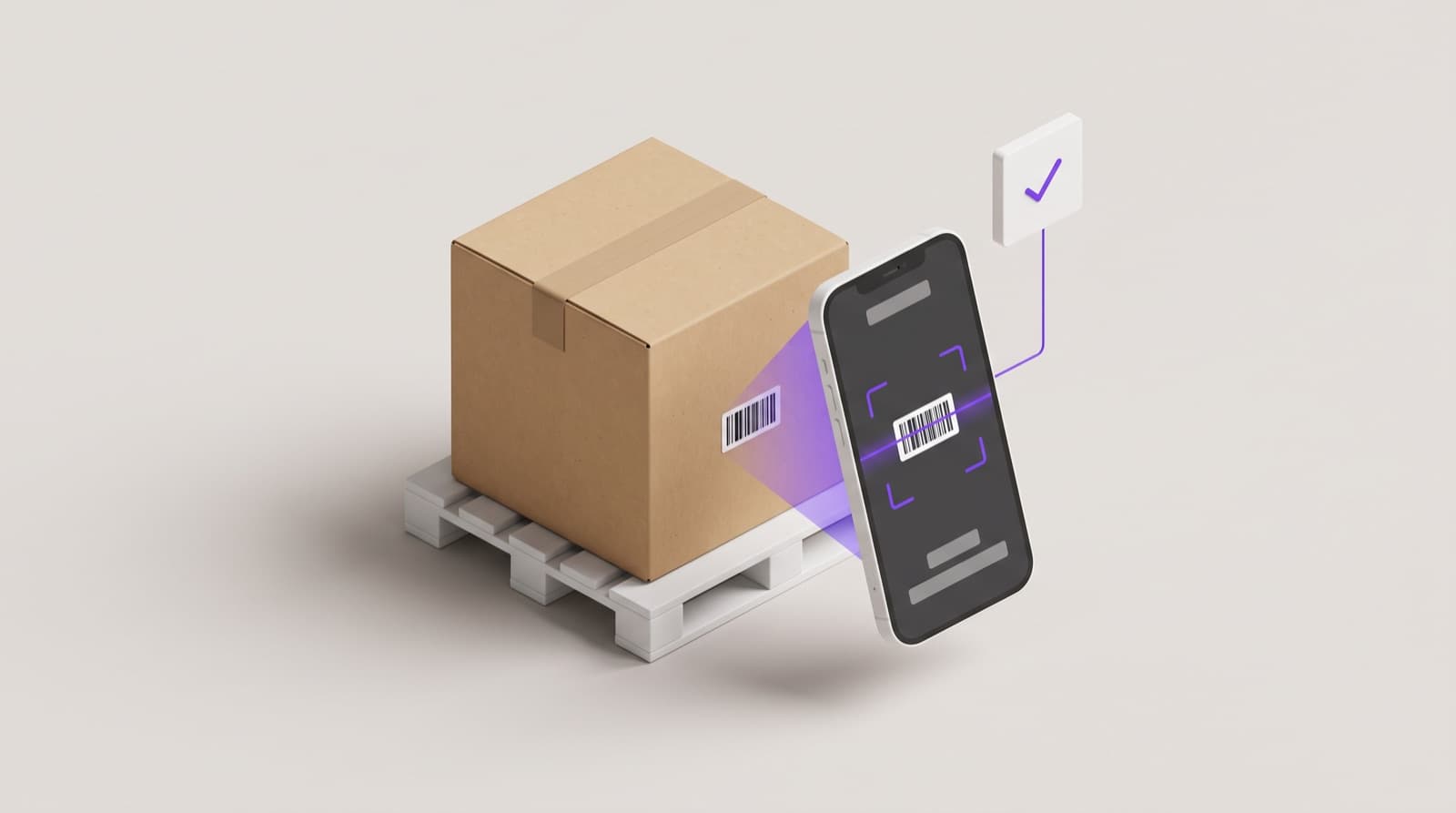
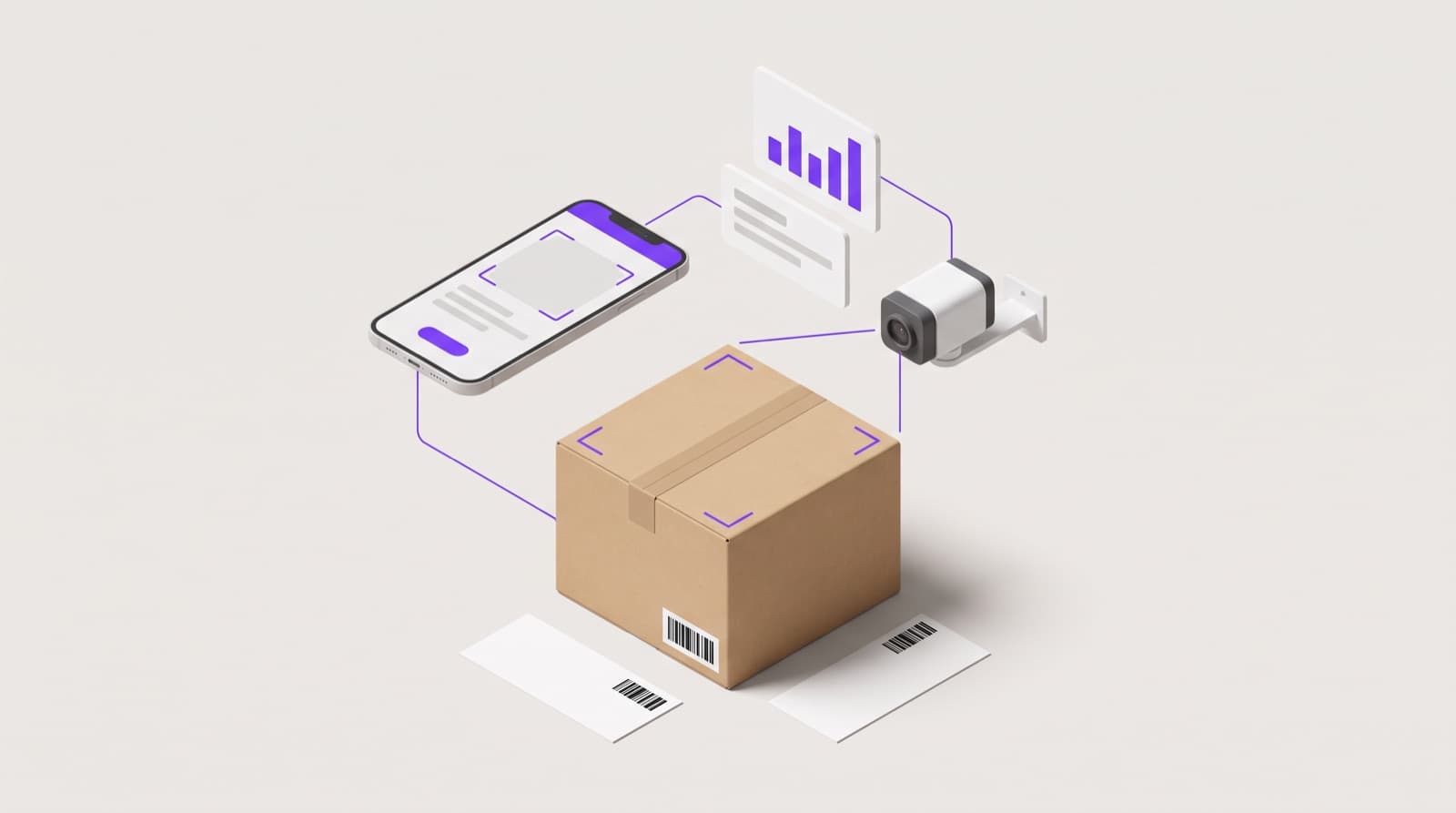
- Any Device Becomes a Scanner: Any smartphone, tablet, or fixed camera can act as an AI scanner that reads barcodes, QR codes, and text on BOLs, packing slips, and case labels at the dock or the workstation.
- Receipts and Moves Captured in Real Time: Goods receipt, kit build, WIP move, and outbound scan all update the record the moment they happen, not at shift end.
- Exceptions Surface at the Handoff: Damage, ASN mismatch, short shipments, and wrong-bin scans trigger alerts on the spot, where the correction is cheap and someone accountable is still there.
- Verified Data Flows Into Your Existing Stack: Captures sync through the PackageX API and SDK into your WMS and ERP, with a timestamped, image-attached record for every event.
PackageX is not another silo above the stack. It is the capture layer underneath it, the one nobody has a vendor category for. It fills in the transaction most plants leave to memory, and the systems you already run keep working, only now on data that reflects what actually happened.
Start Where the Data Enters
Execution is where logistics strategy either survives contact with the plant floor or quietly doesn't. If your records and your floor disagree, fix capture first. Everything above it inherits the error.
Frequently Asked Questions
What Is a Logistics Execution System (LES)?
A Logistics Execution System (LES) is a software category that combines warehouse management, transportation management, and shipping under one platform. The term is broader than a WMS on its own because it includes yard, dock, and outbound freight coordination in the same system.
How Does a TMS Fit Into Manufacturing Logistics Execution?
A Transportation Management System (TMS) covers the freight side of execution: carrier selection, rate shopping, load tendering, and shipment tracking. In manufacturing, it usually sits alongside the WMS or LES and hands off at the dock.
What Is the Difference Between Logistics Execution and Supply Chain Execution?
Supply chain execution is the broader term, covering everything from supplier collaboration through customer delivery. Logistics execution is the movement-and-record layer inside that, focused on freight, warehouse, and internal material moves. In practice, most teams use the terms interchangeably, but supply chain execution includes procurement and order management, which logistics execution does not.