In modern logistics, leaders often focus on optimization. Faster picking, smarter routing, tighter labor models, and better forecasting matter the most. But many systemic failures do not begin in advanced workflows or outbound execution. They begin at a far more ordinary point in the operation.
The receiving dock.
It is easy to treat receiving as a procedural checkpoint. Freight arrives, is counted and logged, then moved along as the system updates and operations continue without pause. Yet this is the moment when external commitments meet internal execution.
When errors occur later in the process, they are often treated as isolated breakdowns. In reality, they are frequently symptoms of something that entered the system much earlier and went unchallenged.
The Failure That Looked Like a Shipping Problem
“The loading error that cost us a retail partnership didn’t start with loading. It started 72 hours earlier at receiving.”
At first, it appeared to be a shipping issue because incorrect quantities were released from the warehouse, triggering a compliance violation by the retailer. That violation led to SLA breaches, which then resulted in chargebacks, and as financial penalties mounted, the focus shifted to outbound logistics operations.
However, upon review, it became clear that the loading team had shipped exactly what the system showed as available inventory, shifting the focus from execution to data accuracy. That shift pointed back to receiving, where the issue had quietly entered the system three days earlier.
For example, an inbound shipment had arrived and was processed as complete:
- Quantities were entered into the system
- The purchase order was closed
- Inventory was released for allocation
Because the system showed everything as correct, planning moved ahead, and picking started without delay. But once picking began, shortages showed up. To avoid late shipments, the team made quick fixes on the spot.
Each fix looked small at the time. Yet every adjustment added to the original error passed the problem down the line to shipping.
Studies show that inventory record inaccuracies impact over 65% of retail and logistics operations, increasing the risk of stock discrepancies and operational errors.
They substituted SKUs, adjusted quantities, and made minor corrections, believing those fixes would prevent delays. Instead, each quick fix added to the original error, making the problem worse and pushing it forward into shipping.
By the time the shipment reached outbound staging, the issue had become visible to the customer, which turned an internal data error into an external failure. Within the operation, teams debated what went wrong, yet most focused on the final shipping outcome rather than the earlier receiving entry that had set everything in motion.
This is the leadership insight: receiving is not simply an operational step because it establishes the integrity of every downstream process. Once incorrect information is accepted at intake, it becomes operational truth, and the organization executes efficiently against a flawed foundation.
When a warehouse appears to break at loading, the fracture often begins at receiving.
Receiving as the Operational Boundary of Truth
Receiving sits at a critical operational boundary where external commitments intersect with physical reality. Advance ship notices, purchase orders, and supplier confirmations represent what should arrive. What actually arrives at the dock often includes variance, damage, substitutions, and inconsistencies that require interpretation. This intersection defines the integrity of the entire operation.
According to Industry reports, inventory distortion costs businesses $1.73 trillion globally each year.
Every downstream workflow depends on the accuracy of the records received. Putaway logic, inventory availability, allocation decisions, picking priorities, and fulfillment commitments all rely on the assumption that inbound data is correct.
Systems of record process what is entered without independently validating whether it reflects physical conditions on the floor.
In most warehouse environments, receiving is treated as a transactional checkpoint rather than a structural control point.
If this boundary is weak, instability propagates throughout the operation. Inventory discrepancies, service failures, and planning inefficiencies often originate here.
Receiving is the only moment where physical truth can be established before it becomes a digital assumption that drives every subsequent decision.
When Inventory Accuracy Becomes Assumed Rather Than Verified
Most warehouse systems are designed to trust the information entered at receiving. Once data is captured and submitted, it becomes the foundation for planning, allocation, replenishment, and reporting. The system processes what it receives without independently validating whether it reflects physical reality at the dock.
Over time, this design creates a structural gap between the physical and the digital.
The Assumption Built Into Most WMS Platforms
At intake, the system accepts data as truth. From that point forward, every downstream workflow depends on it.
- If 100 units are entered, the system plans for 100 units.
- If the wrong SKU is scanned, inventory shifts silently in the database.
- If the product condition is misjudged, damaged goods enter the sellable stock.
The system remains internally consistent even when it is externally inaccurate.
Consistency Is Not the Same as Correctness
Systems of Record are built to validate transactional consistency, not physical correctness.
They ensure:
- Required fields are completed
- Quantities reconcile mathematically
- Workflow steps follow predefined logic
They do not ensure:
- The physical count matches the entry
- The item scanned matches the purchase order
- The condition assessment reflects the actual product state
This distinction is critical at scale.
Why Reported Accuracy Can Be Misleading
A warehouse may report 99% inventory accuracy because the system measures alignment against recorded entries. It does not measure alignment against physical truth at intake.
Operational leaders often focus on optimizing labor utilization, pick rates, and throughput. However, when the intake data is flawed, optimization amplifies distortion rather than performance.
Efficiency applied to inaccurate inputs accelerates misalignment. Establishing verified truth at receiving is therefore not an operational enhancement. It is a structural control point that determines the reliability of everything that follows.
Operational Ripple Effects: How Receiving Errors Multiply Across the Warehouse
A discrepancy in receiving rarely stays contained. Once inaccurate information enters the system, it begins to influence every downstream workflow. The impact is not immediate or dramatic. Instead, it spreads quietly across operations until it surfaces in a visible failure.
Below is how that cascade unfolds in practice.
Putaway Distortion
When incorrect quantities or SKUs are entered at intake:
- Items are assigned to the wrong storage locations
- Slotting logic becomes misaligned with actual inventory
- High velocity products may be misplaced
This creates structural misalignment between physical inventory and system records from the very first movement.
Inventory Mismatch
As goods are stored:
- The WMS reflects what was recorded, not what physically exists
- Available inventory appears higher or lower than reality
- Planning and allocation decisions rely on inaccurate assumptions
The system remains internally consistent while being externally incorrect.
Picking Instability
During order fulfillment:
- Pickers encounter missing or mislocated items
- Workarounds become common practice
- Exception handling consumes labor time
Over time, teams adapt to instability rather than resolving its source.
Staging as a Late Detection Point
Errors often surface when:
- Orders are consolidated for shipment
- Quantities are reconciled against customer expectations
- Discrepancies require urgent correction
By this stage, correction is more disruptive and more costly.
Loading as Visible Failure
The final impact appears when:
- Shipments are short
- Incorrect items are dispatched
- Delivery commitments are missed
Customers experience the breakdown at loading, even though it originated at receiving.
Errors do not move in isolation. They accumulate across workflows and become operational risk only when exposed at the edge of customer interaction.
Downstream Automation Cannot Correct Upstream Structural Weakness
Across the logistics industry, capital investment continues to concentrate on downstream automation. Organizations prioritize technologies that deliver speed, efficiency, and deeper warehouse optimization.
Where Investment Typically Flows
- Picking robots to accelerate order fulfillment
- Sortation systems to increase throughput
- Optimization engines to refine slotting and routing
- Forecasting tools to improve planning accuracy
These investments generate measurable gains. However, they assume that the data entering the system is accurate. Most downstream automation processes originate from receiving. If those records are incomplete, miscounted, or misidentified, every automated decision that follows compounds the error.
The Structural Limitation
Automation enhances execution. When inbound inputs are corrupted, automation scales the inaccuracy rather than correcting it. Faster picking and smarter routing cannot resolve inventory that was recorded incorrectly at intake.
This is why receiving represents the highest leverage control point in warehouse operations. Stability downstream depends on verification upstream. Without structural integrity at receiving, performance improvements elsewhere remain fragile.
Establishing Structural Truth at Receiving
If receiving is the operational boundary between suppliers and internal execution, it must establish three forms of structural truth before inventory enters the system. These verifications protect downstream planning, fulfillment, and financial performance.
1. Quantity Verification
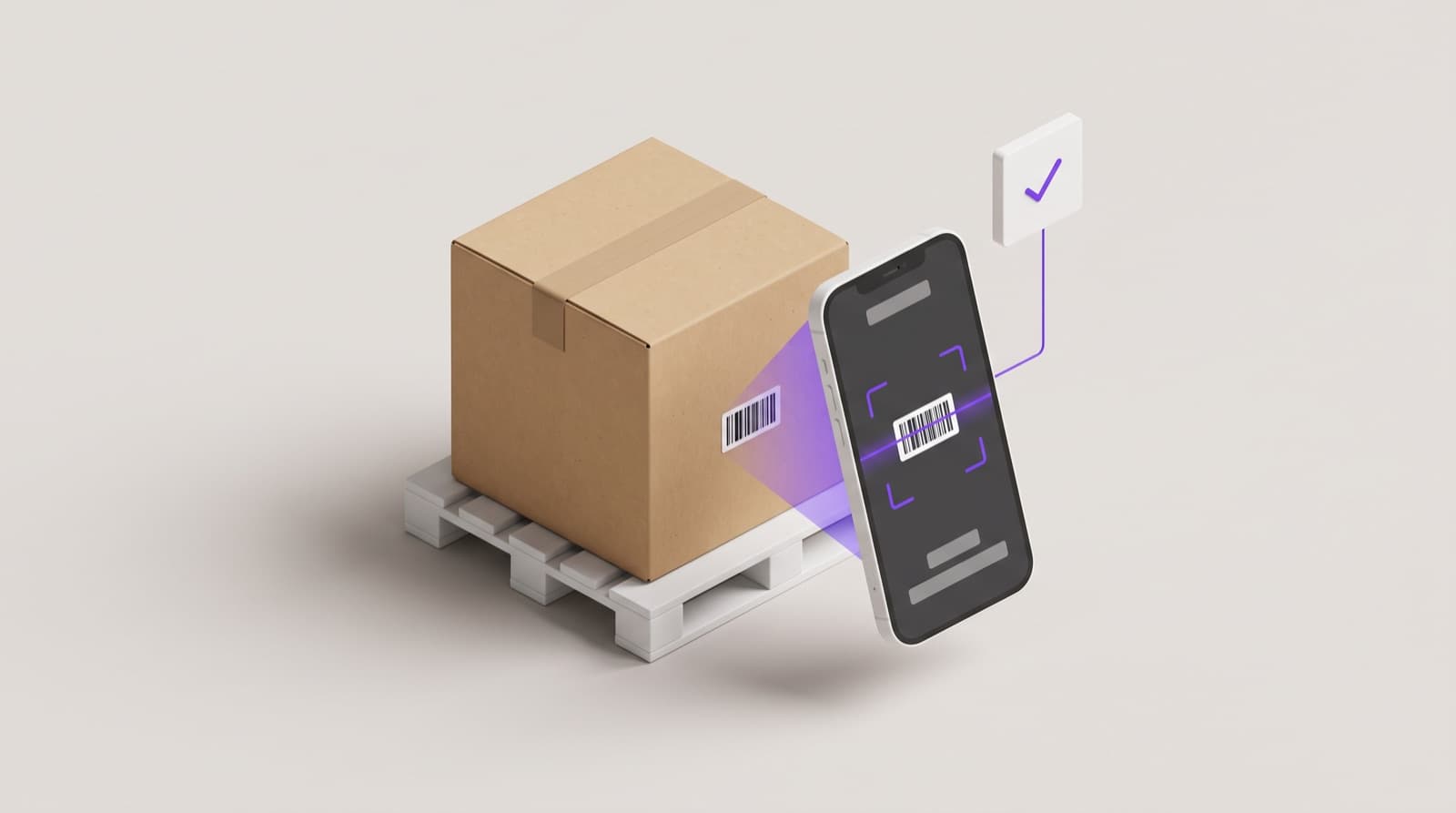
Quantity verification confirms that the physical count matches the supplier commitment.
- Validate units against the purchase order or ASN
- Detect shortages and overages before system entry
- Prevent inaccurate inventory balances from propagating
Without reliable quantity confirmation, planning assumptions become speculative. Forecasting, replenishment, and allocation decisions depend on accurate intake numbers.
2. Identity Verification
Identity verification ensures that what arrived is exactly what was ordered.
- Confirm SKU accuracy
- Validate item codes and purchase order alignment
- Prevent substitution errors from entering inventory
If identity is not verified at intake, misclassified inventory flows through the system undetected. This leads to picking errors, fulfillment delays, and additional reconciliation effort later in the cycle.
3. Condition Verification
Condition verification determines whether received goods meet quality and compliance standards.
- Document visible damage
- Confirm packaging integrity
- Flag exceptions before items become available for sale or use
When condition checks are inconsistent, liability shifts downstream to operations, customer service, and finance teams.
Operational Shift: From Systems of Record to Systems of Action
Most warehouses operate on Systems of Record. These platforms are designed to capture transactions after work has already been performed. They store data, maintain consistency, and support reporting. However, they depend entirely on the accuracy of human input at the point of execution.
Receiving demands a different operational layer. It requires a System of Action that verifies physical reality before information enters core systems. Without verification at the boundary, inaccurate data becomes institutionalized and travels through planning, inventory, and fulfillment processes.
This shift is not about improving scanning speed or digitizing forms. It is about closing the verification gap where physical freight becomes digital inventory.
A System of Action at receiving introduces:
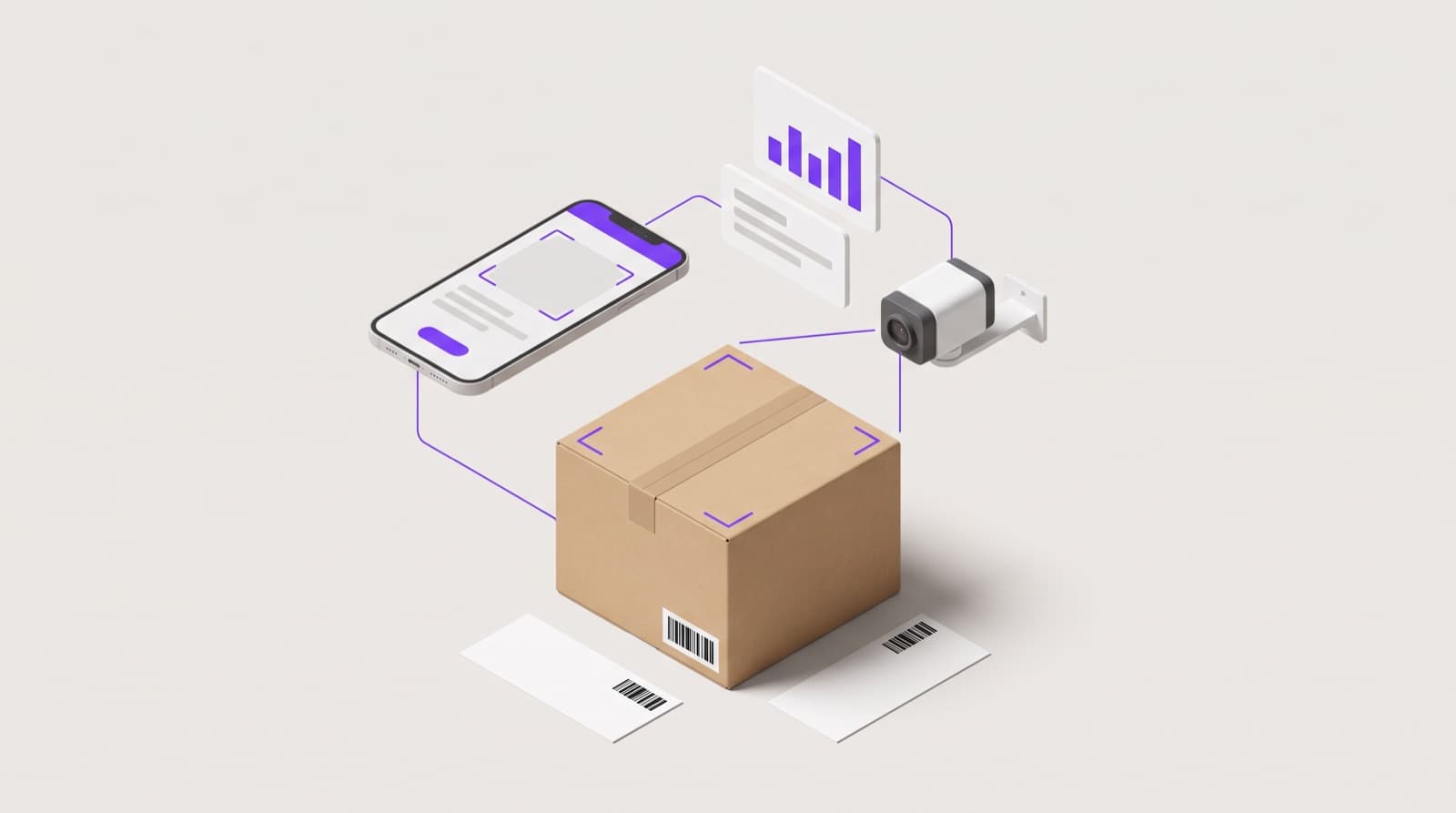
- Vision-enabled workflows that interpret physical freight within an operational context
- Deterministic validation that confirms accuracy before acceptance into the system
- Real-time execution at the dock that updates enterprise platforms immediately and reliably
By establishing verified truth at intake, organizations strengthen the integrity of every downstream workflow.
Financial Exposure from Unverified Receiving
At the executive level, receiving accuracy is not an operational detail. It is a financial control point. When inbound freight is not verified structurally at intake, the impact compounds across the balance sheet.
Operational Consequences
- Safety stock levels increase to buffer against hidden inaccuracies
- Working capital remains tied up in inventory that may not physically exist
- Cycle counting expands to compensate for weak intake controls
- Exception management becomes embedded in daily workflows
- Teams shift from proactive planning to reactive correction
These patterns create silent cost structures. Labor expands without productivity gains. Inventory carrying costs rise without a corresponding increase in revenue. Service levels fluctuate unpredictably.
Margins erode quietly when the truth is not established at intake.
For leadership teams focused on capital efficiency and operational resilience, receiving verification is a financial control decision masquerading as a warehouse process.
Operational Audit: Where Are Errors Discovered?
Leadership teams seeking structural clarity should begin with a simple internal audit.
Review the last 50 receiving discrepancies and assess:
- How many were identified and resolved at the dock?
- How many surfaced during picking or staging?
- How many were discovered only after shipment?
- How many resulted in retailer penalties or chargebacks?
This exercise reveals where control truly exists within the operation.
When discrepancies are detected downstream, correction costs multiply. Labor increases, service levels decline, and customer trust weakens. The later an error is discovered, the more expensive it becomes to resolve.
If most discrepancies are found after intake, receiving is not functioning as a control point. It operates as a pass-through layer, transferring risk forward into the system.
Conclusion: Establishing Operational Truth at the Source
Modern warehouse performance depends on the accuracy of the first system interaction. Failures rarely originate in picking, staging, or loading. They begin earlier, at the point when physical freight is accepted and recorded digitally.
When assumptions enter enterprise systems without verification, instability spreads quietly. Inventory accuracy degrades. Exception handling increases. Planning becomes reactive rather than precise.
Why Receiving Defines System Integrity
- Receiving determines the initial inventory record
- That record drives allocation, replenishment, and fulfillment
- Every downstream workflow depends on its accuracy
If physical truth is not validated at intake, every subsequent optimization operates on compromised data.
Stabilizing the Operation
Establishing structured verification at the receiving stage provides a reliable foundation for execution. When quantity, identity, and condition are confirmed at the dock, downstream processes perform as designed.
Organizations that treat receiving as a control point, not a pass-through step, build resilient operations that scale with confidence.