Recent outbreaks are putting traceability back in the spotlight. FSMA 204 adds a deadline. But the bigger opportunity is improving how food companies capture and verify information while physical work is actually happening.
This summer has been a reminder of how quickly food, and a food safety problem, moves across interconnected supply chains.
Between May 1 and August 31, 2026, the CDC recorded 19,595 laboratory-confirmed cases of cyclosporiasis acquired in the United States, with 1,043 hospitalizations, two deaths, and cases reported in 49 states and the District of Columbia. Over the same window last year, the figure was 1,180.
Of this season’s total, several cases have been linked to the ongoing outbreak associated with recalled iceberg lettuce from Taylor Farms de Mexico. The recalled foodservice product was distributed across 31 states and also reached retail stores and restaurants.
At the same time, a separate Salmonella investigation involving fresh jalapeños has resulted in 431 reported illnesses, 57 hospitalizations, and cases across 32 states. The implicated product moved through distributors, restaurants, and foodservice companies.
These are different outbreaks, involving different products and pathogens. Neither was caused by a traceability gap.
But for every company operating in the food supply chain, they raise the same operational question:
When something goes wrong, how quickly can you determine what you received, what happened to it inside your operation, and exactly where it went?
Traceability Begins Before the Traceability System
Most food companies already have enterprise systems designed to store information on inventory, quality, production, and traceability.
But the actual event happens somewhere else.
- A truck arrives at a receiving dock.
- Someone checks the trailer temperature.
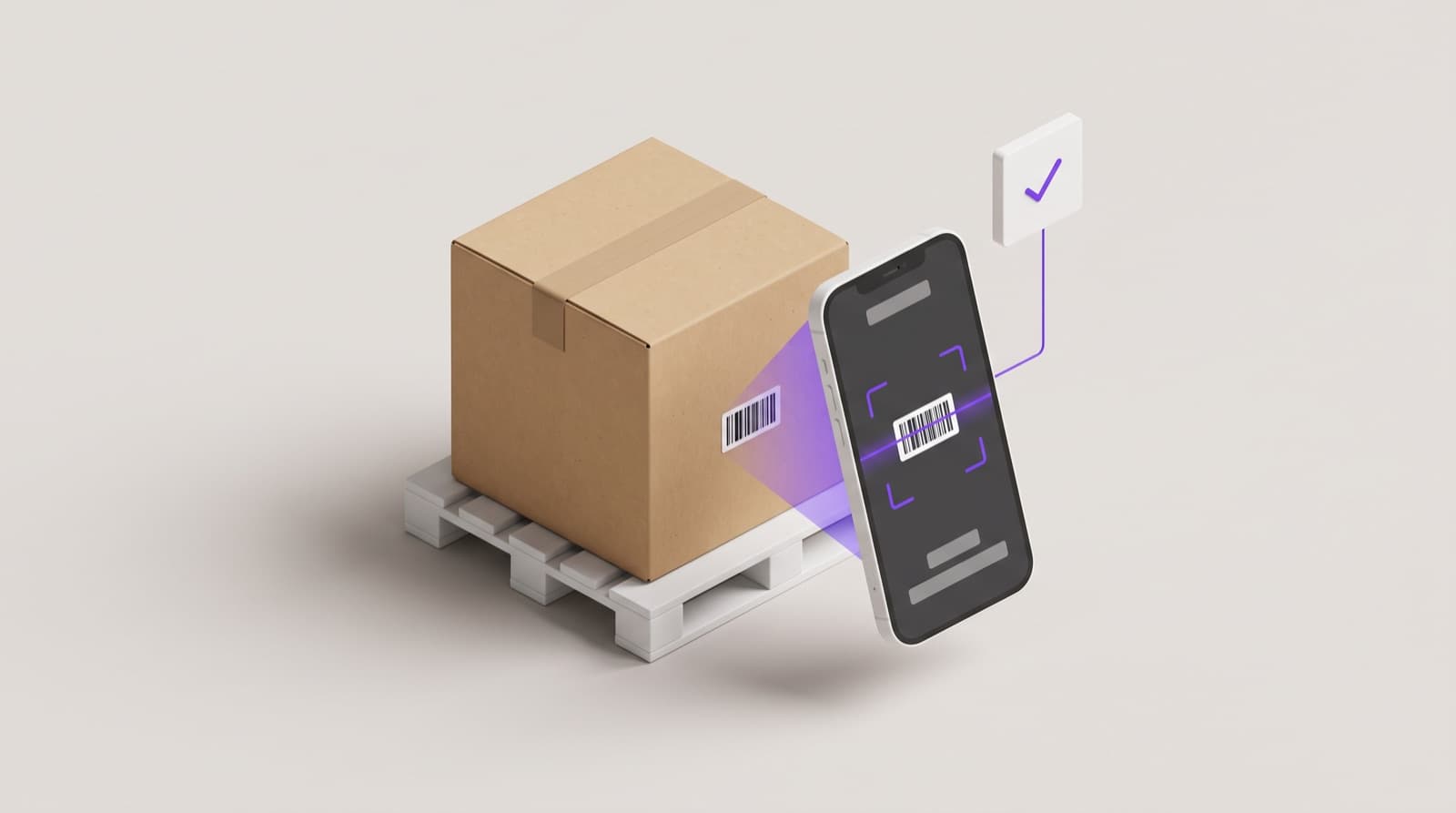
- A pallet label is read.
- A supplier lot is captured.
- An ingredient moves into production.
- An allergen statement is verified.
- A finished label is applied.
- A shipment leaves for a customer or store.
If those events are captured manually, inconsistently, or after the fact, the downstream record inherits every gap.
This makes traceability an execution problem rather than a data problem.
Food Safety, Quality, and Traceability Are Connected
Consider an ingredient moving through a food operation.
- At receiving, the organization needs to know what arrived and from whom.
- Before production, teams may need to verify ingredients, allergens, labels, and specifications.
- During transformation, input lots need to remain connected to the products they become.
- At shipping, finished lots need to be tied accurately to destinations.
These are usually run as separate processes - receiving, quality, manufacturing, inventory, compliance - owned by separate functions.
Operationally, they are one connected chain.
Receive → Verify → Produce → Trace → Ship
The same data that helps a QA team verify the correct material was used can later help establish where that lot moved.
The same receiving workflow that captures supplier information can become part of the traceability record.
And the same production event that links input and output lots becomes critical when a company needs to determine the scope of a recall.
Capture it well once, and it works four times over.
The Financial Impact Goes Beyond the Product
A food safety event doesn't end when the affected inventory is removed.
Depending on the incident, organizations can face product destruction, plant or distribution disruption, lost sales, customer claims and chargebacks, regulatory scrutiny, litigation, insurance exposure, loss of shelf space, and long-term damage to trust.
Technology cannot eliminate all of those risks.
But the quality of the evidence matters.
The faster an organization can establish exactly what happened, and what was not affected, the better positioned it is to respond with precision rather than uncertainty. Uncertainty is what forces a recall wider than it needs to be.
FSMA 204 Turns That Capability Into a Deadline
The FDA Food Traceability Rule now gives much of the industry another reason to act.
For covered foods, FSMA 204 requires companies to maintain Key Data Elements at defined Critical Tracking Events, including receiving, transformation, and shipping.
When requested, required traceability records must be provided to the FDA electronically in a sortable format within 24 hours.
Enforcement begins July 20, 2028.
Just under two years sounds like substantial runway. It compresses quickly once implementation involves multiple facilities, changes to frontline workflows, system integrations, supplier data, and trading partners.
Build for Operations, Not Just Compliance
The strongest response to FSMA 204 is not to create another compliance process employees must complete.
It is to improve the physical workflows that generate the traceability record in the first place.
- Capture information when product arrives.
- Verify ingredients, allergens, labels, and specifications when the checks actually happen.
- Connect input and output lots during transformation.
- Verify destination information when product ships.
- Create evidence automatically throughout the process.
That infrastructure creates value even if FDA never requests a record. It means better QA, less duplicate entry, cleaner operations, more reliable traceability, and a faster, narrower response when something goes wrong.
FSMA 204 creates the deadline. Better food operations are the bigger opportunity.
Verify what came in. Verify what was produced. Know exactly where it went.