The food and beverage supply chain challenges are growing as global demand rises and systems become more complex. The food and beverages market size reflects this rapid expansion. It is expected to grow from $7.04 trillion in 2025 to $7.4 trillion in 2026, at a compound annual growth rate (CAGR) of 5.2%. This growth puts pressure on how efficiently food moves across the supply chain.
Behind every product is a logistics network that must work without delays. Rising fuel costs, limited storage capacity, and labor shortages are making this harder. At the same time, food is perishable. A few hours of delay can lead to spoilage, waste, and lost revenue.
Logistics is no longer just about transportation. It controls inventory flow, cold chain management, and delivery speed. When logistics fails, the entire supply chain feels the impact.
This blog looks at key logistics challenges in food supply chains and practical ways to solve them.
Key Takeaways
• Cold chain, warehousing, and last-mile delivery must work together. One gap causes spoilage and lost revenue. • Disconnected systems create blind spots that lead to delays, poor planning, and wasted inventory. • A small temperature shift can destroy entire shipments. IoT sensors and predictive maintenance are essential. • Cross-border regulations and traceability requirements demand automated audit trails and digital proof of delivery. • PackageX solves these at the execution layer. Vision AI-powered solutions help food businesses automate manual operations and act on data in real time.
Understanding Logistics in the Food & Beverage Supply Chain
Supply chain challenges in the food and beverage industry often start with logistics. It is the system that moves products from origin to consumer. In simple terms, logistics covers how food is stored, handled, and delivered at every stage. When this system breaks down, delays, spoilage, and cost overruns follow.
- Transportation: Moving goods via trucks, ships, or air
- Warehousing: Safe storage before distribution
- Cold chain management: Maintaining required temperatures
- Last-mile delivery: Final delivery to stores or consumers
Each function must work together without gaps. A delay in transport or poor storage can affect product quality within hours.
Logistics also connects every stage of the supply chain. It links sourcing with production, then moves goods to distribution centers and retail shelves. For example, fresh produce harvested in one region must reach stores quickly to stay sellable. Any disruption in this flow creates waste and lost revenue.
Speed, temperature control, and coordination are critical. A broken cold chain can spoil dairy products in transit. Poor coordination can lead to overstocking or stockouts.
These gaps highlight why supply chain operations demands constant attention in the food and beverage sector. Inefficient logistics increases risk, reduces shelf life, and raises operational costs across the network.
Rising Transportation Costs and Inflation Pressures
Transportation costs are one of the fastest-growing pressures in food logistics. Fuel prices shift quickly, and freight rates rarely stay stable for long. These changes directly affect how food moves from farms to stores.
Many logistics teams feel the pressure in daily operations. A single delay or pricing spike can disrupt the entire distribution plan. In most cases, companies do not absorb these costs. They pass them on to customers, thereby increasing market pressure.
Key Cost Pressures in Logistics
- Fuel price volatility is affecting delivery budgets
- Freight rate fluctuations across regions
- Rising impact on profit margins
- Global trade disruptions are increasing costs
- Route inefficiencies are adding another layer of stress
Underutilized capacity is now a common issue. It weakens overall supply chain performance and reduces operational efficiency.
Practical Solutions
- Route optimization using real-time data
- Predictive logistics planning for demand spikes
- Supplier network diversification to reduce risk
Smarter planning tools help reduce waste and improve delivery flow. Even small changes in routing can lower costs and improve stability in volatile markets.
Perishability and Cold Chain Logistics Challenges
Perishability is one of the most expensive problems in food logistics. Fresh produce, dairy, seafood, and frozen goods need strict control from the warehouse to delivery. Even a small delay or temperature shift can lead to major losses within hours.
Cold chain logistics is meant to prevent that. But in real operations, gaps are common. Trucks often face delayed loading or broken monitoring systems. These failures directly increase food waste and reduce profit margins. For logistics teams, it is not just about transport. It is about maintaining product quality at every step.
Key Pain Points in Cold Chain Logistics
- No real-time tracking of temperature conditions
- Poor coordination between the warehouse and transport teams
- Inefficient inventory turnover leading to expired stock
- Limited alerts when refrigeration systems fail
- Gaps in last-mile cold delivery execution
Practical Solutions
- IoT-enabled temperature sensors for real-time monitoring
- Smart warehousing with automated alerts
- AI-based demand forecasting to reduce overstocking
- Predictive maintenance for refrigeration systems
These solutions improve cold chain stability and reduce waste. Even a 5% reduction in spoilage can significantly improve margins in high-volume food operations.
Lack of End-to-End Visibility in Logistics Networks
Poor visibility across logistics systems is a root cause of inefficiency in food supply chains. Companies still depend on fragmented tools like spreadsheets, emails, and legacy software. These systems do not communicate with each other. As a result, data gets trapped in silos across suppliers, warehouses, and transport partners, limiting real-time decision-making.
Common Visibility Gaps
- No real-time tracking of shipments across the network
- Disconnected data between warehouse, transport, and suppliers
- Manual reporting that increases errors and delays
- Limited insight into inventory movement and stock levels
- Slow updates during disruptions or route changes
These gaps lead to delayed shipments, poor planning, and weak coordination.
Practical Solutions
- Use blockchain technology for end-to-end product traceability
- Use centralized logistics platforms to unify supply chain data
- Integrate ERP systems for seamless data flow
- Apply AI-driven analytics for predictive logistics insights
- Enable automated alerts for delays and disruptions
Improving visibility reduces risk and strengthens logistics performance across the entire network.
Regulatory Compliance and Traceability in Logistics
Strict regulations and rising expectations for transparency are adding complexity to logistics operations. Teams now deal with tighter food safety laws, traceability requirements, and cross-border compliance rules. Every shipment must meet documentation standards from origin to final delivery, adding pressure on already strained networks.
Global trade makes things even harder. A single product may pass through multiple countries, each with different compliance rules. This increases coordination efforts and slows down operations when systems are not connected.
Common Compliance Challenges
- Heavy documentation workload across multiple stakeholders
- Lack of unified traceability systems across the supply chain
- Difficulty tracking product origin in real time
- Delays caused by manual compliance checks
- Higher risk of errors during cross-border shipping
In some cases, missing documents can lead to shipment holds or recalls, affecting both cost and brand reputation.
Practical Solutions
- Use blockchain technology for end-to-end product traceability
- Implement automated compliance management systems
- Maintain digital audit trails for faster inspections
- Integrate logistics data with regulatory reporting tools
- Enable real-time tracking of shipments across borders
Strong compliance systems reduce risk, improve transparency, and build trust across the logistics network.
Sustainability and Ethical Logistics Practices
Supply chain priorities in food and beverage are no longer just about cost and speed. Sustainability has become a core expectation in modern logistics. Transportation alone contributes a large share of carbon emissions. At the same time, inefficient routing and poor load planning increase fuel use and waste. Ethical sourcing also adds pressure, especially when suppliers operate in high-risk regions.
Companies are now expected to reduce environmental impact while maintaining efficiency. This balance is difficult to achieve in complex logistics networks. Many businesses still rely on outdated systems that do not track emissions or waste effectively.
Common Logistics Challenges
- High carbon emissions from long-distance transport
- Inefficient logistics routes increase fuel consumption
- Packaging and storage waste across distribution channels
- Limited visibility into ethical sourcing practices
- Difficulty tracking supplier sustainability performance
Practical Solutions
- Adopt green transportation, including EV fleets and optimized routing
- Use local sourcing to reduce transport distance and emissions
- Implement waste reduction strategies in warehousing and distribution
- Track carbon footprint using logistics analytics tools
- Strengthen supplier audits for ethical sourcing compliance
Sustainable logistics operations directly improves efficiency, reduces waste, and builds long-term supply chain resilience.
Last-Mile Delivery and Changing Consumer Expectations
Customer expectations for faster and more reliable delivery are growing rapidly. Same-day and next-day delivery are now common in food e-commerce, putting pressure on last-mile logistics where speed and freshness matter most.
Urban delivery adds more complexity. Traffic congestion, limited delivery windows, and high fuel costs make operations harder to manage. Maintaining product freshness during quick delivery cycles is critical, especially for chilled and frozen goods.
Common Last-Mile Challenges
- High delivery and fuel costs in urban areas
- Difficulty managing dense city routes and traffic delays
- Maintaining freshness and temperature control during transit
- Limited delivery capacity during peak demand periods
- Inconsistent delivery timelines are affecting customer satisfaction
Practical Solutions
- Set up micro-fulfillment centers closer to demand zones
- Use real-time delivery tracking for better visibility
- Optimize last-mile routes using AI-based planning tools
- Improve cold chain packaging for perishable goods
- Use dynamic scheduling to handle peak demand efficiently
Efficient last-mile logistics improves speed, reduces costs, and strengthens customer satisfaction in a competitive food delivery market.
Building a Resilient and Future-Ready Logistics Strategy
A resilient logistics strategy is essential for smooth operations. Resilience starts with diversification. Companies that depend on one supplier or transport route face a higher risk during disruptions. Using multiple suppliers and logistics partners improves stability and reduces bottlenecks.
Technology adoption also plays a key role. Real-time tracking, IoT sensors, and AI scanning tools improve visibility across the supply chain. For example, temperature tracking in transit helps reduce spoilage in perishable goods.
Data-driven decisions further improve planning accuracy. Predictive analytics help companies forecast demand, manage inventory, and reduce last-minute shortages.
Key Logistics Practices
- Supplier and route diversification
- Real-time shipment monitoring
- AI-based demand forecasting
- Automated logistics planning
When logistics systems are optimized, supply chain challenges in the food and beverage industry become easier to manage. This leads to lower costs and stronger operational reliability.
How PackageX Helps Solve These Supply Chain Challenges
Here is how PackageX maps to the key challenges covered in this blog:
Real-Time Inventory Visibility
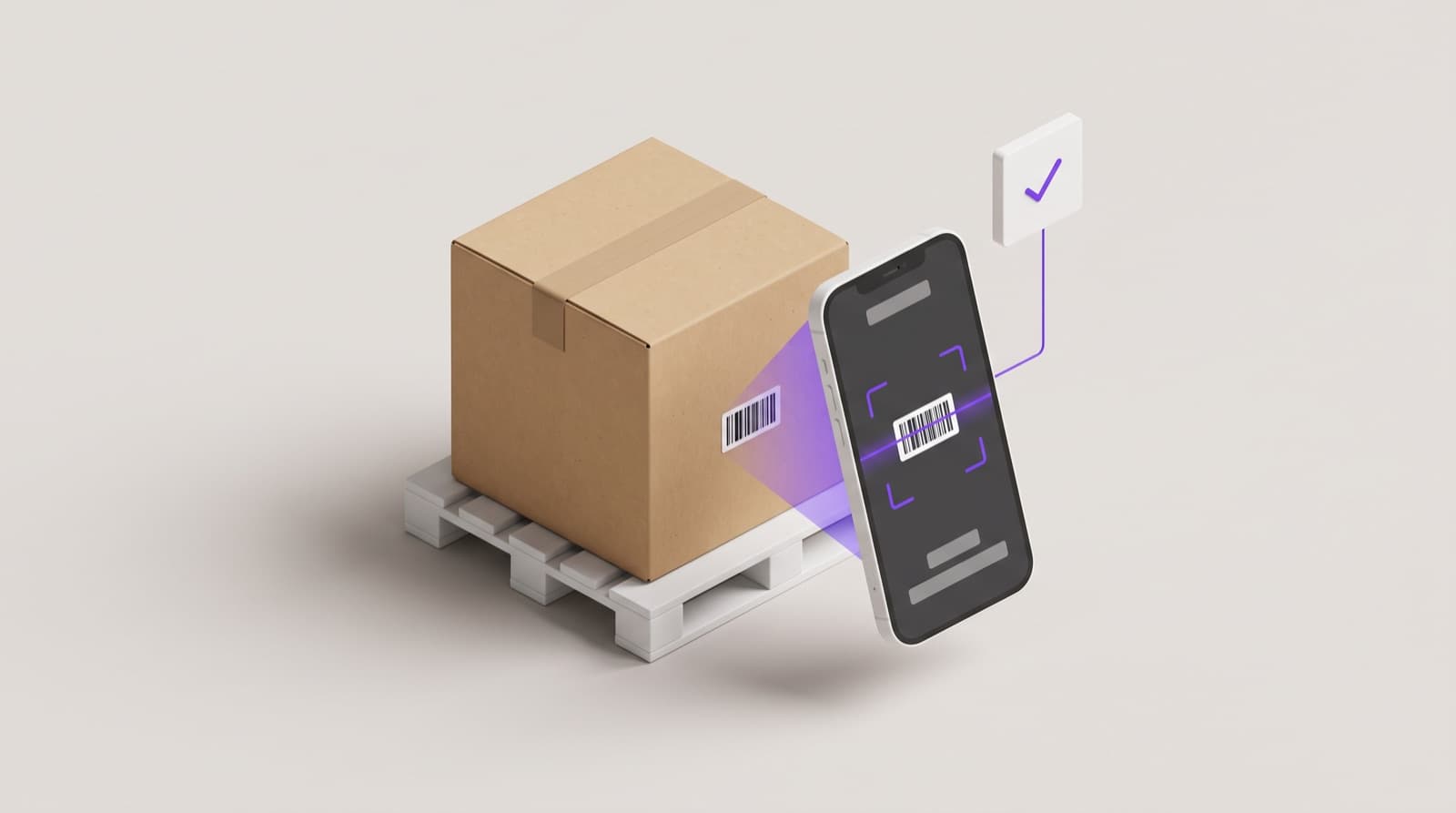
Instead of relying on periodic stock counts, PackageX uses mobile scanning and OCR technology to capture inventory movements as goods are received, stored, or shipped. Teams get real-time updates on stock levels, helping prevent stockouts, reduce overstocking, and improve planning accuracy.
End-to-End Shipment Tracking
PackageX provides unified tracking across carriers in a single view. Logistics teams can monitor inbound and outbound shipments in real time, with full chain-of-custody documentation including locations, pickups, delivery photos, and condition reports.
Compliance and Traceability
Every scan, user interaction, and stock movement is tracked for auditability. PackageX supports digital proof of delivery with timestamps, photos, and signatures, helping businesses maintain compliance with food safety regulations and simplify audit processes.
Seamless Integration
PackageX integrates with existing WMS, ERP, and logistics systems, ensuring fast adoption without disrupting current workflows. This unified data flow eliminates the silos that create blind spots in food supply chains.
Frequently Asked Questions
What are the biggest food and beverage supply chain challenges today?
The most pressing challenges include rising transportation costs, cold chain failures leading to spoilage, lack of real-time visibility across logistics networks, complex regulatory compliance requirements, and growing consumer demand for faster last-mile delivery. Each of these issues increases operational costs and the risk of product waste.
How does technology help solve supply chain challenges in the food industry?
Technology plays a critical role in addressing these challenges. IoT sensors enable real-time temperature monitoring for perishable goods. AI-powered analytics improve demand forecasting and route optimization. Centralized logistics platforms unify data across suppliers, warehouses, and carriers to eliminate blind spots.
Why is real-time visibility important in food and beverage logistics?
Without real-time visibility, logistics teams cannot track where shipments are, whether storage conditions are being met, or when delays occur. This leads to spoilage, missed deliveries, and poor planning. Real-time tracking systems give teams the data they need to respond quickly to disruptions, maintain product quality, and keep operations running efficiently.