Retail chargebacks are among the quietest threats to a supplier's margins. They rarely land as a single big hit. Instead, they trickle out of your remittance a few percent at a time, until a real slice of profit has simply vanished. What makes them so frustrating is that many of these deductions are invalid, preventable, or disputable, yet most suppliers never bother to challenge them.
As retail supply chains grow more automated, the pressure keeps rising. The global deduction-management software market is expanding at an 8.4% CAGR as suppliers invest in tools to prevent errors and fight back on the deductions they do get.
This guide breaks down what retail chargebacks are, why they happen, and the practical steps to prevent them and to dispute those that are not valid.
Key Takeaways
• Retail chargebacks are compliance deductions retailers apply to a supplier's invoice when shipments miss the rules laid out in the routing guide. • They typically cost 2 to 5% of gross revenue, and 40 to 60% of them are invalid or preventable. • The most common causes are OTIF misses, ASN errors, labeling issues, packaging violations, and shortages. • Prevention beats disputes: dispute win rates run 75 to 80% in the first week and collapse to under 5% after 90 days. • Automation across receiving, ASN generation, and deduction management is what separates suppliers who control chargebacks from those who lose money to them.
What are Retail Chargebacks?
A retail chargeback is a financial penalty a retailer deducts directly from a supplier's invoice when a shipment fails to meet the retailer's compliance requirements. Also called vendor or supplier chargebacks, they are the retailer's way of recovering the cost of fixing your mistake, and of enforcing the rules laid out in their routing guide.
Retail chargebacks are business-to-business deductions between a supplier and a retailer. They are completely different from credit card chargebacks, which are consumer-initiated payment disputes governed by card network rules
Here is how they typically work:
- A retailer receives a shipment that violates a requirement (late, mislabeled, short, and so on).
- Their system flags the violation, often automatically, with no human review.
- A deduction is applied to your next payment, sometimes before you even know there was a problem.
Retail Deductions and Chargebacks: What's the Difference?
The terms get used interchangeably, but retail deductions and chargebacks are not quite the same thing. "Deductions" is the umbrella term for any amount a retailer subtracts from what it owes you. A chargeback is one specific type of deduction, a penalty for a compliance or shipping violation.
Other common deduction types include:
- Shortage claims: The retailer says it received fewer units than you invoiced.
- Pricing and allowance deductions: Disputes over agreed cost, discounts, or promotional allowances.
- Returns and RTV (return-to-vendor): An effective return management process ensures damaged or unsold goods sent back to the vendor are tracked and credited accurately.
- Co-op and marketing deductions: Agreed advertising, slotting, or promotional contributions.
Why does the distinction matter?
Because each type has its own reason code, evidence requirements, and dispute path. Winning back a compliance chargeback requires shipment documentation; winning back a shortage claim requires proof of what actually left your dock. Lumping them together is one reason so many suppliers are under dispute.
Chargebacks in The Retail Industry: Why They Keep Rising
Chargebacks in the retail industry have evolved from occasional flat-fee fines into automated, percentage-based penalties baked into every trading-partner agreement. Three forces are pushing them up:
- Automation of enforcement: Retailer systems now catch and deduct violations instantly, no leniency, no manual review.
- Tighter delivery windows: On-Time In-Full (OTIF) programs measure both whether you arrived inside the window and whether the order was complete.
- More complex data requirements: Advance shipping notices (ASNs), EDI transactions, and GS1 labels must all match perfectly.
The numbers make the stakes clear. Across the chargebacks retail industry, penalties commonly run 1 to 5% of the gross invoice, and the trend line points up, not down.
The most common types of retail chargebacks
Nearly every retail chargeback traces back to one of a handful of root causes. Knowing them tells you where to aim your prevention effort.
- OTIF / late or short deliveries: Missing the Must Arrive By Date (MABD) or shipping fewer cases than ordered. OTIF is now the most-cited chargeback category across major retailers.
- ASN / EDI errors: A late, missing, or inaccurate advance shipping notice. The ASN is the single most penalized document in retail because receiving teams depend on it.
- Labeling errors: Missing, unscannable, or non-GS1-compliant UCC128 carton labels. Costco alone can charge $5 to $10 per mislabeled carton.
- Packaging and carton violations: Wrong case pack, missing polybag labels, banding left on, or product that is not floor-ready.
- Routing and transportation: Using an unauthorized carrier, the wrong pallet configuration, or the wrong ship mode.
- Shortages: The retailer receives, or claims to receive, fewer units than invoiced.
- PO violations: Shipping outside the order window, wrong quantity, or items that were not on the purchase order.
The pattern underneath almost all of them is the same: a data-accuracy failure at receiving, pack, or ship. The label did not match the PO. The ASN did not match the truck. The count on paper did not match the count on the pallet. Fix accuracy at the source, and the majority of retail chargebacks simply stop happening.
Retail chargebacks prevention: How to reduce them
Retail chargebacks prevention is not about heroics. It is about building accuracy and documentation into your fulfillment process so errors never reach the retailer. The highest-impact moves:
- Read and monitor every routing guide: Each retailer publishes detailed requirements and revises them once or twice a year. Assign someone to track changes, because retailers rarely announce them.
- Nail ASN accuracy and timing: Auto-generate the EDI 856 from your WMS and transmit it within about two hours of shipment, with SSCC labels that match the cartons. ASN errors are the top driver of chargebacks, so this one change moves the needle the most.
- Verify labels, counts, and condition before shipment: Scan-based checks that confirm the GS1 label matches the PO and the quantity matches the order catch mistakes while you can still fix them for free.
- Integrate WMS, ERP, and EDI: Manual re-entry is the primary source of mismatches; connected systems eliminate it.
- Assign a compliance owner and review data monthly: A cross-functional review across ops, sales, and finance kills recurring root causes.
Brands that systematize compliance this way report cutting chargebacks by 80-90%. One Canadian food supplier reduced them 85% after automating ASN validation, according to compliance provider Crstl.
Best ways to reduce chargebacks in online retail
Selling through online and omnichannel channels, including Amazon Vendor Central, dropship, and marketplace fulfillment, adds its own compliance layer. The best ways to reduce chargebacks in online retail: automate ASN and label generation so every order matches its digital record; maintain real-time inventory accuracy to protect fill rate and OTIF; and verify each order at pack-out with a barcode or vision scan before it ships. In high-volume online retail, a single template or mapping error can recur across thousands of orders, so automation pays off fastest here.
How to dispute retail chargebacks
Even with strong prevention, invalid deductions slip through. Retailers receiving errors, system glitches, and EDI mapping issues generate them constantly. Knowing how to dispute retail chargebacks is key to recovering that money, and timing is everything: dispute win rates run 75 to 80% in the first week after a deduction and collapse to below 5% after 90 days.
A reliable process to dispute retail chargebacks:
- Collect documentation: The signed bill of lading, proof of delivery, carton scan reports, ASN transmission logs, and time-stamped photos taken at the time of shipment.
- Read the deduction detail: Identify the PO, the reason code, the dollar amount, and, critically, the dispute deadline.
- Submit through the correct portal: Walmart uses Retail Link and its APDP/HighRadius portals; Target uses Partners Online; Amazon uses Vendor Central (30-day window, two attempts maximum).
- Track and follow up: Keep a dispute log with submission dates and deadlines so nothing lapses.
- Analyze denial patterns: Repeated denials point to either a documentation gap or a real operational issue that needs to be fixed at the source.
The suppliers who win most consistently are the ones who can produce proof instantly. When your receiving and shipping systems automatically capture time-stamped evidence, a dispute becomes a one-click evidence pull instead of a scramble through emails and spreadsheets.
Best platforms for reducing retail chargebacks
There is no single tool that does everything, so the best platforms for reducing retail chargebacks usually combine prevention (stopping errors) with recovery (disputing deductions). The main categories:
- AI receiving and vision data capture : Reads labels, BOLs, and packing slips with OCR and computer vision, verifies goods against the PO, flags damage and shortages at the dock, and stores time-stamped images as an audit trail.
- EDI / ASN automation : Validates the 856 ASN and GS1 labels before they are transmitted.
- WMS with scan-based QC : Enforces a scan match at pick and pack so the shipment matches the order.
- PIM : Keeps product data accurate before it is syndicated to retailers.
- Deduction-management platforms : Automate the dispute-and-recovery workflow.
What to look for in the best software for disputing retail chargebacks
When evaluating the best software for disputing retail chargebacks, prioritize: automatic documentation (it assembles the evidence packet for you), reason-code mapping to each retailer, direct retailer-portal integrations (Retail Link, Vendor Central), full audit trails, and root-cause reporting so you prevent repeats rather than only recovering after the fact.
How PackageX Stops Retail Chargebacks Before They Land
Most retail chargebacks are won or lost before the shipment ever leaves your dock. That is exactly the stage PackageX controls, with Vision AI that reads labels, verifies goods against the PO, and captures the time-stamped proof that turns a dispute into a one-click evidence pull.
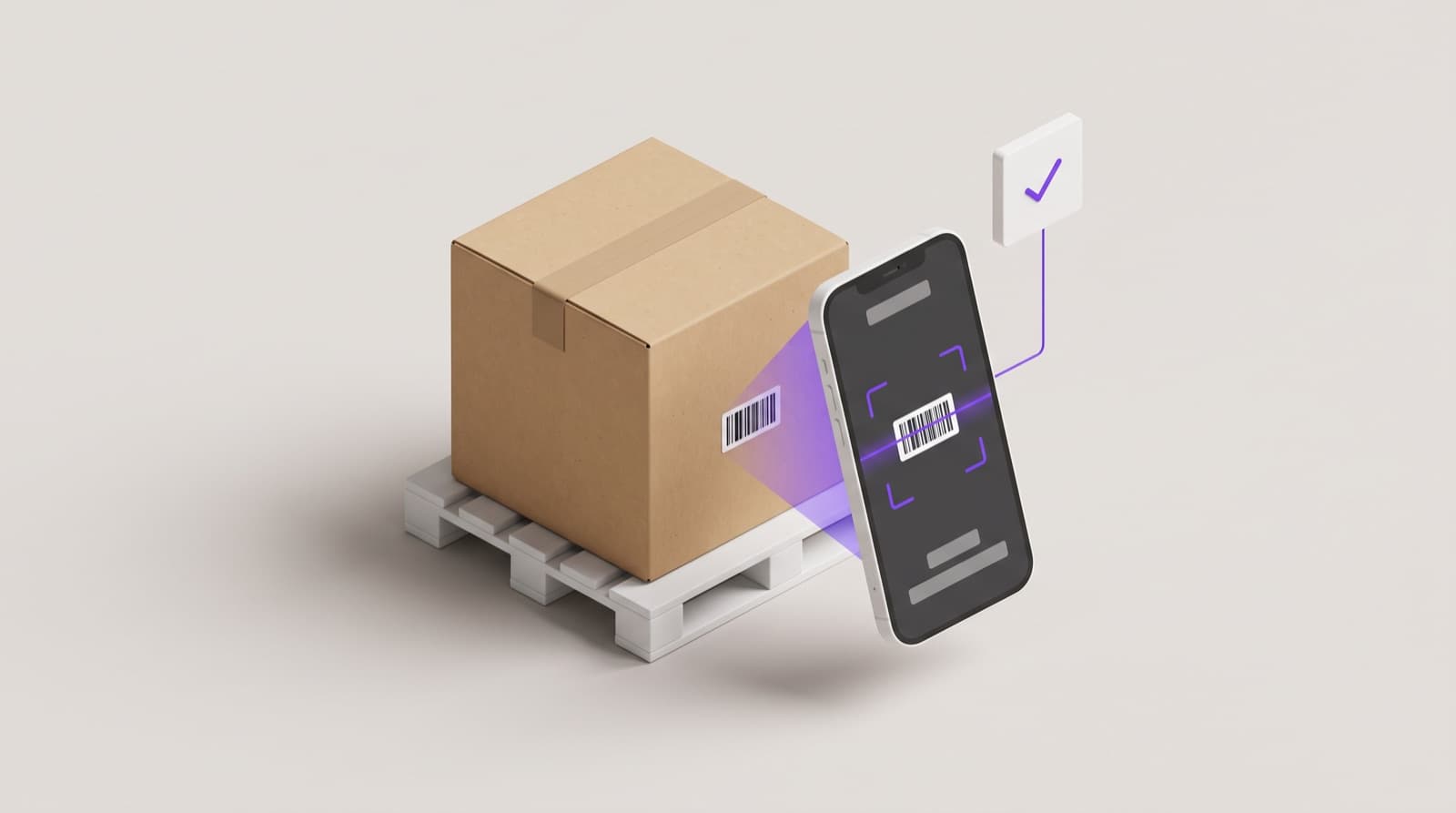
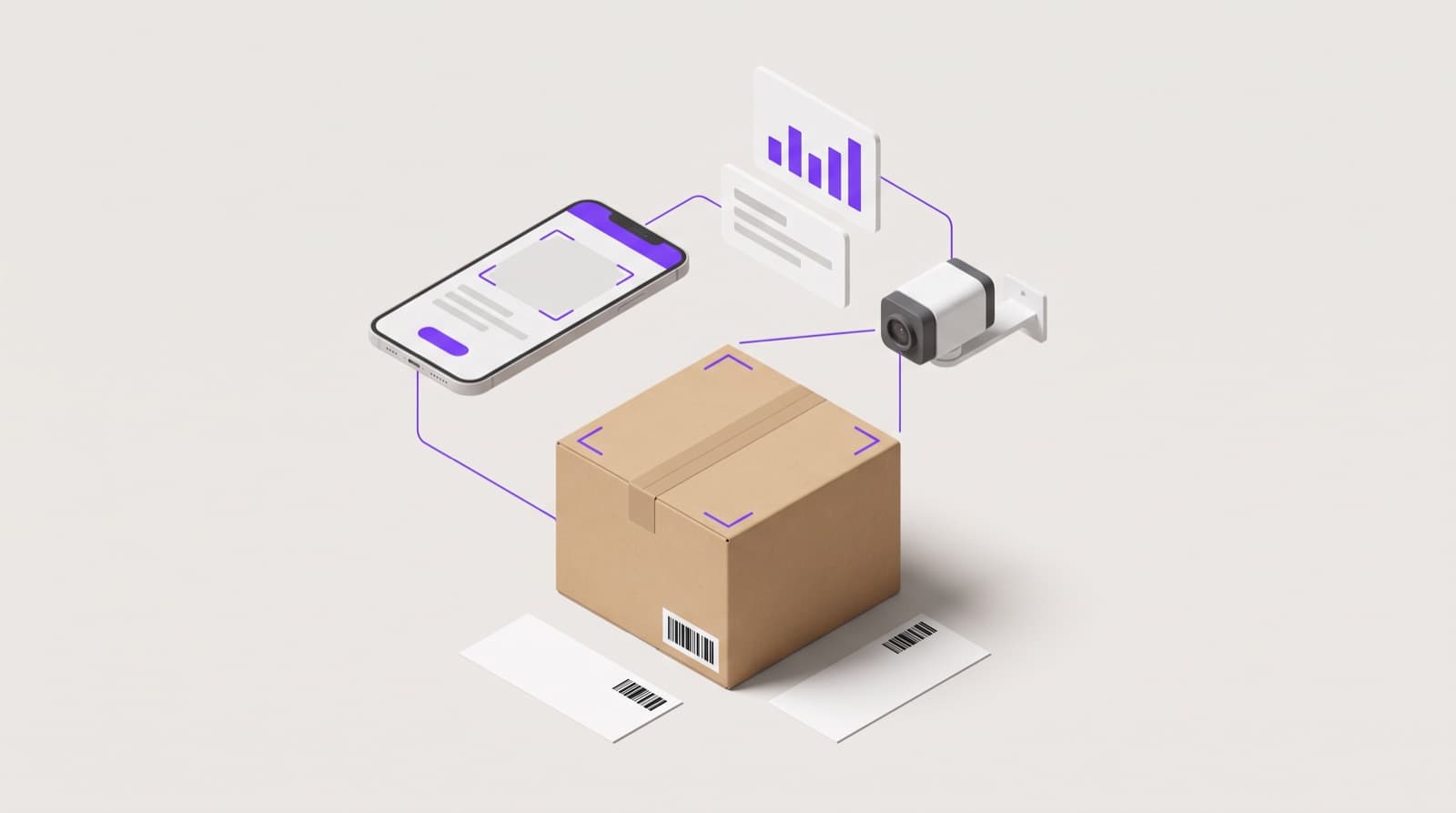
- Verified receiving at the source: PackageX turns any smartphone, tablet, or fixed camera into an AI scanner that reads labels, BOLs, and packing slips with OCR and computer vision, matches goods against the PO, and flags damage and shortages at the dock.
- Automatic evidence for disputes: Every scan is stored as a time-stamped image and record, so when an invalid deduction lands, the audit trail is already assembled.
- Label and quantity checks before ship: Vision-based verification catches the wrong label, wrong count, or missing floor-ready prep that trigger a large share of retail chargebacks.
- Clean data into your WMS or ERP: Verified receiving and shipping events flow into your existing systems through the PackageX API and SDK, so ASNs and invoices reflect reality.
The payoff is fewer avoidable chargebacks, faster wins on the ones you dispute, and a compliance track record retailers actually reward.
Conclusion
Retail chargebacks will never disappear entirely. They are part of doing business with major retailers. But they are far more controllable than most suppliers assume. Prevent errors at the source, capture proof automatically, dispute invalid deductions fast, and you protect both your margin and your standing with buyers. The suppliers who win are the ones who treat compliance as a system, not a scramble.