The Tyson closure just eliminated 125 truckloads of daily freight. And most 3PLs aren't ready for what's coming.
Tyson Foods shut down its Lexington, Nebraska beef processing plant on November 21st. Everyone talked about the 3,200 jobs. The ag press covered what a shrinking cattle herd means for beef prices.
Nobody talked about freight.
That plant moved nearly 5,000 head of cattle through its doors every single day. Roughly 2.85 million pounds of meat leaving daily. Add in the byproducts, packaging, fat and bone, you're looking at 125 truckloads in and out of that compound. Every. Single. Day.
That freight didn't disappear. It got rerouted. Pushed onto warehouses and 3PLs who had no warning. Right now, some warehouse manager is standing at a receiving dock that wasn't this busy last week, trying to figure out why cycle counts are off, why pick accuracy tanked, why drivers are stacked up in lines that didn't exist five days ago.
That's disruption.
Supply Chain Disruption Isn't Abstract. It Hits Your Dock First.
The numbers have become background noise at this point. McKinsey says disruptions lasting over a month happen every 3.7 years now, and they can eat 45% of a year's profit over a decade. Maersk polled 900 European companies, 78% expect tariffs and geopolitical chaos to mess with their operations for at least another year or two. CargoNet logged 884 cargo theft incidents in Q2 2025. That's up 13% from last year.
People are calling it a "permacrisis."
But we keep talking about it like it's a boardroom problem. Tariffs. Shipping lanes. Port congestion. All real. All important. But if you're running a 200,000 square foot 3PL in the Midwest, you're not sitting around discussing the Red Sea. You're asking why six pallets showed up with no documentation and why your inventory management accuracy just dropped to 87%.
Headlines cover the macro while your warehouse lives in chaos.
How One Disruption Wrecks Every Part of Your Operation
When a plant closes or a supplier goes dark, the damage doesn't start in the C-suite. It starts at the dock.
Receiving: Blind Shipments Are Still the Norm
Most warehouses still get "blind shipments"-product that arrives with zero advance notice. The vendor sent it, but their systems are ancient. Green screens. EDI that doesn't connect to anything. So when that truck backs into your dock, nobody knows what's on it.
Someone has to physically inspect the shipment, hunt for labels, figure out the vendor, match it to a PO, count items, and manually key everything into your backend. That's not receiving. That's forensics. And when rerouted freight starts flooding in from a plant that just closed, you're underwater.
Time isn't the only cost. Accuracy takes the hit. Every keystroke is a chance to mess something up. And those errors don't stay small.
Put-Away: New Hires Get Zero Help
Once receiving is complete, assuming it was done correctly, someone has to move that product to the correct location. Right aisle. Right shelf. Right bin. The problem is, most workers have no real-time guidance on where anything goes.
They're working off paper. Spreadsheets. Gut feel. Contract workers who started yesterday are just guessing. When inventory piles up faster than normal because something broke upstream, those guesses turn into items stored in the wrong spots. And wrong spots create picking errors later.
You store something in the wrong bin today, a picker grabs the wrong SKU tomorrow, a customer complains the day after.
Cycle Counting: Your Data Is Already Wrong
Cycle counting should keep you honest, a rolling audit of what's actually on your shelves. In reality, someone prints a list, walks the floor, scans items one at a time, writes down quantities by hand. It's slow. It's error-prone. And when inventory is moving fast because of upstream problems, your counts are stale before you're done.
Industry average for inventory accuracy sits around 63%. More than a third of your data is wrong on any given day. Disruption makes that worse, not better.
Pick & Pack: This Is Where You Lose Customers
You've done this, ordered something online, got a cancellation email two hours later.
What happened? Somebody in the warehouse grabbed that item before your order processed. They picked it manually and never updated the system. The website said it was in stock. It wasn't. Your order got killed.
That's not an operational hiccup. That's a customer you'll never see again.
The math is ugly. A single picking error costs $22 to $50 on average, some estimates push it past $100 once you add returns processing, reshipping, customer service calls, and the cycle count you have to run afterward. Warehouses without scan verification run 1% to 3% error rates. Sounds tiny until you multiply it out.
1,500 orders a day, 1% errors, $50 per error, and 260 working days. That's $195,000 gone annually, just from picking mistakes. Doesn't include the lifetime value of the customers who left.
Dispatch: Paper Is Still Running the Show
Say everything went perfectly. Received right, put away right, counted right, picked right, packed right. Now it has to leave.
A driver pulls up. Shows a paper document, bill of lading, maybe. Somebody loads the truck. Driver signs something. Gone.
Who verified that driver? DOT number? License plate? Actual ID? Usually nobody. Someone glances at the logo on the truck, figures it looks familiar, and waves them through.
Organized theft rings know this. They impersonate carriers and walk out with entire truckloads. Cargo theft jumped 29% year-over-year in Q3 2025. Average loss per incident is over $202,000 now. Warehouses account for 41% of where these thefts happen.
Even when the right driver takes the load, there's still a problem. That paper document has to make it back to your office before you get paid. Driver delivers, receiver signs off, maybe crosses out some quantities for damaged or missing items, and then that paper sits in a truck cab. For days.
I've heard electronics distributors say millions get stuck because they can't get that signed document back before the payment cutoff. Cash locked up because of a piece of paper in someone's pocket.
Your cash flow in 2025. Held hostage by paper.
The Basic Processes Are Still Broken
Most 3PLs aren't struggling because they don't have robots or AI. They're struggling because they haven't nailed the fundamentals.
Green screens still run operations. EDI systems don't talk to each other. Workflows live in spreadsheets. Drivers get verified by eyeballing a truck logo. Inventory counts happen on clipboards.
Everyone talks about digitization and automation. Almost nobody has actually done it. The industry runs on processes built for a world where disruption was rare. That world is gone.
The numbers tell the story. 70% of 3PLs are fighting higher labor costs. For more than half, labor is over 40% of total operating costs. 56% say labor shortages hurt their operations. The U.S. warehousing industry is short 35,000+ workers. Amazon's inventory turnover rate has hit 150%.
You can't fix a labor problem by hiring more people when your processes are broken. You need workflows simple enough that someone hired yesterday can actually be useful today.
What Separates the Ones Who Make It
The warehouses that survive disruption aren't the ones with the most expensive automation. They're the ones who digitized the unglamorous stuff before everything went sideways.
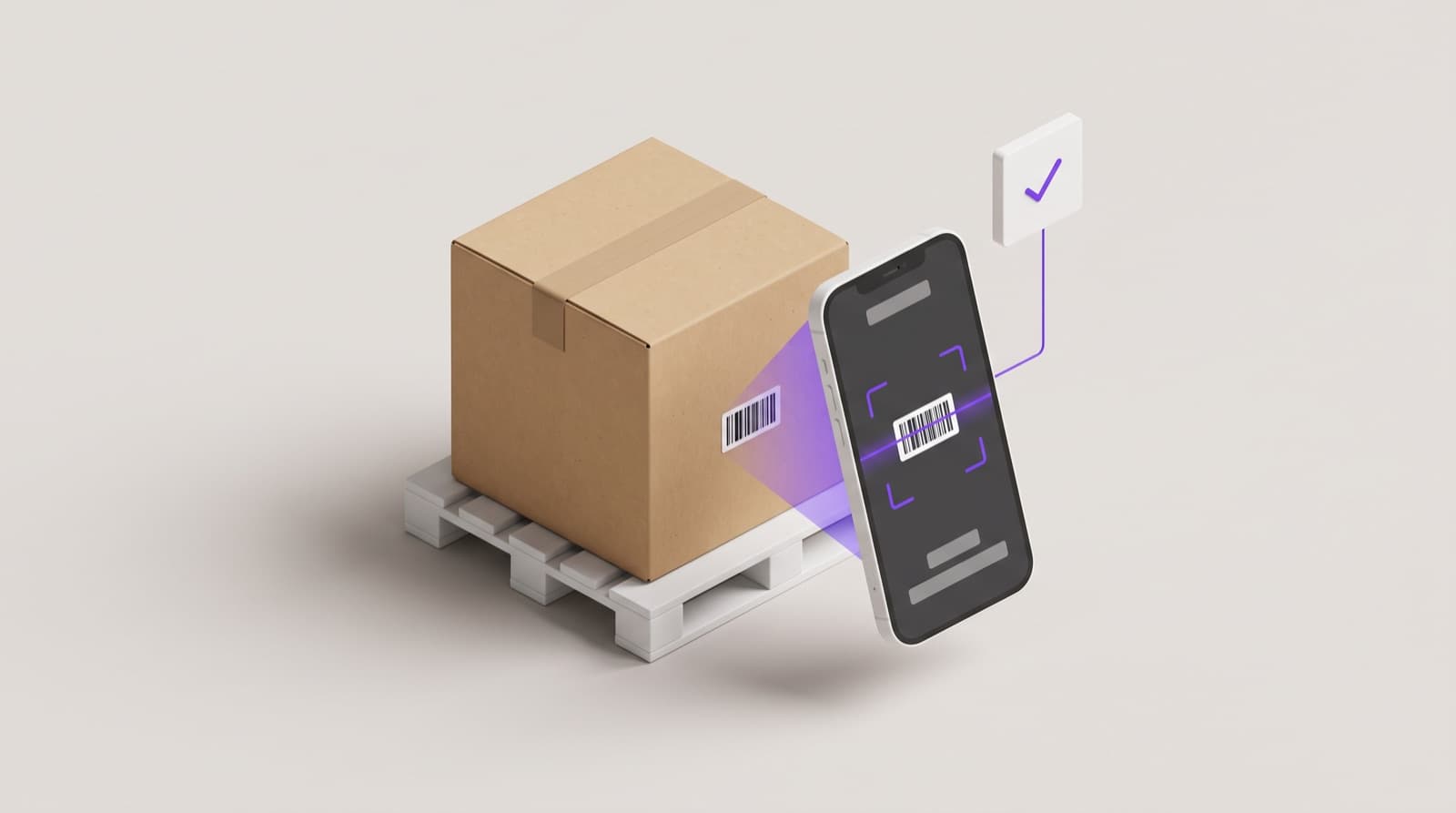
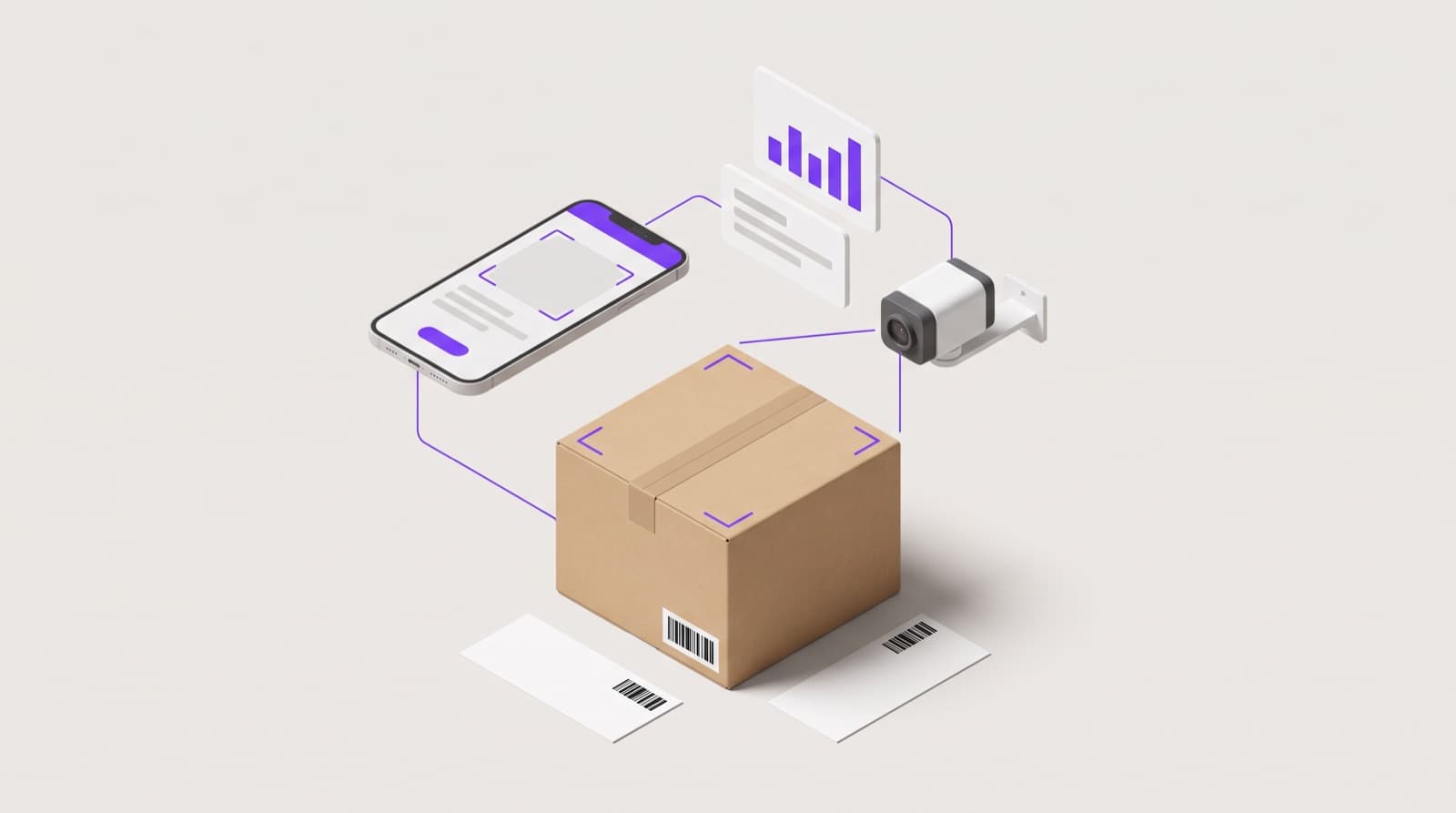
A blind shipment arrives and a camera at the dock captures vendor info, item numbers, quantities automatically. No typing. No guessing. A worker scans once at receiving and sees exactly where that item needs to go-aisle, shelf, bin. Every pick gets verified with a scan before it goes in the box. Proof of delivery gets photographed and hits backend systems in real time instead of riding around in a truck for a week.
None of this is science fiction. The technology exists. Cameras that read license plates and DOT numbers. Apps that connect floor operations to your WMS instantly. It's all available.
The question is whether you set it up before the next plant closure, the next tariff change, the next supplier that ghosts you.
The Point
The next disruption won't send a calendar invite. A plant will close. A policy will shift. A vendor will disappear. Your dock will be slammed, your counts will be off, your accuracy will crater, and customers will leave.
The companies that make it through won't be the ones who panicked and spent money reactively. They'll be the ones who fixed receiving, put-away, counting, picking, packing, and dispatch before they had to.
The warehouse is always where disruption shows up first. It's also the last place most companies bother to prepare.