Warehouse receiving is the first checkpoint in any supply chain. Trucks back into the dock, pallets come off, and the team has minutes to confirm what arrived. Mistakes at this stage ripple straight through inventory, finance, and customer orders.
Accuracy at receiving is non-negotiable. A miscounted pallet today becomes a stockout next week, a chargeback next month, and a payment dispute next quarter. To protect against this, many warehouses now run blind receiving on their inbound flow.
The stakes keep rising. The global warehouse management system market is projected to grow from USD 4.04 billion in 2025 to USD 4.77 billion in 2026, at a 17.98% CAGR through 2031. As warehouse tech scales, the data flowing into it must remain clean.
This guide explains how the method works, when to use it, and how to roll it out without breaking your dock-to-stock speed.
Key Takeaways
• Blind receiving is a method where staff count and inspect inbound shipments without seeing the purchase order or packing slip. • The approach prevents confirmation bias and exposes supplier or carrier errors that traditional receiving can miss. • Common types are fully blind and partially blind receiving, in which some data is shared. • It works best for high-value goods, error-prone suppliers, and compliance-heavy industries. • Modern WMS, barcode scanning, and Vision AI tools reduce the labor cost of blind receiving without sacrificing its accuracy.
What is Blind Receiving?
The blind receiving definition is straightforward. It is a warehouse receiving process where the receiving team works without access to any purchase order, packing list, or advance shipping notice. Staff record what they actually count and inspect.
To define blind receiving more precisely, it is the practice of capturing inbound shipment data solely through physical verification. Reconciliation against the purchase order happens after the goods are logged.
Blind receiving in purchasing has a specific role. It separates the act of receiving from the act of approving payment. This separation is a core control in the three-way match between purchase order, receiving report, and supplier invoice. Keeping receivers blind prevents the receiving record from being shaped by the buyer's expectations.
The contrast is clear. Expectation-based receiving uses paperwork to guide the count. Verification-based receiving captures the count first, then compares it to the paperwork. Blind receiving sits firmly in the verification camp.
How the Blind Receiving Method Works
The blind receiving method follows a clean sequence. Each step is built to remove bias and lock in accuracy.
Here is how the blind check receiving method runs in practice:
1. Shipment arrives: The truck pulls up to the dock. The receiving team unloads it without first opening the carrier paperwork.
2. Physical inspection: Staff open cartons and pallets. They count units, check for damage, and note any visible issues.
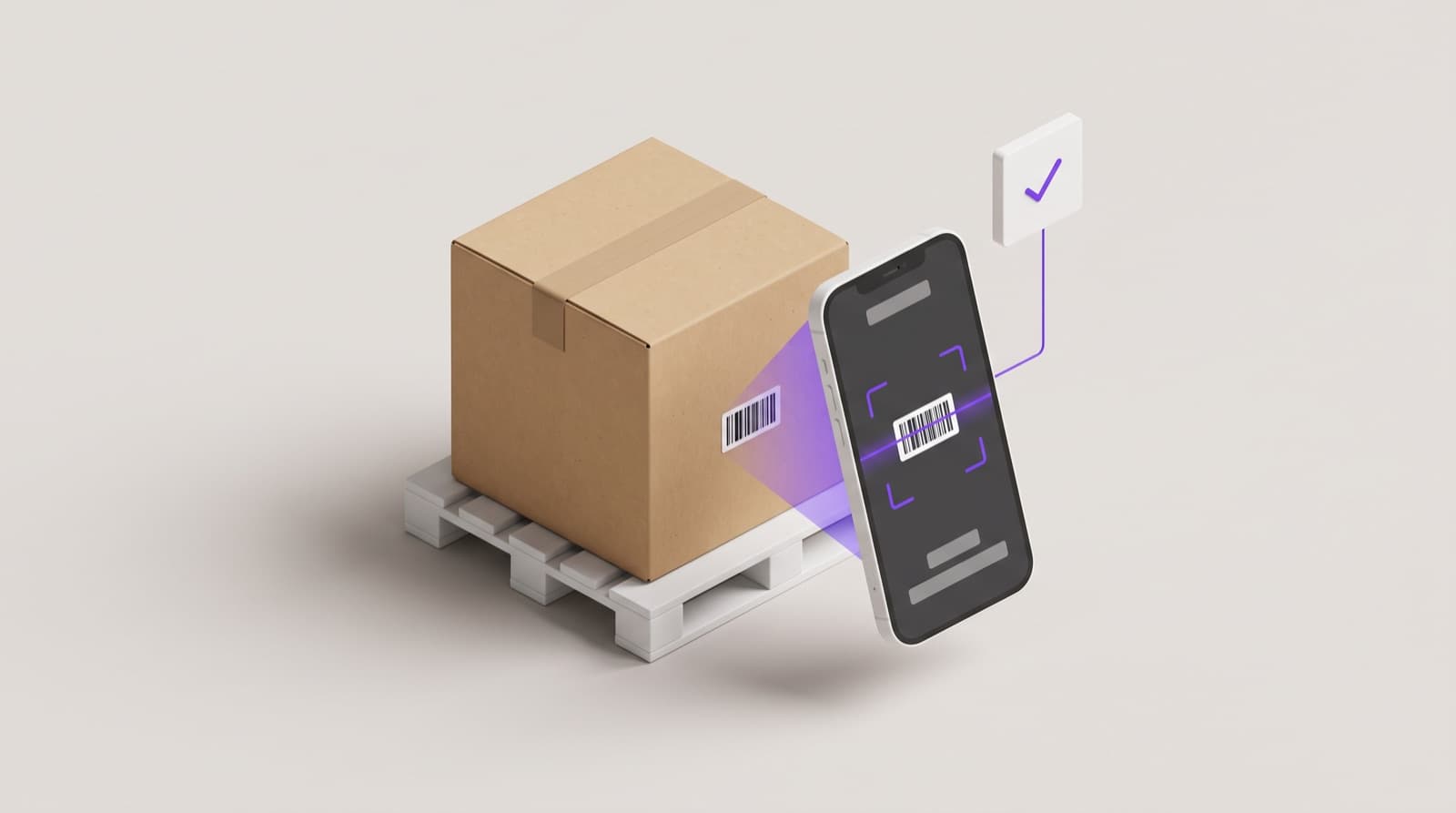
3. Manual entry or barcode scanning: Workers enter quantities into the WMS by hand or use barcode scanners to capture SKUs and counts directly.
4. Provisional receiving record: The WMS creates a record of what arrived. The record stays pending until reconciliation.
5. System validation: The system compares the receiver's data to the purchase order. Discrepancies trigger alerts, holds, or supplier follow-up.
The blind method of receiving works because it removes the anchor. No advance numbers means no temptation to rubber-stamp counts. Workers report what they see, not what they expect.
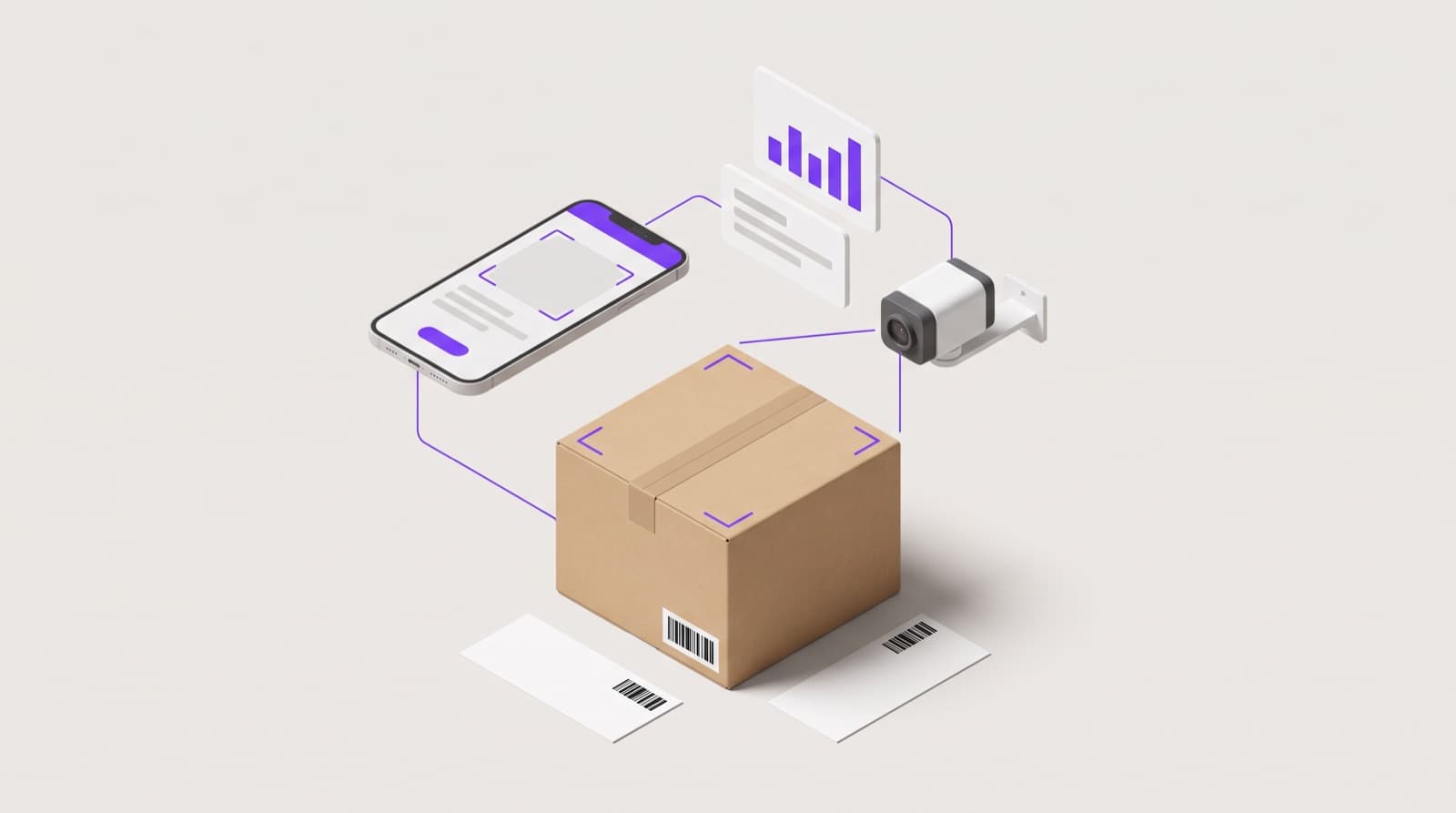
Modern operations layer Vision AI scanning, RFID, and computer vision on top of the manual count. These tools capture SKU and quantity data automatically while still operating without prior data visibility. Speed goes up. The blind discipline stays intact.
This step-by-step workflow connects directly to procurement, accounts payable, and inventory control. A clean blind receive at the dock makes every downstream process easier.
Types of Blind Receiving
Two main types of blind receiving exist. Each fits a different operational need.
- Fully blind receiving: Staff gets no information at all. No SKU list. No quantity. No supplier reference. The team logs every detail from the physical inspection. This is the strictest version of the blind receiving method.
- Partially blind receiving: Staff can see some data, such as SKU numbers, but quantities remain hidden. Workers know what is supposed to be in the shipment, but not how much. This balance keeps verification honest while reducing total inspection time.
Fully blind works best for high-risk, high-value shipments where accuracy is everything. Partially blind receiving fits faster, lower-risk operations where some context speeds the process. The trade-off is simple. Full blind catches more errors but takes longer. Partial blind moves faster but loses some bias-prevention edge.
Why Companies Use Blind Receiving
Blind receiving solves five real problems that show up across industries:
- Inventory auditing and reconciliation: Without bias, the count reflects what actually arrived. Discrepancies surface immediately, not weeks later when a stockout reveals the gap.
- Supplier performance checks: Blind receiving creates a clean dataset on supplier accuracy. Over time, the data shows which vendors ship complete and which ones are short.
- Fraud prevention: When the receiver does not see the purchase order, collusion between buyer and supplier becomes much harder. Blind receiving in purchasing is a core internal control for this reason.
- Quality control: Workers focused on physical inspection to catch damage, missing labels, and substituted SKUs that paperwork-driven receivers miss.
- 3PL and high-volume use: Third-party logistics providers often default to blind receiving. It protects them from claims that they shipped the wrong items by providing every receipt with a verified record of the count and condition.
Manufacturers, retailers, pharmacies, and contract logistics teams all use blind receiving for one or more of these reasons. The common thread is accountability.
Advantages of Blind Receiving
Blind receiving advantages compound over time. The big ones break into five clear gains.
1. Improved Inventory Accuracy
Counts reflect reality, not expectation. Blind receiving forces verification of every unit. The result is cleaner stock data, which feeds every downstream process: picking, order fulfillment, and reorder planning.
2. Reduced Supplier Errors
When suppliers know their shipments will be counted blind, they tighten their own outbound checks. The blind process exposes shorts, overshipments, and substitutions. Vendor scorecards built on blind receiving data carry real weight.
3. Fraud Prevention
Blind receiving separates duties. The receiver cannot rubber-stamp a fake count to match a fraudulent invoice. This is why the method is a standard control in three-way match programs across procurement and accounts payable teams.
5. Better Accountability
Each receiver records what they actually inspected. No one can claim they trusted the paperwork. This trail is invaluable for audits, recalls, and disputes with carriers or vendors.
6. Unbiased Verification
Confirmation bias is the silent killer of receiving accuracy. People show an expected number tend to count toward it. Blind receiving removes the anchor, and the count gets honest fast.
So is blind receiving a good method? For warehouses that depend on accurate data, the answer is yes. The advantages of blind receiving line up with the goals of any modern operation: lower shrinkage, stronger supplier discipline, and a defensible audit trail. The trade-off is time and labor, which technology now offsets. Vision AI scanners, RFID, and integrated WMS tools cut the manual workload of blind receiving without weakening its core benefits.
Challenges and Limitations
Blind receiving is not without cost. The method comes with five real limitations:
- Manual data entry risks: Workers entering counts by hand make typing errors. A mis-keyed digit creates a discrepancy that takes time to resolve.
- Increased labor time: Counting every unit by hand takes longer than scanning a packing slip. For high-volume docks, that time adds up fast.
- Longer dock-to-stock time: Goods sit at the dock until the count and provisional record are complete. Faster fulfillment promises suffer when receiving slows down.
- Operational bottlenecks: A blind receive can stall when a single shipment has high SKU diversity or unclear labeling. The team works through it manually, which holds up the next inbound load.
- Training requirements: Staff need training on the WMS, scanners, exception handling, and the discipline of not peeking at supplier docs. Turnover in receiving roles makes ongoing training a real cost.
These challenges are real but solvable. Vision AI, scan-and-verify stations, and well-designed WMS workflows offset most of them. For most operations, accuracy wins the trade-off.
Blind Receiving Examples
Three blind receiving examples show the method in action across different industries:
- 3PL warehouse verifying client inventory: A third-party logistics provider receives goods on behalf of multiple ecommerce clients. The team counts every blind shipment, so each client gets a verified inventory record. This protects the 3PL from disputes and maintains client trust.
- Retail warehouse checking supplier shipments: A grocery chain runs blind, receiving inbound from new or low-trust suppliers. Staff count every case, log shorts and damages, and feed the data into supplier scorecards. Repeat offenders lose contracts.
- Manufacturing inbound quality control: A pharmaceutical contract manufacturer uses blind receiving of raw materials. Workers verify SKU, lot number, and quantity by hand. Any mismatch triggers a hold before the materials enter production. This prevents costly recalls down the line.
Each example shows the same principle. Blind receiving turns receiving into a control point, not a paperwork stamp.
Blind Receiving vs Traditional Receiving
The blind method of receiving and traditional receiving differ on several factors. The table below compares them side by side:
| Factor | Blind Receiving | Traditional Receiving |
|---|---|---|
| Data access | None at intake | Full PO visibility |
| Accuracy | Higher, removes confirmation bias | Depends on supplier paperwork |
| Speed | Slower at the dock | Faster at the dock |
| Best for | High-value or risk-prone shipments | Trusted suppliers, high-volume docks |
Traditional inventory receiving is faster because the staff has the count in front of them. They open boxes, tick off the list, and move on. The blind receiving method takes longer because every unit gets a hands-on count. The accuracy gap is what tips most operations toward blind receiving for at least part of their inbound flow. Even a 1 percent error rate in receiving can drive massive downstream costs in stockouts, write-offs, and chargebacks.
Is Blind Receiving Right for Your Business?
Blind receiving is not a fit for every operation. The decision depends on your goods, suppliers, and risk profile.
Use blind receiving when:
- You handle high-value goods: Electronics, pharmaceuticals, or jewelry, where each unit is too costly to lose.
- Your suppliers are error-prone or new: You need clean data on their performance before extending trust.
- You operate in compliance-heavy industries: Food, pharma, or medical devices, where the audit trail matters for regulators.
Skip or modify blind receiving when:
- You run a fast-moving environment: Same-day fulfillment promises with trusted suppliers leave no time for full blind counts.
- Your inbound volume is extreme: Pure blind receiving would create dock bottlenecks every shift.
In those cases, partially blind receiving or a hybrid approach is often the better fit. Apply the strict method to risk-prone shipments. Keep a standard process for routine volume. Is blind receiving a good method for your operation? The answer depends on which trade-off matters more: accuracy or speed.
Best Practices for Implementing Blind Receiving
A few habits make the blind receiving method work without burning out the team:
- Train staff thoroughly: Workers need to understand the why, not just the steps. Bias prevention is the goal, and staff who get the logic stuck to the process.
- Use barcode and RFID scanning: Speed up data capture without losing the blind discipline. Scanners read SKUs without showing expected quantities.
- Integrate with a modern WMS: A good warehouse management system captures provisional receipts, manages reconciliation, and flags exceptions automatically.
- Adopt a hybrid approach: Run partially blind, receiving on lower-risk shipments. Reserve fully blind for high-stakes inbound.
- Standardize the process: Every shift, every dock, every supplier should follow the same script. Standardization turns the blind check-receiving method from a one-off check into a real control.
Improve Your Blind Receiving Process with PackageX
PackageX brings AI and automation to every step of blind receiving without giving up the bias-prevention discipline.
Here is what teams gain with PackageX:
- Vision AI Scanning at receiving: Auto-detect SKUs and label data on intake without manual barcode entry.
- Real-time exception alerts: Flag shorts, damages, and miscounts as they happen, not days later.
- WMS and ERP integration: Provisional receipts flow into your system through APIs, ready for the three-way match.
- Configurable workflows: Run fully blind, partially blind, or hybrid receiving from the same app.
Frequently Asked Questions
Is blind receiving a good method for small businesses?
Yes, with the right setup. Small businesses benefit most when they handle high-value or compliance-sensitive goods. A simple WMS or even a structured spreadsheet can support blind receiving without big investment. The key is training and a consistent process.
What is partially blind receiving?
Partially blind receiving shares some shipment data with staff, like SKU numbers, but hides quantities. Staff still has to count the actual units. The method speeds up receipt while preserving the bias-prevention benefit for the most important data point.
How does blind receiving improve accuracy?
Blind receiving improves accuracy by removing confirmation bias. When workers do not know the expected count, they record what they actually see. Errors, damages, and shortages surface immediately instead of being buried under matching paperwork.
Conclusion
Blind receiving is a proven method for tightening accuracy at the warehouse dock. The blind-receiving definition is simple: count and inspect first; reconcile later.
The benefits are real. Inventory accuracy improves. Supplier errors come to light. Fraud risk drops. Audit trails get stronger. Workers stay accountable.
The trade-off is more time and labor at the dock. Modern tools like Vision AI, RFID, and integrated WMS reduce that cost without weakening the discipline.
For warehouses, 3PLs, and procurement teams that depend on clean data, blind receiving is worth adopting. Start with high-value or high-risk shipments. Scale up from there.