Disorganized storage is one of the most expensive habits in a warehouse. SKUs go missing, pickers walk miles looking for them, shelves sit half empty next to overflowing aisles, and every small error compounds the next. Warehouse putaway is where inventory accuracy actually begins. If the moment between receiving and storage is sloppy, everything downstream (picking, packing, shipping, counts, audits) runs on bad data.
The cost of getting it wrong is rising as the industry scales. The global warehouse market is set to rise from USD 146.2 billion in 2026 to USD 315.4 billion by 2035, growing at an 8.92% CAGR, which means more square footage, more SKUs, and more pressure on the handoff between dock and shelf.
This guide breaks down what putaway in warehouse operations means, why it matters, the step-by-step process, the four main putaway strategies, how to choose the right one, the KPIs that measure success, best practices, and the technology that keeps inventory accurate from dock to shelf.
Key Takeaways
• Warehouse putaway is the process of moving received goods from the dock to their designated storage location and confirming the move in the WMS. • The four main putaway strategies are direct, fixed-location, dynamic (random), and zone putaway. • Strong putaway reduces pick times, improves inventory accuracy, frees up usable floor space, and supports safer flows. • Track dock-to-stock time, putaway accuracy rate, putaway cycle time, and cost per line. • Modern putaway runs on WMS-directed routes, barcode or RFID scanning, and increasingly Vision AI.
What is putaway in a warehouse?
Putaway in warehouse operations is the process of moving received goods from the receiving dock to their designated storage location, recording the move in the WMS, and confirming the items are ready to be picked. It is the link between inbound and outbound activity, and the place where inventory accuracy is made or lost.
The meaning of "putaway" in warehouse management goes beyond simply "putting things away." Proper putaway in warehouse management involves verifying that the goods match the purchase order, determining the appropriate storage location based on item type and turnover, transporting the goods safely, and updating the system. Hence, the items are findable for the next pick.
In a clean operation, what is putaway in warehouse management can be summarized as the controlled handoff between receiving and storage that keeps the WMS in sync with the physical warehouse. Skip it or do it badly and the rest of the warehouse runs on guesswork, with mis-slotted SKUs, hidden stock, and broken cycle counts cascading into picking, shipping, and audits.
Why warehouse putaway matters
Warehouse putaway is the quiet leverage point that shapes everything downstream. When done well, putaway in warehouse operations pays off in cleaner picks, faster cycle counts, and lower labor costs per order.
- Faster picking: SKUs sit in predictable, slot-optimized locations, so pickers waste fewer steps and fewer seconds per line.
- Higher inventory accuracy: Every move is logged in the WMS the moment it happens, keeping system records aligned with the shelf.
- Better space use: Smart placement uses vertical space, frees pick faces, and stops aisles from clogging with overflow.
- Fewer lost SKUs: Items have a documented home, not a "we put it there last time" home.
- Safer floor: Heavy or hazardous items are placed in the right zones, reducing strain, drops, and incidents.
Each benefit ties to a downstream outcome: faster picks raise throughput, accurate stock reduces stockouts and write-offs, and safer flows protect both people and product.
The warehouse putaway process, step by step
The warehouse putaway process follows four canonical steps that connect the receiving dock to stock. Strong warehouse receiving and putaway practice locks each step to a system event, so nothing relies on memory or paper.
- Receiving: Goods arrive at the dock and are checked against the purchase order. The receiving team verifies quantity, condition, lot or serial numbers, and any temperature or compliance flags. A goods receipt note is created, and damage or shortage exceptions are captured before the items enter the building.
- Transfer to staging: Verified goods are moved to a staging area to await storage assignment. Staging keeps the dock clear, batches similar items for efficient transport, and gives the WMS time to assign optimal locations based on slotting rules.
- Transport and storage: Items move from staging to their assigned bin, rack, or floor location. The WMS directs the route, the operator confirms placement with a scan, and the system records the exact storage location.
- System update in the WMS: The final scan closes the putaway transaction. Inventory counts update in real time, the item becomes available for picking, and the goods receipt is reconciled with the original purchase order for three-way matching.
Each step ends with a verification event. Skipping any of them, especially the receiving check or the final scan, is the most common reason inventory accuracy drops below target. Strong real-time inventory visibility ties these four steps into a single auditable flow that clearly defines the putaway process in warehouse operations.
Types of putaway in a warehouse
There are four main types of putaway in warehouse operations, each suited to a different inventory profile and facility layout. Choosing the right warehouse putaway strategy is the difference between a warehouse that flows and one that fights itself every shift.
Direct putaway
Direct putaway moves goods straight from the receiving dock to their final storage location without a staging step. It fits high-velocity SKUs, cross-docking flows, and operations with reliable inbound data, where the trip to staging would only add handling time. Direct putaway shines when the WMS knows the destination before the truck door opens.
Fixed-location putaway
Fixed-location putaway assigns each SKU a permanent storage location. The same item always lives in the same bin, which makes manual picking intuitive and supports operators who memorize the layout. It works well for stable assortments with predictable demand but wastes space when SKUs turn over slowly or arrive in irregular volumes.
Dynamic (random) putaway
Dynamic or random putaway allows the WMS to assign locations based on real-time conditions: available space, SKU management, velocity, weight, and proximity to picking. Random putaway maximizes cube utilization and adapts to changing assortments, but it relies entirely on accurate system data, as no operator can memorize a constantly shifting layout. This is where a strong warehouse putaway strategy really pays off.
Zone putaway
Zone putaway groups storage by physical characteristics rather than by item identity. Hazardous chemicals go to ventilated cages, frozen goods go to cold storage, bulky pallets go to floor zones, and high-value items go to secure cages. Zone putaway is essential for regulated industries, cold chain operators, and any warehouse handling mixed-risk inventory.
Modern WMS platforms blend these four strategies at the bin level. For example, direct hazardous SKUs to a zone, route the fastest movers to dynamic slots near picking, and pin a few high-touch SKUs to fixed locations. The four named strategies remain the mental model; the rule engine just expresses them in code.
How to choose the right putaway strategy
The right warehouse putaway strategy depends on three variables: space availability, item type and weight, and volume and turnover. Use this short decision logic when designing or refreshing your slotting rules.
- If space is tight and assortments change often: Choose dynamic (random) putaway. The WMS will maintain high cube utilization without enforcing rigid SKU-to-bin mapping.
- If you handle hazardous, perishable, or regulated stock: Choose zone putaway. Compliance and safety override any other consideration.
- If your assortment is stable and pickers work without scanners: Choose fixed-location putaway. Operator memory becomes an asset rather than a risk.
- If you run high-velocity SKUs with reliable inbound data: Choose direct putaway. Cutting out the staging step lowers labor and dock-to-stock time.
- If you run a mixed operation: Layer the four strategies. Most large distribution centers use zone for safety, dynamic for fast movers, fixed for slow specialty items, and direct for cross-dock flows, all governed by WMS rules.
Warehouse putaway KPIs to track
The right warehouse putaway KPIs surface bottlenecks before they hit picking or shipping. Track these four to keep the operation honest.
- Dock-to-stock time: The elapsed time from goods arriving at the dock to becoming available for picking in the WMS. Lower is better. Best-in-class operations target under 2 hours.
- Putaway accuracy rate: The percentage of items stored in their correct system-assigned location. Target above 99 percent. Anything lower means picks will fail downstream.
- Putaway cycle time: The time required to move a unit or pallet from staging to its final storage location. Trend it over time; sudden spikes signal issues with labor, equipment, or processes.
- Cost per line: Total putaway labor and equipment costs divided by the number of lines put away. Pairs with cycle time to show whether efficiency gains are real.
Track these alongside broader inventory-auditing metrics for a full view of inventory health.
Best practices for warehouse putaway
Best practices for warehouse putaway come down to four tactics that the highest-performing distribution centers run as standard practice.
- Deploy a WMS to direct routes and locations: Stop relying on operator memory. Let the WMS calculate the optimal storage location based on velocity, weight, hazard class, and current space availability, then direct the operator to it.
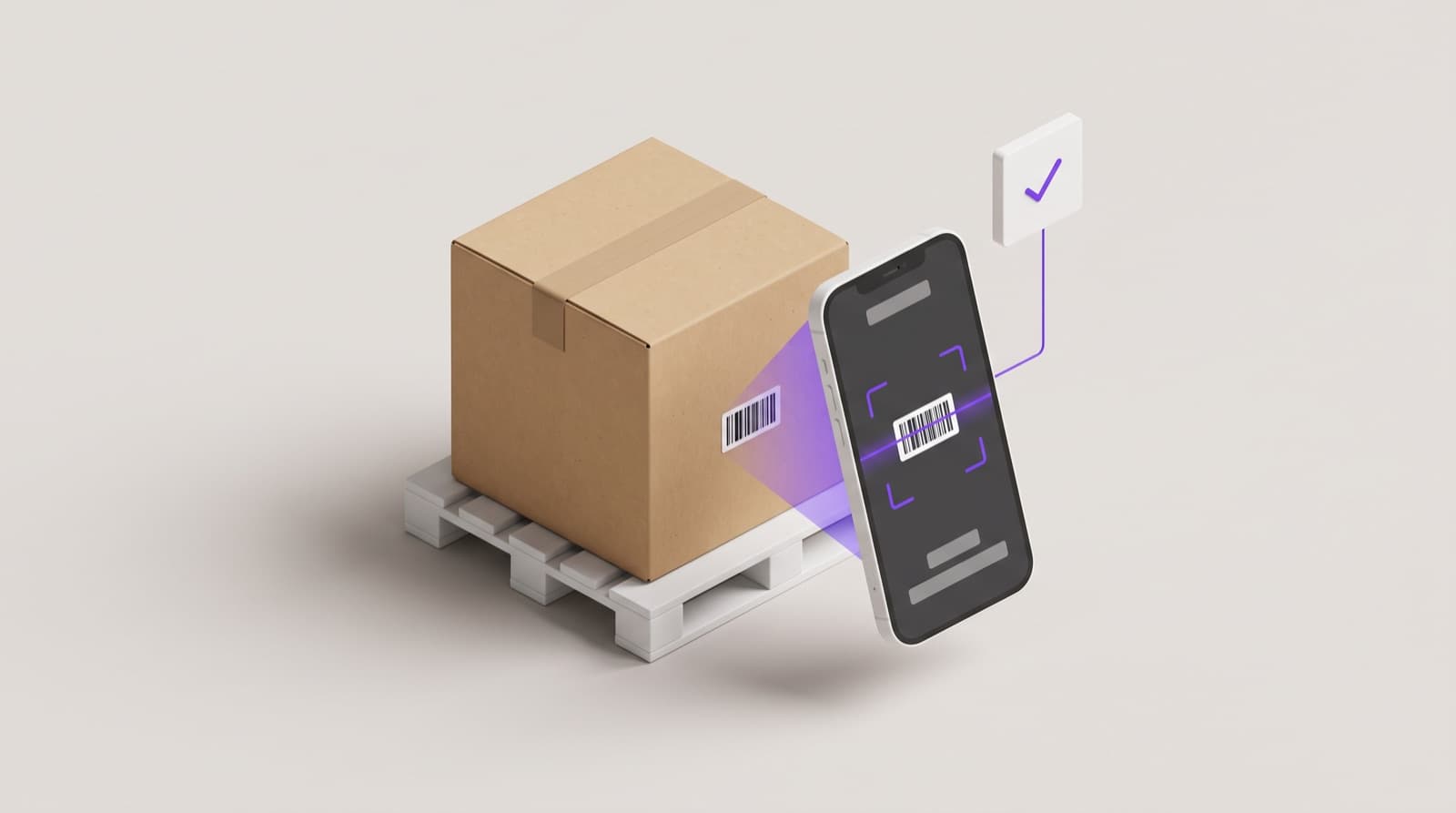
- Use barcode and RFID scanning to log locations in real time: Every move ends with a scan that closes the putaway transaction. This is the single biggest lever for accuracy in any warehouse. Tools like the PackageX VScan make scanning fast and forgiving for front-line staff.
- Apply slotting rules to keep high-turnover SKUs near picking: Velocity slotting keeps the most-touched items closest to the pick face, cutting travel time on every order. Refresh slotting quarterly as demand shifts.
- Set clear bin logic: Define what can go where, including hazardous restrictions, temperature zones, weight limits, and bin capacities. Document the rules, train operators, and enforce them through the WMS so that exceptions get flagged rather than buried.
Technology for modern putaway
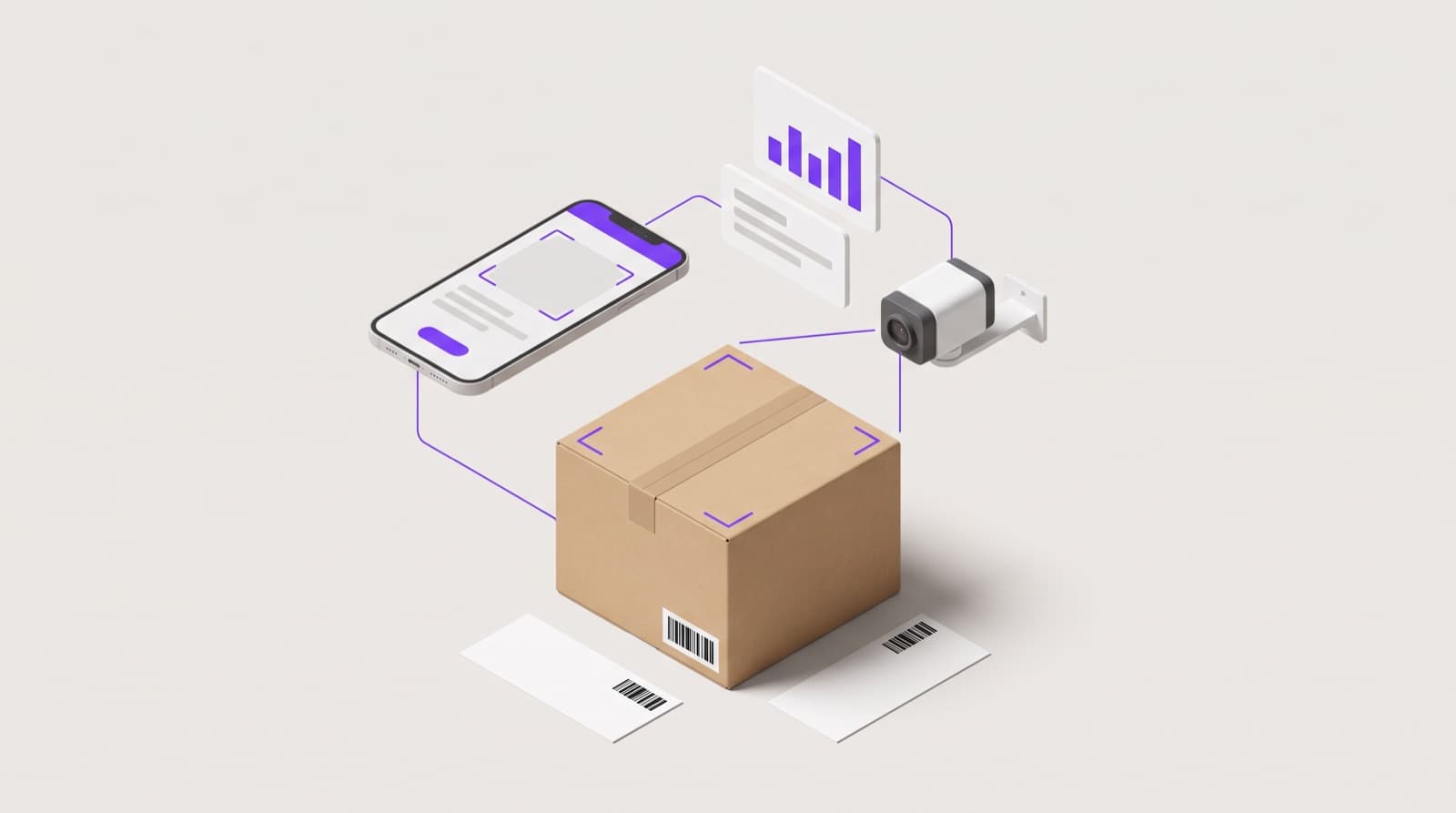
Modern putaway in warehouse management runs on scanning, not paper. Barcode scanning is the baseline; every move is verified at the bin with a quick scan, instantly updating the WMS. RFID extends this to bulk and pallet-level visibility, capturing many items at once and supporting hands-free check-in at gates and zones.
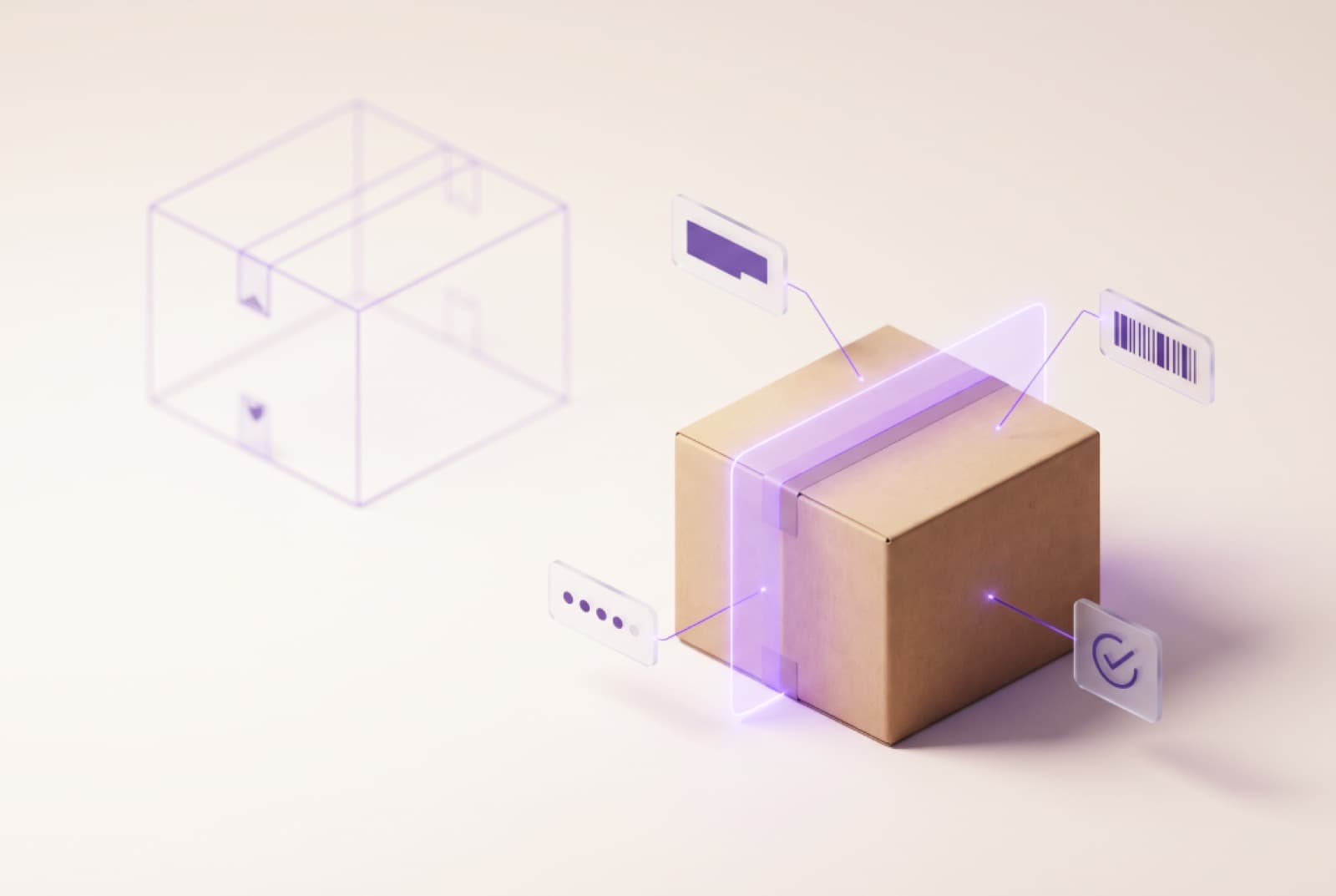
The next step is Vision AI. Vision AI verifies inbound goods and captures their location without manual scanning, in one shot, reading labels and measuring dimensions, with a single fixed assessment using a single device.
The result is faster receiving, fewer mis-scans, and a continuously updated system of record that feeds the WMS and ERP without operator effort. By 2026, Vision AI is becoming standard for high-volume operations chasing sub-hour dock-to-stock times.
How PackageX Powers Faster, Cleaner Putaway
PackageX removes that friction with a Vision AI engine that reads labels, bin locations, and exceptions in one shot and pushes the data straight to your WMS.
What it looks like on the floor:
- One-shot intake at the dock: The VScan reads PO numbers, lot codes, and damage signals from a single camera frame, replacing the need for a stack of barcode scans and clipboards.
- Smart bin confirmation: Operators see the WMS-assigned location on a mobile device and confirm placement with a quick vision capture instead of multiple manual scans.
- Exceptions surface instantly: A short ship, a wrong-bin attempt, or a damaged carton triggers an alert before the item lands in stock and quietly distorts counts.
- Live system sync: Every move syncs to the WMS and ERP in real time, creating an auditable history without anyone having to key it in after the shift.
FAQs
How long should warehouse putaway take?
The benchmark for total dock-to-stock time is under 2 hours, with individual unit putaway cycle time under 5 minutes in well-run operations. Anything longer usually points to a dock bottleneck, a staging backlog, or a WMS slotting issue worth investigating.
What is the difference between putaway and replenishment?
Putaway moves received goods from the dock to a storage location. Replenishment moves stock from reserve storage to a forward pick face when picking demand depletes it. Both rely on the same scanning discipline, but they serve different points in the order flow.
How can I improve putaway accuracy?
Three habits drive accuracy: scan every move without exception, let the WMS direct locations rather than letting operators choose bins, and run weekly cycle counts to catch drift early. Teams trained to follow system-assigned routes consistently hit 99 percent or higher.