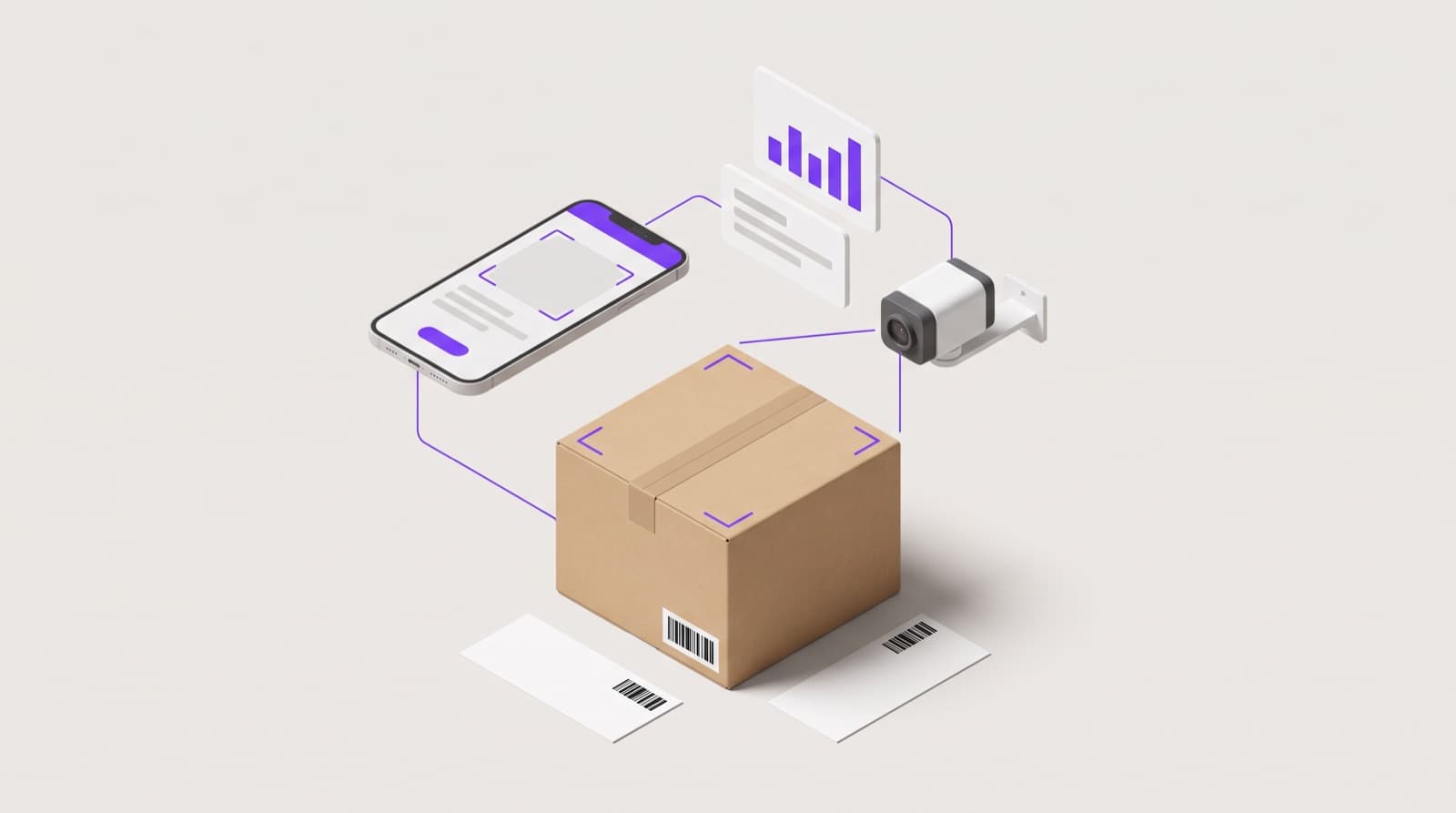
A single inventory mismatch can disrupt warehouse operations in unexpected ways. Delayed orders, declining service levels, and lost revenue often follow. Multiply that across hundreds of SKUs, and the cost of poor warehouse stock control adds up fast.
This is why warehouse stock control plays a key role in keeping operations accurate, efficient, and profitable. As supply chains grow more complex, businesses are investing more in better warehouse inventory management systems.
In fact, the global warehouse management system market is expected to grow from USD 4.38 billion in 2026 to USD 10.64 billion by 2034, at a CAGR of 11.70%.
For businesses that depend on efficient warehousing and inventory management, getting warehouse stock control directly impacts how quickly orders ship, how much capital sits idle on shelves, and whether customers come back or move on.
This guide breaks down what warehouse stock control actually involves, the methods that work, best practices to follow, and the software and technology that make warehouse inventory management more efficient and scalable.
Key Takeaways
• Warehouse stock control focuses on accurately tracking and managing inventory, ensuring every item is properly stored and easy to locate when needed. • Poor stock control can quickly lead to stockouts, overstocking and lost revenue, making it a critical area for operational efficiency and customer satisfaction. • Proven methods like FIFO, JIT, ABC analysis, and min/max levels help businesses maintain the right inventory balance while improving turnover rates. • Adopting technology such as warehouse management systems (WMS), barcode scanning, and AI-driven tools significantly improves inventory accuracy, real-time visibility, and overall warehouse performance. • PackageX enables real-time tracking, automated data capture, and smarter decision-making, helping businesses scale warehouse stock control more accurately.
What Is Warehouse Stock Control?
Warehouse stock control is the process of tracking and managing the availability, location, and movement of goods within a warehouse. It covers everything from receiving inbound shipments and logging stock into the system to monitoring real-time inventory levels and coordinating outbound dispatch.
The types of stock a warehouse typically manages include:
- Raw materials: Base components used in production
- Work-in-progress (WIP): Items midway through the manufacturing process
- Finished goods: Products ready for sale and shipment
- MRO supplies: Maintenance, repair, and operations items that support day-to-day warehouse functions
It is worth noting the difference between stock control and inventory management. Stock control is warehouse-specific and operational, it focuses on what is physically present on the shelves and where it is located.
Inventory management, on the other hand, is a broader strategic function that covers planning, procurement, and supply chain coordination across multiple channels and locations.
When stock control is done well, it gives your team real-time visibility into warehouse inventory, which translates to faster fulfillment, fewer picking errors, and smarter replenishment decisions.
Why Warehouse Stock Control Matters
Effective warehouse stock control is the foundation of smooth operations. Without it, even well-run warehouses can fall into costly patterns that erode margins and disappoint customers.
- Prevents stockouts and overstocking: Maintaining the right stock balance means you can meet demand without tying up working capital in excess inventory. Businesses that actively manage stock levels avoid both empty shelves and the slow drain of overstock sitting in storage.
- Speeds up order fulfillment: When inventory records are accurate and up to date, warehouse teams can locate, pick, and pack items faster. This reduces order cycle count times and directly improves the customer experience.
- Reduces storage and carrying costs: Every square foot of warehouse space incurs costs. Strong inventory control helps you use that space efficiently, minimizing dead stock and reducing expenses tied to storage, handling, insurance, and obsolescence. Research shows that improving inventory accuracy alone can lead to a 10% reduction in overall inventory costs.
- Enables data-driven decisions: Consistent stock control gives you reliable data on product movement, turnover rates, and demand patterns. That data feeds into better forecasting, so you can plan replenishment proactively rather than react to shortages after they occur.
Common Challenges in Warehouse Stock Control
Managing stock control in a warehouse comes with persistent challenges. Recognizing them early is the first step toward solving them.
- Inaccurate inventory counts: When your system says 50 units are in stock, but the shelf tells a different story, orders get delayed, and trust breaks down. Inaccurate counts usually stem from manual data entry errors, outdated tracking systems, or inconsistent receiving processes.
- Overstocking and understocking: Without reliable demand forecasting, warehouses tend to swing between extremes, ordering too much and locking up cash, or ordering too little and losing sales. Finding the right balance requires both high-quality data and effective stock control techniques in a warehouse setting.
- Poor visibility across locations: If you cannot see what is stored where or how fast products are moving, you waste time searching, misallocate space, and slow down fulfillment. This is especially problematic for operations spanning multiple storage zones or facilities.
- Manual and outdated processes: Spreadsheets and paper-based logs might work at a small scale, but they quickly become bottlenecks. Manual processes are slow, error-prone, and nearly impossible to scale as order volumes grow.
- Dead stock buildup: Obsolete inventory quietly eats into margins while occupying valuable warehouse space. Without regular reviews and clear processes for clearing non-movers, dead stock accumulates unnoticed.
Warehouse Stock Control Methods
Choosing the right warehouse stock control system depends on your product type, order volume, and operational complexity.
Here are six proven stock control techniques in warehouse environments, each suited to different business needs and warehouse inventory management strategies.
Just-in-Time (JIT)
JIT is a lean inventory strategy in which stock is ordered and received only when needed to fulfill immediate demand. This minimizes holding costs and reduces waste from expired or obsolete products.
However, JIT depends on highly reliable suppliers and accurate demand forecasting, any disruption in the supply chain operations can quickly lead to stockouts.
First-In, First-Out (FIFO)
FIFO ensures that the oldest stock is sold or dispatched first. This method is essential for warehouses handling perishable goods, seasonal products, or items with expiration dates.
It reduces the risk of spoilage and stock write-offs, though it requires systematic storage layouts and clear labeling to execute consistently.
ABC Analysis
ABC analysis categorizes inventory into three groups based on value and demand. A-items are high-value products that account for a large share of revenue but represent a smaller portion of total SKUs. C-items are lower-value products with higher quantities.
This method helps warehouse managers prioritize their time and resources, focusing tighter controls on A-items while applying lighter oversight to C-items.
Economic Order Quantity (EOQ)
EOQ is a formula-driven approach that calculates the most cost-efficient order quantity by balancing ordering costs against holding costs. It works best for products with stable, predictable demand and helps prevent both overstocking and stockouts.
The limitation is that EOQ requires accurate cost and demand inputs and must be recalibrated as business conditions change.
Minimum/Maximum Stock Levels
This method sets predefined lower and upper thresholds for each SKU. When stock drops to the minimum level, a reorder is triggered. When it reaches the maximum, ordering pauses. It is a straightforward approach that works well with warehouse stock control systems that support automated alerts and replenishment triggers.
Batch Control (Lot Tracking)
Batch control tracks groups of products that were manufactured or received together. This is particularly valuable for industries with strict quality control or regulatory requirements, such as food, pharmaceuticals, and electronics, where traceability from origin to customer is essential.
Which Method Fits Your Operation?
JIT works best for lean operations with dependable suppliers. FIFO is a must for perishables. ABC analysis suits warehouses with large SKU counts. EOQ fits businesses with stable demand. These stock control techniques in warehouse settings are not mutually exclusive, most operations combine two or more methods to build an inventory control system that matches their specific needs.
Warehouse Stock Control Best Practices
Having the right methods in place is only part of the equation. Consistent execution of proven best practices is what separates warehouses that run smoothly from those that constantly firefight.
- Schedule regular cycle count: Instead of relying on a disruptive annual full-warehouse audit, conduct smaller, more frequent cycle counts. Counting a subset of SKUs on a rotating basis keeps your data accurate without halting operations.
- Set PAR levels for every SKU: PAR (Periodic Automatic Replacement) levels define the minimum and maximum quantity for each product. When stock hits the minimum threshold, a reorder is triggered automatically. This removes guesswork and prevents both stockouts and overstock situations.
- Standardize receiving and putaway procedures: Every inbound shipment should be inspected, labeled, and logged into the warehouse stock control system before it reaches the shelves. Inconsistent receiving is one of the most common sources of inventory discrepancies.
- Use barcode or RFID scanning: Replacing manual data entry with scanning technology significantly reduces errors during putaway, picking, and dispatch. Barcode systems are cost-effective and widely adopted, while RFID enables faster bulk scanning without line-of-sight requirements.
- Optimize your warehouse layout: Place high-velocity items closer to packing and dispatch zones to reduce travel time. Use slotting strategies, such as velocity-based placement or ABC-driven zoning, to keep your most-picked products in the most accessible locations.
- Monitor slow-moving and dead stock: Run regular reports to identify SKUs with declining inventory turnover. Flagging non-movers early gives you the chance to discount, bundle, or liquidate before they become a permanent drag on space and margins.
Integrate stock control with your sales and purchasing systems. When your warehouse stock control software connects to your order management, sales, and procurement platforms, stock positions stay aligned across the business.
This connected data flow eliminates blind spots and supports more accurate demand forecasting.
Warehouse Stock Control Software and Technology
Manual tracking methods have a ceiling. As order volumes grow and product catalogs expand, technology becomes essential for maintaining accuracy and speed. Here is how modern warehouse stock control solutions stack up.
Warehouse Management Systems (WMS)
A warehouse management system is the central hub for stock control operations. It provides real-time visibility into inventory levels across all storage locations, automates reorder triggers, manages receiving and dispatch workflows, and generates reports on key metrics, including stock turnover and order accuracy. For businesses managing warehouse inventory across multiple sites, a cloud-based WMS ensures that data stays synchronized and accessible from anywhere.
Barcode and RFID Systems
Scanning technology is the backbone of accurate warehouse stock control systems. Barcode scanners capture product data during receiving, putaway, picking, and shipping, eliminating errors associated with manual entry. RFID takes it further by using radio-frequency tags that can be read in bulk without direct line of sight, making it ideal for high-volume environments where speed matters.
AI and Automation
Warehouse stock control automation is rapidly reshaping how warehouses operate. AI-powered forecasting tools analyze historical sales data, seasonal patterns, and external signals to predict demand with far greater accuracy than manual methods. Predictive replenishment systems automatically adjust reorder quantities based on real-time trends, and anomaly detection flags unusual stock movements before they turn into losses.
In 2026, over 90% of warehouses use some form of AI or automation, with early adopters reporting up to a 40% improvement in order fulfillment speed and 95%+ inventory accuracy.
How PackageX Strengthens Warehouse Stock Control
Here’s how PackageX helps improve warehouse stock control:
- Accurate receiving and putaway: PackageX uses Vision AI to capture shipment data at intake. This reduces manual entry errors and ensures inventory is logged correctly from the start, improving overall warehouse stock control.
- Real-time inventory visibility: Get a live view of inventory across locations and zones. This helps warehouse teams avoid stock mismatches, track movement, and make faster, more informed decisions.
- Mobile-driven operations: Warehouse teams can scan, update, and manage inventory directly from mobile devices. This speeds up picking, putaway, and cycle counts while reducing dependency on manual processes.
- Built-in exception detection: Automatically flag discrepancies such as missing items, damaged goods, or labeling issues. Early detection allows teams to act quickly and maintain accurate inventory records.
Take Control of Your Warehouse Inventory
Effective warehouse stock control is not about perfection on day one, it is about building the right combination of proven methods, consistent best practices, and modern technology that scales with your business. The result is fewer errors, lower costs, faster fulfillment, and customers who keep coming back.
PackageX gives you the tools to make that happen. From real-time inventory tracking to intelligent warehouse management software, PackageX helps you move from reactive firefighting to proactive stock control.
Frequently Asked Questions
What is warehouse stock control?
Warehouse stock control is the process of tracking and managing the availability, location, and movement of goods within a warehouse. It involves monitoring inbound receiving, outbound dispatch, and real-time stock levels to ensure accuracy and operational efficiency.
How do you control stock in a warehouse?
The most effective approach combines a warehouse management system (WMS) with regular cycle counts, defined PAR levels for each SKU, barcode or RFID scanning, and an optimized warehouse layout. Integrating stock data with sales and purchasing systems ensures everything stays aligned.
What are the main stock control techniques in a warehouse?
The most commonly used techniques include Just-in-Time (JIT), First-In First-Out (FIFO), ABC analysis, Economic Order Quantity (EOQ), minimum/maximum stock levels, and batch control or lot tracking. Most warehouses use a combination of these methods.