I watched a receiving manager at a Fortune 500 distribution center toggle between three screens last Tuesday.
His left hand held a $1,200 tablet running a WMS that cost his company worth of $10 million to implement. The system had real-time dashboards, predictive analytics, and integration with every system in their tech stack. It was supposed to eliminate manual processes and bring “complete visibility” to their operations.
His right hand held a clipboard.
On it: a handwritten log of every shipment that came through the dock that morning. Discrepancies between what the ASN promised and what actually arrived. Damaged pallets that needed inspection. SKUs that didn’t match the PO. The kind of exceptions that happen every single day in physical logistics, but somehow never make it into the system until it’s too late.
When I asked why he needed both, he said something I’ve heard at least 30 times in the last 18 months: “The system doesn’t know what I know until I tell it. And by the time I tell it, I need to have already made the decision.”
That clipboard isn’t a failure of adoption. It’s a feature. It’s filling a gap that expensive enterprise systems were never designed to close.
The Paradox: We’ve Digitized Planning and Recording, But Not Execution
Here’s what most logistics operations have today:
Planning systems that forecast demand, optimize routes, and schedule work. These are sophisticated. They use algorithms, machine learning, and decades of supply chain science to tell you what should happen.
Systems of record (WMS, ERP, TMS) that store what did happen. They track inventory positions, order status, and shipment history. They’re the source of truth for your data.
And in between? Physical work that happens in the real world, executed by real people, dealing with real exceptions.
Most enterprise systems assume that the work between planning and recording happens exactly as intended. They assume that when a worker scans a pallet and confirms a PO, the physical reality matches the digital entry. They assume accurate counts, correct SKUs, undamaged goods, and proper placement.
That assumption is where operations break.
We’ve spent 40 years digitizing planning and recording. We’ve barely started digitizing execution, the actual moment-by-moment work of receiving, verifying, moving, and loading physical goods. And because execution isn’t in the system, the system operates on assumptions, not truth.
That’s why the clipboard still exists. It’s a buffer between physical reality and digital fiction.
Why Systems of Record Are Blind to Physical Work
Let me explain the architecture problem.
A system of record is designed to store data after work is completed. It’s a database with business logic on top. When a shipment arrives at your receiving dock, the system doesn’t know what’s in that truck. It knows what the ASN said should be in the truck. It knows what the PO said you ordered. But until a human being physically opens the truck, counts the pallets, reads the labels, and checks for damage, the system has no idea what actually arrived.
So what happens?
A worker scans labels, enters data, confirms quantities, and marks the shipment as received. The WMS now “knows” what arrived, except it doesn’t. It knows what the worker entered. And here’s the crucial distinction: the system can’t verify if what was entered matches what physically happened.
If the worker:
- Miscounts the pallets, recording 49 instead of 50
- Scans the wrong label, SKU 4782 instead of 4728
- Misses damage on a lower pallet
- Trusts the ASN rather than verifying the physical shipment
- Gets interrupted mid-scan and loses count
The system accepts the entry as truth. It has no way to verify what physically occurred. It is blind to reality.
This is not a failure of your WMS. It is a category limitation. Systems of record were designed to capture data after work is completed, not to verify execution as it happens. They assume accuracy at the point of work.
But execution in physical logistics is where accuracy breaks first.
The Execution Gap: What Happens Between Physical Work and System Updates
Let’s map out what actually happens at a receiving dock:
1- Truck arrives
- Physical: Driver docks, opens the trailer, and waits for the receiving crew.
- System: Has no awareness the truck has arrived until something is scanned.
2- Trailer is opened
- Physical: The crew sees 48 pallets. Some are poorly wrapped. One is leaning.
- System: Still has no data and is waiting entirely on human input.
3- Scanning begins
- Physical: The first pallet label is dirty and takes three attempts to scan. The second pallet has two labels, one old and one new. It is unclear which is correct.
- System: Still blind and unable to validate or interpret what is happening.
4- A discrepancy appears
- Physical: The ASN lists 50 pallets of SKU 4728. The crew counts 49, and one pallet is clearly SKU 4782. Should the shipment be rejected, accepted short, or escalated to the carrier
- System: Has no visibility into the discrepancy or the decision being made.
5- A judgment call is made
- Physical: The crew accepts 49 pallets of SKU 4728, notes the issue on a clipboard, and plans to follow up with procurement later.
- System: Receives a scan confirming 50 pallets of SKU 4728. The data is now incorrect, and the system has no way of knowing.
6- Putaway begins
- Physical: 49 pallets move to staging. One worker remembers there was a shortage but is unsure whether it was logged.
- System: Directs putaway for 50 pallets. Inventory is now overstated by one pallet.
That gap between step 5 and step 6 is where operations fracture.
The system now believes you have inventory you don’t actually have. Downstream planning will assume that a phantom pallet exists. Picking will expect it. A customer order might be allocated against it. And when it comes time to load a truck three days later, someone will discover the shortage, not at receiving, where it could have been addressed, but at shipping, where it causes a missed SLA.
The Cascade: How One Inaccurate Entry Becomes Operational Chaos
Let me walk through a real scenario I saw at a manufacturing facility outside Chicago.
Day 1, 10:00 AM - Receiving:
A shipment arrives with 500 units of a critical component. The ASN says 500. The worker scans the label, confirms receipt, and marks it complete in the WMS. Actual count: 485 units. The shortage wasn’t caught because counting 500 small components by hand is tedious, and the ASN has been accurate for the last 6 shipments from this supplier.
System belief: 500 units received. Inventory position: +500. Physical reality: 485 units received. Actual inventory: +485.
Day 1, 2:00 PM - Putaway:
The WMS directs putaway to a bin location. The worker moves the components. No recount, why would there be? The system says 500, so 500 go into the bin.
System belief: 500 units in Bin A-47. Physical reality: 485 units in Bin A-47. Discrepancy: 15 units.
Day 2, 8:00 AM - Production Planning:
The ERP pulls inventory positions from the WMS to schedule production runs. The planner sees 500 units available and schedules a build that requires 490 units. Looks good. Plenty of buffer.
System belief: 10-unit safety margin. Physical reality: 5-unit shortage.
Day 2, 11:00 AM - Picking:
Production requests 490 units. Picker goes to Bin A-47. Pulls everything. Bring it to the line. Production starts.
System belief: 490 units issued, 10 units remaining in Bin A-47. Physical reality: 485 units issued, 0 units remaining, production is 5 units short.
Day 2, 2:30 PM - Production Line Stoppage:
Halfway through the build, the line stops. They’re 5 units short. The supervisor checks the WMS; it shows 10 units remaining in Bin A-47. Picker goes back. The bin is empty. Confusion. Did someone mis-pick? Was there a phantom transaction? Is the inventory wrong?
Now they have to: - Stop production (cost: $3,000/hour for this line) - Launch an investigation (2 people, 3 hours) - Rush-order the missing components ($500 expedite fee) - Reschedule the build (downstream impact on shipping)
Total cost of the 15-unit discrepancy: $11,000+ Root cause: An inaccurate receiving entry 28 hours earlier.
Day 3, 10:00 AM - The Real Damage:
They trace it back to receiving. The shortage existed from the beginning, but the system had no way of knowing. The worker who received it doesn’t remember the shipment; it was one of 40 that day. No one logged an exception because no one caught it.
The WMS showed 100% accuracy because it trusted the data it was given. The receiving process had no verification mechanism. The system recorded what was entered, not what was true.
And this happens every single day, in thousands of facilities, in small ways that compound.
Why Automation Fails Without Execution Truth
Here’s what makes this problem even more expensive: automation.
If you’re a logistics leader, you’ve been pitched on automation for years. Automated storage and retrieval systems (AS/RS). Automated guided vehicles (AGVs). Robotic picking. Sortation systems. The promise is speed, accuracy, and labor reduction.
But here’s what the automation vendors don’t emphasize: automation amplifies whatever you feed it.
If your receiving data is 98% accurate, your automated systems will execute on 98% accurate data. The 2% error rate doesn’t get smaller with automation; it gets faster. You’ll mis-sort 2% of packages at machine speed. You’ll route 2% of pallets to the wrong location with perfect efficiency. You’ll optimize truck loads based on inventory positions that are 2% fiction.
I’ve seen a $4 million sortation system that processed 1,800 packages per hour to the wrong destinations because the inbound logistics data from receiving was wrong. The system didn’t make mistakes; it executed flawlessly on bad inputs. The mistakes happened upstream, at the point of receipt, where physical reality diverged from system data.
The automation did exactly what it was told. It just wasn’t told the truth.
This is the core problem: you cannot automate execution. You can only automate actions that have been verified for execution.
If execution isn’t verified at the point of work, automation becomes an expensive way to compound errors at scale.
The Trust Tax: What It Costs to Operate on Assumptions
Most logistics operations run on a hidden tax: the cost of operating on assumptions instead of truth.
You assume receiving counts are accurate, so you don’t recount at putaway. You assume putaway was correct, so you don’t verify location accuracy. You assume picking was complete, so you don’t check staged orders before loading. You assume the truck was loaded correctly, so you don’t verify at the gate.
Each assumption saves time in the moment. But each assumption also introduces risk. And when assumptions fail, the cost shows up downstream:
- Cycle count adjustments : Regular inventory corrections to fix data drift
- Expedited freight : Rush orders to cover phantom inventory
- Customer credits : Refunds for wrong shipments or shortages
- Mis-picks and re-picks : Labor to fix picking errors caused by bad location data
- Production delays : Line stoppages due to missing or incorrect materials
- Lost sales : Inability to fulfill orders because you thought you had inventory you don’t
These costs are rarely attributed to the root cause: unverified execution at receiving. They show up as “operational variance,” “shrinkage,” “exception handling,” or “unplanned labor.” They’re accepted as the cost of doing business in physical logistics.
But they’re not inevitable. They’re the tax you pay for running systems that assume execution is accurate without verifying it.
The Real Question: Are You Automating Truth or Assumptions?
If you’re a VP of Logistics, Director of Supply Chain, or Warehouse Operations leader, here’s the question you need to ask before your next automation investment:
What percentage of your receiving data reflects physical truth versus operator input?
If you don’t know the answer, here’s a test:
1. Pick 50 shipments that were received in the last 30 days
2. Check if any downstream issues are traced back to receiving discrepancies
3. Ask your receiving team: “How often do you mark something as received even when there’s a small discrepancy, just to keep the flow moving?”
If the answer to #3 is “more often than we should,” you have an execution gap.
And here’s what that means for automation: Every dollar you invest in automation is multiplied by your data accuracy rate. If you’re 95% accurate at receiving, your $5M sortation system is effectively a $4.75M system with $250K of built-in error.
The better path: Verify execution first. Automate second.
Close the execution gap at the point of work, at receiving, where every operation begins.
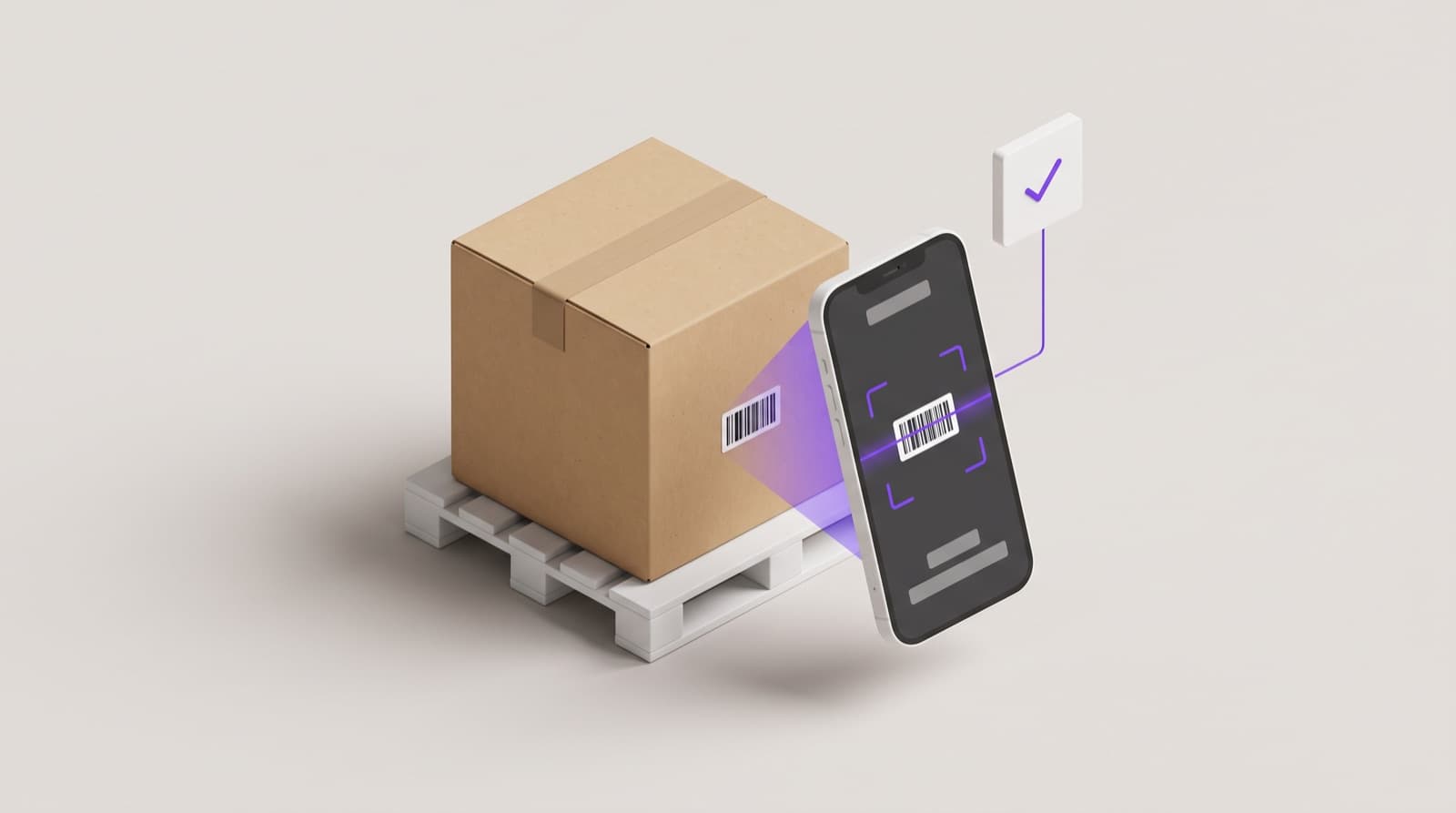
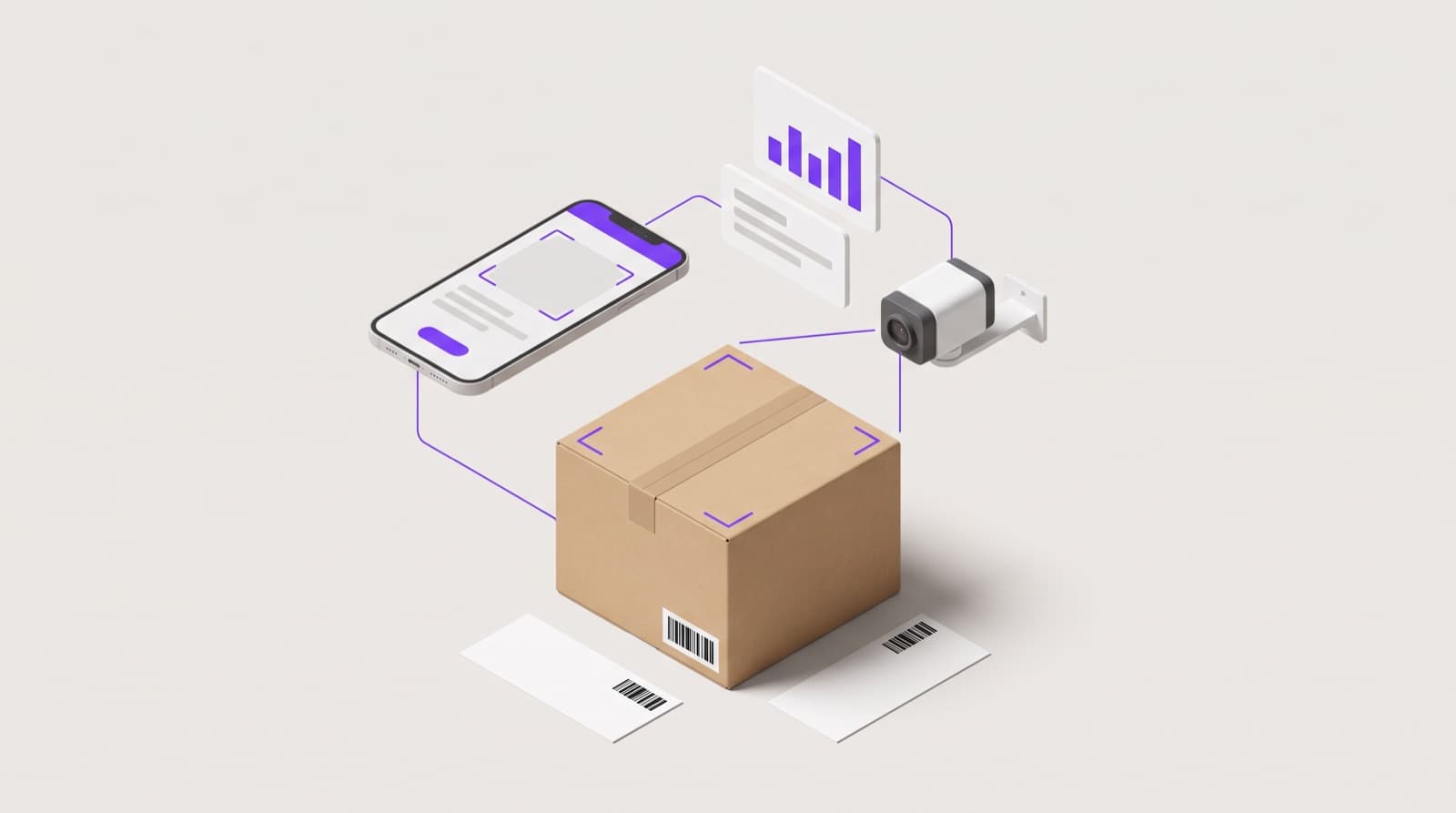
Use technology to verify physical truth in real time: What actually arrived? What condition is it in? Does it match the PO? If not, route the exception immediately, before bad data enters the system.
Once execution is verified, your systems of record can be trusted. Your automation can optimize on truth, not assumptions. And your $10M WMS can finally retire the clipboard.
Because the clipboard was never the problem. It was a symptom of a system that couldn’t see physical reality. And if your most expensive systems still rely on manual checks to catch what they can’t verify, you’re not running a modern logistics operation.
You’re running a digital system with an analog execution layer.
And that’s the gap that’s costing you millions.